

In recent years, the skincare industry has witnessed a significant shift towards natural and sustainable ingredients. Among these, natural cyclodextrin has emerged as a powerful and versatile component, offering numerous benefits for skin health and beauty. As a leading supplier of natural cyclodextrin, I am excited to delve into the various advantages that this remarkable compound brings to skincare products.
Understanding Natural Cyclodextrin
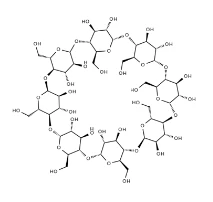
Natural cyclodextrins are cyclic oligosaccharides composed of glucose units linked together in a ring structure. They are derived from starch through enzymatic conversion, making them a renewable and eco - friendly ingredient. There are several types of cyclodextrins, including Alpha Cyclodextrin (α - CD), Beta Cyclodextrin (β - CD), and Gamma Cyclodextrin CAS 17465 - 86 - 0 (γ - CD). Each type has a different number of glucose units in its ring, which affects its cavity size and properties.
Solubility Enhancement
One of the primary benefits of natural cyclodextrin in skincare products is its ability to enhance the solubility of poorly soluble active ingredients. Many potent skincare actives, such as vitamins, essential oils, and antioxidants, have limited solubility in water - based formulations. This can lead to issues such as precipitation, reduced bioavailability, and inconsistent product performance.
Cyclodextrins can form inclusion complexes with these hydrophobic molecules, encapsulating them within their cavities. This effectively increases their solubility in water, allowing for better dispersion in skincare formulations. As a result, the active ingredients can be more easily absorbed by the skin, maximizing their therapeutic effects. For example, vitamin E, a powerful antioxidant, can be complexed with cyclodextrin to improve its solubility and stability in aqueous solutions, ensuring that it remains active and effective in the skincare product.
Stability Improvement
Skincare products often contain ingredients that are sensitive to light, heat, oxygen, and pH changes. These factors can cause degradation of the active components, leading to a loss of efficacy and a shorter shelf - life. Natural cyclodextrins can act as protective agents by forming inclusion complexes with these sensitive ingredients.
The cyclodextrin cavity shields the encapsulated molecule from external factors, preventing oxidation, hydrolysis, and photodegradation. This not only extends the shelf - life of the skincare product but also maintains the integrity and potency of the active ingredients. For instance, essential oils, which are prone to oxidation and evaporation, can be stabilized by complexation with cyclodextrins. This allows the essential oils to retain their aroma and therapeutic properties for a longer period, enhancing the overall quality of the skincare product.
Controlled Release
Another advantage of using natural cyclodextrin in skincare is its ability to provide controlled release of active ingredients. When an active molecule is encapsulated within a cyclodextrin cavity, it is released gradually over time as the inclusion complex dissociates. This controlled release mechanism ensures a sustained delivery of the active ingredient to the skin, providing long - lasting effects.
In the case of anti - aging skincare products, for example, cyclodextrins can be used to encapsulate retinol, a powerful ingredient for reducing the appearance of wrinkles and fine lines. The controlled release of retinol helps to minimize skin irritation, which is a common side effect of high - concentration retinol products. At the same time, it maintains a consistent level of retinol in the skin, promoting continuous collagen production and skin renewal.
Enhanced Skin Penetration
The skin has a natural barrier function that protects it from external substances. However, this barrier can also limit the penetration of active ingredients into the deeper layers of the skin. Natural cyclodextrins can help to overcome this barrier by interacting with the skin's lipid bilayer.

The cyclodextrin molecules can disrupt the ordered structure of the lipid bilayer, increasing its fluidity and permeability. This allows active ingredients to penetrate more easily through the skin, reaching the target cells and tissues. In addition, the inclusion complexes formed by cyclodextrins can also enhance the solubility and stability of the active ingredients in the skin environment, further facilitating their absorption. For example, cyclodextrin - encapsulated hyaluronic acid can penetrate the skin more effectively, providing deeper hydration and plumping effects.
Compatibility with Other Ingredients
Natural cyclodextrins are highly compatible with a wide range of other skincare ingredients, including surfactants, polymers, and preservatives. They can be easily incorporated into various skincare formulations, such as creams, lotions, serums, and masks.
Cyclodextrins do not interfere with the normal functioning of other ingredients in the formulation. Instead, they can enhance the performance of the overall product by improving the solubility, stability, and delivery of the active components. This compatibility makes cyclodextrins a versatile and valuable ingredient in the development of innovative skincare products.
Safety and Biocompatibility
Safety is a crucial consideration in the skincare industry. Natural cyclodextrins are generally recognized as safe for use in skincare products. They are non - toxic, non - irritant, and biodegradable.
Cyclodextrins have been extensively studied for their safety profile, and they have been approved by regulatory authorities for use in cosmetics. Their biocompatibility with the skin makes them suitable for all skin types, including sensitive skin. This means that skincare products containing cyclodextrins can be used by a wide range of consumers without the risk of adverse reactions.
Applications in Different Skincare Categories
- Moisturizers: In moisturizing products, cyclodextrins can enhance the solubility and stability of humectants and emollients. They can also improve the skin penetration of these ingredients, providing deeper and longer - lasting hydration. For example, cyclodextrin - encapsulated glycerin can be more effectively absorbed by the skin, preventing moisture loss and keeping the skin soft and supple.
- Anti - Aging Products: As mentioned earlier, cyclodextrins can be used to encapsulate anti - aging ingredients such as retinol, peptides, and antioxidants. The controlled release and enhanced skin penetration properties of cyclodextrins help to maximize the anti - aging effects of these ingredients, reducing the appearance of wrinkles, fine lines, and age spots.
- Acne Treatments: Cyclodextrins can improve the solubility and stability of acne - fighting ingredients such as salicylic acid and benzoyl peroxide. They can also help to deliver these ingredients more effectively to the sebaceous glands, where they can reduce sebum production and prevent the formation of acne.
- Sunscreens: In sunscreen formulations, cyclodextrins can enhance the solubility and stability of UV filters. They can also improve the skin penetration of these filters, providing better protection against UVA and UVB radiation.
Conclusion
In conclusion, natural cyclodextrin offers a multitude of benefits for skincare products. Its ability to enhance solubility, improve stability, provide controlled release, enhance skin penetration, and be compatible with other ingredients makes it a valuable addition to any skincare formulation. As a supplier of high - quality natural cyclodextrin, we are committed to providing the skincare industry with innovative solutions that meet the growing demand for effective and safe skincare products.
If you are interested in incorporating natural cyclodextrin into your skincare products, we invite you to contact us for further information and to discuss potential procurement opportunities. Our team of experts is ready to assist you in developing customized solutions that meet your specific needs.
References
- Loftsson, T., & Duchêne, D. (2007). Cyclodextrins in drug delivery: an updated review. Pharmaceutical Research, 24(3), 467 - 486.
- Szente, L., & Szejtli, J. (2004). Cyclodextrins as pharmaceutical excipients. Journal of Pharmacy and Pharmacology, 56(11), 1131 - 1146.
- Pinto, S. C., et al. (2015). Cyclodextrins in topical and transdermal drug delivery. Journal of Controlled Release, 203, 1 - 14.


