

Can Sulfobutyl Ether - β - cyclodextrin be used in cosmetic products?
As a supplier of Sulfobutyl Ether - β - cyclodextrin, I've been frequently asked about its potential applications in the cosmetic industry. In this blog, I'll delve into the scientific aspects of whether Sulfobutyl Ether - β - cyclodextrin can be used in cosmetic products.
Understanding Sulfobutyl Ether - β - cyclodextrin
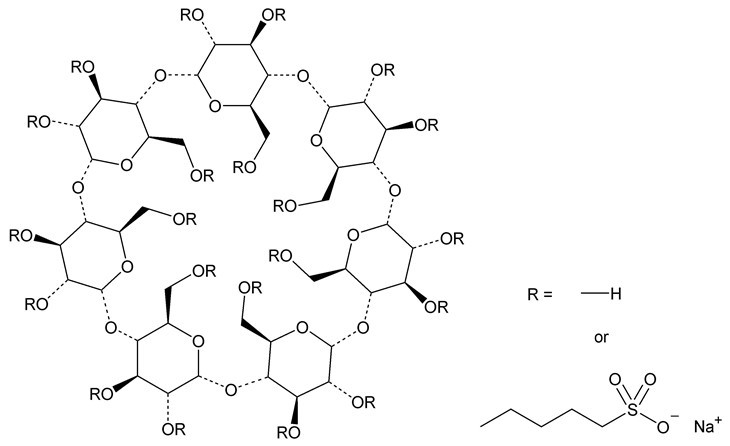
Sulfobutyl Ether - β - cyclodextrin (SBE - β - CD) is a chemically modified cyclodextrin. Cyclodextrins are cyclic oligosaccharides composed of glucose units, and β - cyclodextrin is one of the most common types. The sulfobutyl ether modification enhances its solubility and other properties compared to the native β - cyclodextrin.
The structure of SBE - β - CD consists of a hydrophobic cavity and a hydrophilic outer surface. This unique structure allows it to form inclusion complexes with various guest molecules. In the pharmaceutical industry, it has been widely used as a solubilizer, stabilizer, and drug delivery agent. For example, it can improve the solubility of poorly water - soluble drugs, which in turn enhances their bioavailability and stability. You can find more detailed information about Sulfobutyl Ether - β - cyclodextrin on this page: Sulfobutyl Ether - β - cyclodextrin.
Potential Benefits in Cosmetics
Solubilization
Many cosmetic ingredients, such as essential oils, vitamins, and some active compounds, are poorly soluble in water. This can lead to issues like phase separation, precipitation, and reduced efficacy in cosmetic formulations. SBE - β - cyclodextrin can act as a solubilizer. By forming inclusion complexes with these hydrophobic ingredients, it can increase their solubility in aqueous - based cosmetic products, such as lotions, creams, and serums.
For instance, some natural essential oils have excellent antibacterial and anti - inflammatory properties but are difficult to dissolve in water. When complexed with SBE - β - cyclodextrin, they can be evenly dispersed in the cosmetic matrix, ensuring a more uniform distribution and better performance of the product.
Stability Enhancement
Cosmetic products often contain ingredients that are sensitive to light, oxygen, and heat. These factors can cause degradation, oxidation, and loss of activity of the active components. SBE - β - cyclodextrin can protect these sensitive ingredients by encapsulating them within its cavity.
For example, vitamin C is a popular antioxidant in cosmetics, but it is highly unstable in the presence of air and light. When vitamin C forms an inclusion complex with SBE - β - cyclodextrin, it is shielded from external factors, which helps to maintain its stability and efficacy over a longer period. This means that the cosmetic product can retain its antioxidant properties for a more extended time, providing better skin - care benefits to the consumers.
Controlled Release
In cosmetics, controlled release of active ingredients is crucial for achieving long - lasting effects. SBE - β - cyclodextrin can be used to control the release rate of active substances. When the inclusion complex is applied to the skin, the active ingredient is gradually released from the cavity of SBE - β - cyclodextrin over time.
This is particularly useful for anti - aging ingredients or skin - lightening agents. Instead of a sudden burst of activity, a controlled release ensures a continuous supply of the active compound to the skin, maximizing its effectiveness and minimizing potential side effects.
Safety Considerations
Safety is of utmost importance when considering the use of any ingredient in cosmetics. SBE - β - cyclodextrin has a relatively good safety profile. It is non - toxic, non - immunogenic, and non - irritant in most cases.
Numerous pre - clinical and clinical studies have been conducted on its safety, especially in the pharmaceutical field. These studies have shown that SBE - β - cyclodextrin is well - tolerated by the human body. However, as with any new ingredient in cosmetics, it is essential to conduct appropriate safety evaluations, including skin irritation tests and allergenicity tests, before large - scale use.
Regulatory Status
The regulatory status of SBE - β - cyclodextrin in cosmetics varies from country to country. In some regions, it may be allowed for use in cosmetics as long as it meets certain quality and safety standards. Manufacturers need to ensure that they comply with the local regulations regarding the use of this ingredient.
It is also important to note that the regulatory environment is constantly evolving. Staying updated with the latest regulations and guidelines is necessary to ensure the legal and safe use of SBE - β - cyclodextrin in cosmetic products.
Comparison with Other Cyclodextrins in Cosmetics
There are other types of cyclodextrins, such as native β - cyclodextrin and hydroxypropyl - β - cyclodextrin, which are also used in the cosmetic industry. Compared to native β - cyclodextrin, SBE - β - cyclodextrin has better solubility in water, which makes it more suitable for formulating water - based cosmetic products.
Hydroxypropyl - β - cyclodextrin is another commonly used modified cyclodextrin. While both SBE - β - cyclodextrin and hydroxypropyl - β - cyclodextrin can form inclusion complexes, SBE - β - cyclodextrin may offer better stability and solubilization for some specific types of guest molecules. For more information about related cyclodextrin products, you can visit Betadex Sulfobutyl Ether Sodium Salt and Betadex Sulfobutyl Ether Sodium.
Challenges and Limitations
Although SBE - β - cyclodextrin has many potential benefits in cosmetics, there are also some challenges and limitations.
One of the main challenges is the cost. The production process of SBE - β - cyclodextrin is relatively complex, which makes it more expensive compared to some other commonly used cosmetic ingredients. This may limit its widespread use in some low - cost cosmetic products.
Another limitation is the potential interaction with other ingredients in the cosmetic formulation. The formation of inclusion complexes may affect the properties and performance of other components in the product. For example, it may change the viscosity, texture, and pH of the cosmetic formulation, which requires careful formulation optimization.

Conclusion
In conclusion, Sulfobutyl Ether - β - cyclodextrin has significant potential for use in cosmetic products. Its ability to solubilize hydrophobic ingredients, enhance stability, and enable controlled release makes it an attractive option for formulators. However, it is essential to consider the safety, regulatory requirements, cost, and potential interactions with other ingredients.
As a supplier of Sulfobutyl Ether - β - cyclodextrin, we are committed to providing high - quality products and technical support to our customers in the cosmetic industry. If you are interested in exploring the use of Sulfobutyl Ether - β - cyclodextrin in your cosmetic formulations, we encourage you to contact us for further discussion and procurement. We can work together to develop innovative and effective cosmetic products that meet the market's demands.
References
- Stella, V. J., & He, Q. (2008). Sulfobutyl ether-β-cyclodextrin: What does the future hold?. Journal of Inclusion Phenomena and Macrocyclic Chemistry, 62(1 - 2), 3 - 10.
- Loftsson, T., & Brewster, M. E. (1996). Pharmaceutical applications of cyclodextrins. 1. Drug solubilization and stabilization. Journal of pharmaceutical sciences, 85(10), 1017 - 1025.
- Szente, L., & Szejtli, J. (1999). Cyclodextrins in cosmetics. Cosmetics & Toiletries, 114(8), 61 - 66.


