


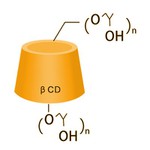

New Product
Cyclodextrin makes insoluble substances more soluble through its own cavity inclusion, making it a single molecule solubilizer with high biocompatibility; The solubilization operation is simple; Strong solubilization stability, new products include Cationic cyclodextrin,Hyperbranched cyclodextrin,Hydroxybutyl beta cyclodextrin and Chlorpropanol cyclodextrin,etc.
Application fields: Sewage treatment, environmental protection, agriculture, animal husbandry, chiral drug separation, analytical chemistry, fragrance essence, pigments, pigments and dyes, food storage and transportation, fabrics, fibers, packaging materials,etc.
Zhiyuan: Your Trustworthy Cationic Cyclodextrin Manufacturer!
Shandong Binzhou Zhiyuan Biotechnology Co., Ltd is a leading direct supplier of cyclodextrin derivatives, cyclodextrin inclusion compounds and cyclodextrin reagents. Established in 2010, our company covers an area of 30,000 square meters, with a construction area of 10,000 square meters. We have our own GMP standard pharmaceutical excipient clean production workshop, a large pharmaceutical storage warehouse, and a quality inspection center. In addition, we have developed procedures for identifying the status of products at each stage and monitoring their raw materials, processes, quality testing, etc. to ensure that these products can be safely used in pharmaceuticals, food, cosmetics, spices, pesticides and other fields.
Rich Product Range
We have more than 70 kinds of cyclodextrins in 5 major series (natural cyclodextrins, cyclodextrin derivatives, cyclodextrin reagents, cyclodextrin complexes, and cyclodextrin polymers), and conduct research and development for different applications of new products.
Well Equipped
Our GMP workshop obtained the pharmaceutical production license in 2013 and passed ISO certification. It is currently equipped with ion chromatography (Ic), capillary electrophoresis (Ce), high-performance liquid chromatography, and Fourier transform infrared spectrometer (Ftir ) and other imported testing equipment.
Quality Assurance
All our products, including hydroxypropyl βdex, β-butanesulfonate sodium and hydroxypropyl γ-cyclodextrin, have been registered by DMF, approved by the US FDA, and have passed many standard certifications such as CP, USP, and EP.
Customizable Services
We have a complete R&D, quality inspection center and professional production team. We can customize the production of cyclodextrin products according to your needs, including their quantity, ingredients, packaging, and support OEM and ODM orders.


What Is Cationic Cyclodextrin?
Cationic cyclodextrin is a type of cyclodextrin that has a positively charged (cationic) functional group attached to one or more of its sugar units. They are positively charged cyclodextrin derivatives, formed when cyclodextrin reacts with a reagent that introduces a cationic-type substituent into the molecule. And they are complex and inclusion materials, which form cationic salts with various anions and can be used in paper sizing, adhesives and flocculants. Cationic cyclodextrins are commonly used as drug delivery vehicles due to their ability to encapsulate and protect drug molecules, enhance their solubility and stability, and target them to specific tissues or cells.

Strong Compatibility
The shielding effect of the carbon-hydrogen bonds of our cationic CDs leads to the formation of hydrophobic cavities in the CDs with a hydrophilic outer structure, so they can be co-assembled with various small molecules through interactions.
Rich Specifications
Our cationic cyclodextrin is available in different packaging forms, including 10kg, 20kg/barrel, and different concentration and pH value versions according to customer needs.
Efficient Delivery
At the same time, the multiple complex hydroxyl sites of these cyclodextrins used in the pharmaceutical field also provide active sites for chemical modification of compounds, improving the efficiency of drug delivery.
Easy to Store
These cationic cyclodextrins are often used in reagent production and laboratory purposes. They are generally stored in airtight containers at room temperature and do not require additional refrigeration or light protection.
Application of Cationic Cyclodextrin
Reducing Agents and Stabilizers
Cationic cyclodextrins are of interest due to their high solubility and stability. The hydrophobic cavity and unique ionic effects expand their applications in drug delivery and drug solubilization. It has been reported that materials containing polar groups such as amines, hydroxyl groups, and amides are more suitable for stabilizing nanoparticles. Quaternary ammonium salts can stabilize AgO nanoparticles through electrostatic interactions and steric effects, and halogen ions can stabilize AgO nanoparticles through chelation. To the best of our knowledge, there are few studies on the preparation of silver nanoparticles using cationic cyclodextrins as reducing agents and stabilizers.
Gene Delivery
Due to their positive surface charge, cationic cyclodextrins are usually composed of cationic monomers containing amine groups. This allows electrostatic interactions between polymers and any negatively charged nucleic acid, such as plasmid DNA (pDNA), microRNA (mRNA), small interfering RNA (siRNA), messenger RNA (mRNA) and even CRISPR-related proteins - 9 (cas9) RNP or S1mplex. This interaction results in the formation of complex polyplexes between polymers and nucleic acids. These complexes preserve the genetic material while protecting it during childbirth.
Complexation and Solubilization
In addition to the above advantages, cationic polymers are attractive nonviral delivery vehicles because they are highly customizable, both in terms of size and the type of genetic material used for delivery—this stems in part from the fact that Cationic polymers can be chemically diverse. They can also be engineered to have a longer shelf life, suggesting easier clinical use. However, their different complexing and solubilizing abilities make them ideal hosts for constructing inclusion complexes with guest molecules. They are commonly used in the pharmaceutical industry to improve the solubility and bioavailability of poorly soluble drugs in patients.
Trimethylammonium Cyclodextrin (TMC)
N,N,N-trimethyl chitosan chloride (TMC) is a derivative of quaternized chitosan that is used in pharmaceutical products. It is obtained by methylating the amino group at the C2 site of chitosan's backbone. This cyclodextrin derivative is quaternized with three methyl groups, making it positively charged. TMC is commonly used in drug delivery applications because it can solubilize poorly water-soluble drugs and target specific cells.
Tetramethylammonium Cyclodextrin (TeMC)
Tetramethylammonium cyclodextrin (TeMC) is a topic in the growth of materials in a magnetic field. Tetramethylammonium (TMA) chloride yields a solid mixture of TMA salts, or used in the investigation of magnetic materials. This cyclodextrin derivative is quaternized with four methyl groups, making it more hydrophobic and positively charged than TMC. TeMC is often used to solubilize lipophilic drugs and for gene delivery.
Polyethyleneimine-modified Cyclodextrin (CD-PEI)
Polyethyleneimine-modified cyclodextrin (CD-PEI) is a covalent conjugate that has been widely synthesized for adsorption technologies. It is a polymer that has been covalently linked with β-CD to increase the efficiency of gene transfection by PEI. This strategy has increased the transfection efficiency of the luciferase gene to nearly four folds, compared with PEI alone. This cyclodextrin derivative is modified with polyethyleneimine (PEI), which carries a high positive charge due to the presence of amine groups.
Aminocyclodextrin (ACD)
Amino Cyclodextrin (ACD) is a derivative of cyclodextrin that contains various amine pendent groups. These groups provide a binding site rich in amino groups. They are also prebiotics that improve intestinal microflora by selectively proliferating bifidobacteri. It is modified with an amino group, which makes it positively charged. ACD is commonly used as an adsorbent for removing pollutants from water.
Guanidinocyclodextrin (GCD)
Guanidino Cyclodextrin (GCD) is a cationic derivative of gamma-cyclodextrin (GCD). GCD is also known as gamma-cyclodextrin, and the abbreviations "gCD" and "γCD" refer to it. The U.S. FDA considers gamma-cyclodextrin to be generally safe. They have been used to deliver a variety of drugs, including hydrocortisone, prostaglandin, nitroglycerin, itraconazole, and chloramphenicol. This GCD derivative is modified with a guanidine group, which carries a high positive charge, as an antimicrobial agent.
Drug Delivery Approaches of Cationic Cyclodextrin


Drug Delivery by Oral Route
Drug delivery by oral route has traditionally been the most prevalent option for designing delivery systems. Drug release in oral delivery system may be controlled by dissolution, diffusion, pH, or osmosis. The usage of CDs in an oral delivery system is to increase the rate at which dissolution occurs—forming inclusion complexes with CD aids in increasing the solubility of drugs and hence transport of drugs across aqueous phase to lipid membrane in GIT. The hydrophobic derivatives of CDs are mostly employed to accomplish this goal. In case of buccal and sublingual routes, rapid increase in drug concentration can also be achieved by complexation; however, in order to exhibit the therapeutic effect, drug must need to get released from the complex. For sublingual route, it is a little bit difficult since the amount of saliva as well as contact time is limited.
Cyclodextrins especially hydrophobic ones, that is, ethylated CDs, are also very important in achieving site-specific or sustained drug release. Additionally, cyclodextrins have productively been utilized in matrix tablets as well as osmotic pumps to control the drug release.
Ocular Drug Delivery
The primary treatment of an ocular aliment is mainly topical application of drug as aqueous solution. The current findings ascertain that cyclodextrin molecules are helpful components in ocular preparations, since they can enhance the solubility, stability, and consequently bioavailability of the ophthalmic formulations. Among the CDs, hydrophilic cyclodextrins, mainly SB β-CD and HP β-CD, are reported to be most compatible and nontoxic. It is well known that only a small amount an ophthalmic drug can actually reach systemic circulation, but increasing the availability of a drug at corneal surface through the CD complexation can easily enhance ocular bioavailability of hydrophobic drugs.
Nasal Drug Delivery
In order to have systemic absorption, drug must have optimum solubility in nasal fluids. Moreover, an optimum nasal formulation also must not have any effect on the defensive functions of cilia in respiratory tract. Both hydrophilic and hydrophobic CDs are the highly employed in this regard, as they can enhance the solubilization as well as the permeation, correspondingly. Besides, they are highly effective in small concentration and stereotypically inert from toxicological perspective.
Transdermal Drug Delivery
Stratum cornea serves as the main barrier in the delivery of drugs through the skin. Various penetration enhancers are often employed to enhance the delivery across the barrier. Owing to the hydrophobic properties, cyclodextrins have the ability to deliver across water diffusion layer; however, if absorption is dependent on the lipophilic barrier solely, CDs are unable to deliver the drug dermally. Therefore, suitable selection of an aqueous vehicle is highly important.
Novel Drug Delivery
Captivatingly, CD and its derivatives have been employed to develop the novel systems having supramolecular architectures such as micelles, nanosponges, nanoparticles, nanovesicles, etc., to build the functional platforms. Among these delivery systems, lipid nanocarriers are arguably the most common nanomaterials, which are used in association with modified CDs. Being biodegradable and biocompatible, these systems offer versatile advantages including targeted delivery, stability, and co-drug loading (i.e., both hydrophobic and hydrophilic). In addition, they also exhibit superior efficacy and pharmacokinetics. Conducive studies on the lipid nanosystems including parent and derivated CDs have proven the suitability of this approach to enhance the bioavailability of numerous pharmaceutical formulations; hence, continually increasing its implications in different disorder, for instance, diabetes, hypertension, cancer, and many other ailments.
Benefits of Cationic Cyclodextrin
Enhancement of Solubility
CDs increase the aqueous solubility of many poorly soluble drugs by forming inclusion complexes with their apolar molecules or functional groups. The resulting complex hides most of the hydrophobic functionality in the interior cavity of the CD while the hydrophilic hydroxyl groups o-n the external surface remain exposed to the environment. The net effect is that a water-soluble CD drug complex is formed.
Enhancement of Bioavailability
When poor bioavailability is due to low solubility, CDs are of extreme value. Preconditions for the absorption of an orally administered drug are its release from the formulation in dissolved form. When drug is complexed with CD, dissolution rate and, consequently, absorptionare enhanced. Reducing the hydrophobicity of drugs by CD complexation also improves their percutaneous or rectal absorption. In addition to improving solubility, CDs also prevent crystallization of active ingredients by complexing individual drug molecules so that they can no longer self-assemble into a crystal lattice.
Improvement of Stability
CD complexation is of immense application in improving the chemical, physical and thermal stability of drugs. For an active molecule to degrade upon exposure to oxygen, water, radiation or heat, chemical reactions must take place. When a molecule is entrapped within the CD cavity, it is difficult for the reactants to diffuse into the cavity and react with the protected guest.
Reduction of Irritation
Drug substances that irritate the stomach, skin or eye can be encapsulated within a CD cavity to reduce their irritancy. Inclusion complexation with CDs reduces the local concentration of the free drug, below the irritancy threshold. As the complex gradually dissociates and the free drug is released, it gets absorbed into the body and its local free concentration always remains below the levels that might be irritating to the mucosa.
Certificate Photo


Factory Photo


Frequently Asked Questions of Cationic Cyclodextrin
Q: What is Cationic Cyclodextrin in short?
Q: What is the difference between beta cyclodextrin and gamma cyclodextrin?
Q: What is the most common cyclodextrin?
Q: What type of cyclodextrin removes cholesterol?
Q: What is the characteristic of cyclodextrins?
Q: How is cationic cyclodextrin different from regular cyclodextrin?
Q: What are the potential applications of cationic cyclodextrin in drug delivery systems?
Q: How does the cationic charge on cyclodextrin affect its ability to encapsulate guest molecules?
Q: What are the advantages of using cationic cyclodextrin as a host molecule in supramolecular chemistry?
Q: Can cationic cyclodextrin enhance the solubility and bioavailability of poorly soluble drugs?
Q: In what ways can cationic cyclodextrin be functionalized to optimize its performance as a drug delivery vector?
Improve water solubility: CDs can interact with hydrophobic molecules, such as drugs, to improve their water solubility and bioavailability.
Increase bioavailability: CDs can form inclusion complexes with appropriately sized guest molecules to improve the aqueous solubility, physical chemical stability, and bioavailability of drugs.
Q: How does cyclodextrin improve solubility of drugs?
Q: What is the mechanism of action of cyclodextrin?
Q: What is the use of cyclodextrin in pharmaceutical industry?
Q: What are the two methods used to improve the solubility of drug?
Q: How does cyclodextrin release drugs?
Q: What is the application of cyclodextrin in organic synthesis?
Q: How does cyclodextrin form inclusion complex with Drug compounds?
Q: What is the complexation efficiency of cyclodextrin?
Q: How does the structure of cationic cyclodextrin affect its interaction with cellular membranes and uptake by cells?