


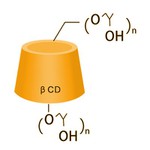

Cyclodextrin Reagent
Shandong Binzhou Zhiyuan Biological Technology Co., Ltd. is a professional supplier of cyclodextrin chemical reagents in China. Including sulfhydryl cyclodextrin, amino-cyclodextrin, bromo-cyclodextrin, iodo-cyclodextrin, polyene polyamine cyclodextrin, carboxymethyl cyclodextrin and water-soluble polymerized cyclodextrin, for experimental use in universities and scientific research institutions.
Zhiyuan: Your Trustworthy Cyclodextrin Reagent Manufacturer!
Shandong Binzhou Zhiyuan Biotechnology Co., Ltd is a leading direct supplier of cyclodextrin derivatives, cyclodextrin inclusion compounds and cyclodextrin reagents. Established in 2010, our company covers an area of 30,000 square meters, with a construction area of 10,000 square meters. We have our own GMP standard pharmaceutical excipient clean production workshop, a large pharmaceutical storage warehouse, and a quality inspection center. In addition, we have developed procedures for identifying the status of products at each stage and monitoring their raw materials, processes, quality testing, etc. to ensure that these products can be safely used in pharmaceuticals, food, cosmetics, spices, pesticides and other fields.
Rich Product Range
We have more than 70 kinds of cyclodextrins in 5 major series (natural cyclodextrins, cyclodextrin derivatives, cyclodextrin reagents, cyclodextrin complexes, and cyclodextrin polymers), and conduct research and development for different applications of new products.
Well Equipped
Our GMP workshop obtained the pharmaceutical production license in 2013 and passed ISO certification. It is currently equipped with ion chromatography (Ic), capillary electrophoresis (Ce), high-performance liquid chromatography, and Fourier transform infrared spectrometer (Ftir ) and other imported testing equipment.
Quality Assurance
All our products, including hydroxypropyl βdex, β-butanesulfonate sodium and hydroxypropyl γ-cyclodextrin, have been registered by DMF, approved by the US FDA, and have passed many standard certifications such as CP, USP, and EP.
Customizable Services
We have a complete R&D, quality inspection center and professional production team. We can customize the production of cyclodextrin products according to your needs, including their quantity, ingredients, packaging, and support OEM and ODM orders.


What Is Cyclodextrin Reagent?
Cyclodextrins (CDs) are a family of cyclic oligosaccharides that are used in a variety of fields, including medicine, industry, and basic sciences. They are made up of sugar molecules called glucopyranosides, which are glucose molecules that exist in a six-membered ring configuration. CDs have a hydrophilic outer surface and a lipophilic central cavity. They are relatively large molecules with a number of hydrogen donors and acceptors, so they generally do not permeate lipophilic membranes. Among them, Beta-cyclodextrin reagent is a cyclic polysaccharide that contains seven glucopyranose units, which is a solid that acts as a chelating agent.

High Purity
Our cyclodextrin material appears as white solid powder or crystal, with purity ≥99%, moisture content ≤11%, and residue (USP) content after combustion ≤0.1%.
Easy to Save
These cyclodextrin components are soluble in water and solutions can be obtained by stirring at room temperature for 30 minutes, or using sonication and cooling, the solutions can be stored at room temperature for several weeks.
More Effective
Cyclodextrin reagents exhibit better inclusion and solubilization capabilities than monomeric cyclodextrin and its derivatives, and have high removal capabilities for micropollutants in water, especially for inorganic heavy metal ions, phenol and aniline.
Wide Uses
Our cyclodextrin reagents can be lyophilized to produce easily soluble powders that can be compressed into tablets for use in research experiments in a variety of fields, including biological effects, pharmaceuticals, flavors, etc.
Against Oxidation
CDs can form complexes with ingredients (flavors, unsaturated fatty acids, dyes, etc.) sensitive to oxygen or oxidizing substances, which in most cases leads to an improvement in the stability of encapsulated substrates. Several studies have shown that complexing by means of this type of compounds almost completely prevents these oxidizable substances from undergoing chemical modifications, even when warehoused in an atmosphere of 100% oxygen.
Against Light-Induced Decomposition
CDs can be also used to protect compounds of interest from deterioration factors such as light, heat, or oxidation. In addition, if the CDs cavity is filled, the entry of other molecules is prevented, so no unwanted reactions occur. Another mechanism of action is preventing reactive molecules from approaching the active sites of the host molecule. For instance, CDs have been used to protect vitamins and pharmaceutical products that contain easily oxidizable double bonds (e.g., prostaglandins). It has been demonstrated that hydroxypropyl-β-CDs protected peptides from hydrolysis and their consequent loss of ability.
Against Heat-Induced Changes
Another important problematic event is thermal degradation of natural compounds. In most cases, the application of heat causes the volatilization of less stable compounds, which might have interesting biological properties. One possible solution can be the encapsulation of bioactive compounds with CDs, resulting in a complex that would provide a barrier for preventing their loss. As a result, there is an increase of both, in its solubility in aqueous media and in its stability against different external factors (temperature, light, and oxygen).
Modifying Solubility
CDs are capable of changing the solubility of a compound. They have the ability to form stable emulsions of water in oil, due to differences in polarity between the inside and outside of the molecule. In addition, CDs can also increase the solubility of certain compounds in water, by forming dynamic, noncovalent, water-soluble inclusion complexes. However, in many cases, the solubility of the complex is not appropriate, so it is necessary to modify the external surface of CDs. Neutral (hydroxypropyl) or ionic groups (hydroxy, carboxymethyl, tertiary amine, or quaternary amine) can be used to increase the solubility up to 60%. On the other hand, to improve solubility in organic solvents, the modification is carried out with aliphatic groups or smaller groups (hexyl, acetyl). Thus, complexation with CDs is a mechanism to increase or decrease the solubility of a guest component.
Types of Cyclodextrin Reagent


Mercapto Cyclodextrin
Mercapto cyclodextrin (MCD) is a type of cyclodextrin that has a thiol (-SH) group attached to its structure. It is commonly used as a chiral selector in chromatography, as well as a reducing agent and stabilizer in chemical reactions. MCD has the ability to form inclusion complexes with various guest molecules, allowing for the separation and purification of target compounds. Mercaptoacetic cyclodextrins are known for ability to adhere to gold surfaces, in binding to and removing heavy metals from solutions.
Amino Cyclodextrin
Amino cyclodextrin is a modified form of cyclodextrin, a cyclic molecule composed of several glucose units. It is modified by the introduction of amino functional groups onto the cyclodextrin molecule, enhancing its ability to bind and transport various molecules. Amino cyclodextrin is used in a variety of applications, such as in drug delivery systems, as a protein stabilizer, and as a separation material in chromatography. It has a good composite ability with negatively charged guest molecules.
Bromocyclodextrin
Bromocyclodextrin is a cyclic oligosaccharide composed of seven glucose units linked by α-1,4-glycosidic bonds. It is a derivative of cyclodextrin with a bromine atom attached to the molecule. Bromocyclodextrin has a cavity in its structure that can encapsulate molecules of appropriate size and shape through host-guest interactions. It has applications in various fields such as pharmaceuticals, agrochemicals, food industries, and environmental science, due to its ability to improve solubility, stability, bioavailability, and sensory properties of guest molecules.
Iodocyclodextrin
Iodo cyclodextrin is a chemical with the molecular formula C42H69IO34 and a molecular weight of 1244.87. Iodocyclodextrin is a water-soluble, cyclic molecule consisting of several glucose units linked together. It is a complex of iodine and cyclodextrin, which is used as an alternative to traditional iodine-based contrast agents for medical imaging. This complex has a lower risk of toxicity and allergic reactions, making it a safer option for patients with kidney problems or iodine allergies. Additionally, iodocyclodextrin has been found to have potential applications in drug delivery, catalysis, and as a stabilizer.
Polyene Polyamine Cyclodextrin
Polyamino-cyclodextrins are chemically modified cyclodextrins that have polyamine pendant groups. These groups may be useful as capping agents. It is used in the field of drug delivery as a carrier molecule for various therapeutic agents. The polyene polyamine moieties on the cyclodextrin surface facilitate complexation and solubilization of hydrophobic drugs, while also providing targeting and release properties. This technology has potential applications in both pharmaceutical and agricultural industries.
Water-soluble Polycyclodextrin
Water-soluble polycyclodextrin refers to a polymer made up of multiple cyclodextrin molecules linked together covalently. Cyclodextrins are cyclic carbohydrates that have a hydrophobic cavity, making them useful for encapsulating hydrophobic compounds. The degree of water solubility depends on the size of the polycyclodextrin and the number of cyclodextrin molecules linked together.
Effect of Cyclodextrin Reagent on Formulation Properties
- The most prominent attribute of the CDs is inclusion complexation, that is, the capability to allow a therapeutic agent or more characteristically just the hydrophobic portion of medicinal moiety into their internal cavity.
- When water molecules are removed from the lipophillic cavity of cyclodextrins (which is in an energetically unfavorable environment due to the nature of the polar-polar interaction), the number of formed hydrogen bonds increases, and the repulsive interaction between guest and aqueous environment decreases, whereas the hydrophobic interaction increases as the guest molecule or lipophilic group with size, shape, and polarity compatible with the CD structure exerts itself in central cavity. As a result, a complex is formed in an aqueous solution.
- When a complex is formed, covalent bonds are neither formed nor broken, and the drug molecules of complex as well as those of solution are in equilibrium. The capacity of guest to interact well with the host molecules to create a stable complex determines the binding strength of thus formed complex. Other factors involved in affecting this host-guest complexation mechanism are:
- Steric factor which is based on the proportion of the CD to drug size and/or on specific functional group of active component. If the active component is too big, it will not fit inside the cavity adequately. Moreover, the dimensions of these molecules also important in this aspect on the basis of dimension smaller compounds or those having aliphatic chain will form complex with the alpha cyclodextrin and those having higher molecular weight, for example, steroids will be accommodated by gamma cyclodextrin. On the other hand, heterocyclic as well as aromatic compounds will form complex with the β-CDs.
- Besides the steric, thermodynamic interaction among various CD components, the host molecule is another important determinant. In order for complexation to take place, a favorable driving force that can draw the host molecule into the CD cavity is necessary. This thermodynamic force is attributable to the unique toroid or cone-like structure of the CDs.

Interest in cyclodextrins is enhanced because their host–guest behavior can be manipulated by chemical modification of the hydroxyl groups. O-Methylation and acetylation are typical conversions. Propylene oxide gives hydroxypropylated derivatives. The primary alcohols can be tosylated. The degree of derivatization is an adjustable, i.e. full methylation vs partial.
Both β-cyclodextrin and methyl-β-cyclodextrin (MβCD) remove cholesterol from cultured cells. The methylated form MβCD was found to be more efficient than β-cyclodextrin. The water-soluble MβCD is known to form soluble inclusion complexes with cholesterol, thereby enhancing its solubility in aqueous solution. MβCD is employed for the preparation of cholesterol-free products: the bulky and hydrophobic cholesterol molecule is easily lodged inside cyclodextrin rings. MβCD is also employed in research to disrupt lipid rafts by removing cholesterol from membranes.
Due to the covalent attachment of thiol groups to cyclodextrins high mucoadhesive properties can be introduced as these thiolated oligomers (thiomers) are capable of forming disulfide bonds with cysteine-rich subdomains of mucus glycoproteins. The gastrointestinal and ocular residence time of thiolated cyclodextrins is therefore substantially prolonged. Furthermore, thiolated cyclodextrins are actively taken up by target cells releasing their payload into the cytoplasma. The cellular uptake of various model drugs, for instance, was up to 20-fold improved by using thiolated α-cyclodextrin as carrier system.
Benefits of Cyclodextrin Reagent
Stabilize Blood Sugar Levels
Cyclodextrins are tasteless, odorless, non-digestible, non-caloric, non-cariogenic sugars that reduce the digestion of carbohydrates and lipids. They have a low glycemic index and can lower the glycemic index of foods. They cannot or are only partially digested by the enzymes of the human gastrointestinal (GI) tract and are fermented by the gut microbiota. Based on these properties, cyclodextrin is a dietary fiber that can be used to control body weight and blood lipid profiles. They are prebiotics that improve the intestinal microbiota through the selective proliferation of bifidobacteria. These anti-obesity and anti-diabetic effects make them bioactive food supplements and nutraceuticals.
Stable Food Properties
Cyclodextrins improve the texture and flavor of foods and help stabilize them. Cyclodextrins can also be used to encapsulate flavors and flavors and improve the shelf life of food products such as protein bars, energy drinks, sports nutrition supplements, meal replacement shakes, protein powders, and multivitamins.
Drug Delivery
Cyclodextrins are a class of cyclic oligosaccharides that are widely used in medicine, industry, and basic science due to their ability to solubilize and stabilize guest compounds. In medicine, cyclodextrins primarily act as complexing carriers and thus as powerful drug delivery agents. Recently, uncomplexed cyclodextrins themselves have emerged as effective therapeutic compounds based on their ability to sequester and mobilize cellular lipids. In particular, 2-hydroxypropyl-β-cyclodextrin (HPβCD) has attracted attention for its cholesterol-chelating properties, which appears to treat a rare neurodegenerative disease and promote arterial inflammation associated with stroke and heart disease. Atherosclerosis resolves.
Certificate Photo


Factory Photo


Frequently Asked Questions of Cyclodextrin Reagent
Q: What is a cyclodextrin and what is it used for?
Q: How does cyclodextrin improve solubility of drugs?
Q: What is the chemical composition of cyclodextrin?
Q: What is the application of cyclodextrin in organic synthesis?
Q: Why use cyclodextrin?
Q: Why is cyclodextrin important?
Q: Why Cyclodextrin is used in drug delivery?
Q: How does cyclodextrin release drugs?
Q: What is the disadvantage of cyclodextrin?
Q: What are the risks of cyclodextrin?
Q: What is an example of a cyclodextrin drug?
Q: What is a natural source of cyclodextrin?
Q: What are the three types of cyclodextrins?
Q: Is cyclodextrin carcinogenic?
Q: Is cyclodextrin an emulsifier?
Q: Does cyclodextrin clear arteries?
Q: Are cyclodextrins used as excipients?
Q: Is cyclodextrin an antioxidant?
Q: Is cyclodextrin safe in food?
Q: Are cyclodextrins drug carriers?