


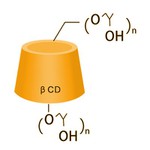

Natural Cyclodextrin
There are three kinds of natural cyclodextrins, α, β and γ cyclodextrins, which are extracted and processed from cassava starch or corn starch, and are widely used in the field of medicine and food development.
Α-cyclodextrin is suitable for high-grade flavor, fragrance, cosmetics and pharmaceutical industry; β-cyclodextrin can be used in food, medicine and cosmetics; γ-cyclodextrins have larger cavities than β-cyclodextrins, can include a wider range of guest molecules, and have better water solubility.
Zhiyuan: Your Trustworthy Natural Cyclodextrin Manufacturer!
Shandong Binzhou Zhiyuan Biotechnology Co., Ltd is a leading direct supplier of cyclodextrin derivatives, cyclodextrin inclusion compounds and cyclodextrin reagents. Established in 2010, our company covers an area of 30,000 square meters, with a construction area of 10,000 square meters. We have our own GMP standard pharmaceutical excipient clean production workshop, a large pharmaceutical storage warehouse, and a quality inspection center. In addition, we have developed procedures for identifying the status of products at each stage and monitoring their raw materials, processes, quality testing, etc. to ensure that these products can be safely used in pharmaceuticals, food, cosmetics, spices, pesticides and other fields.
Rich Product Range
We have more than 70 kinds of cyclodextrins in 5 major series (natural cyclodextrins, cyclodextrin derivatives, cyclodextrin reagents, cyclodextrin complexes, and cyclodextrin polymers), and conduct research and development for different applications of new products.
Well Equipped
Our GMP workshop obtained the pharmaceutical production license in 2013 and passed ISO certification. It is currently equipped with ion chromatography (Ic), capillary electrophoresis (Ce), high-performance liquid chromatography, and Fourier transform infrared spectrometer (Ftir ) and other imported testing equipment.
Quality Assurance
All our products, including hydroxypropyl βdex, β-butanesulfonate sodium and hydroxypropyl γ-cyclodextrin, have been registered by DMF, approved by the US FDA, and have passed many standard certifications such as CP, USP, and EP.
Customizable Services
We have a complete R&D, quality inspection center and professional production team. We can customize the production of cyclodextrin products according to your needs, including their quantity, ingredients, packaging, and support OEM and ODM orders.


Cyclodextrins are a family of cyclic oligosaccharides, consisting of a macrocyclic ring of glucose subunits joined by α-1,4 glycosidic bonds. Cyclodextrins are produced from starch by enzymatic conversion, come from natural sources like corn, potatoes, cassava, and maize starches. They are used in food, pharmaceutical, drug delivery, and chemical industries, as well as agriculture and environmental engineering.
They are composed of 5 or more α-D-glucopyranoside units linked 1->4, as in amylose (a fragment of starch). They are divided into three types.
- α (alpha)-cyclodextrin: 6 glucose subunits
- β (beta)-cyclodextrin: 7 glucose subunits
- γ (gamma)-cyclodextrin: 8 glucose subunits
The largest well-characterized cyclodextrin contains 32 1,4-anhydroglucopyranoside units. Poorly-characterized mixtures, containing at least 150-membered cyclic oligosaccharides are also known.

Highly Inclusive
Our natural cyclodextrins are ideally suited to accommodate larger biomolecules and other guests, and other substances can be absorbed into their molecular cavities, forming molecular capsules that isolate them from environmental influences.
Dissolve Quickly
These cyclodextrins are natural soluble dietary fibers that exhibit high solubility in water, oil or other liquids to produce food, cosmetics, textiles, pharmaceuticals and other products.
Stable Status
They increase the solubility and stability of drugs because they have hydrophobic properties that allow them to penetrate human tissue and release bioactive compounds under specific conditions.
Easy to Store
These natural cyclodextrins can be easily stored in any cool, dry place and do not require refrigeration or temperature control, but they should be kept away from direct sunlight and heat sources.
Application of Natural Cyclodextrin
Food Industry
CDs are used primarily in foods for the encapsulation of compounds of interest and the improvement of water retention, since they are hygroscopic compounds. Their use can enhance several technological advantages, such as more homogeneous compositions that are easier to be standardized. Numerous applications of CDs have been described, e.g., improving the organoleptic quality (total or partial elimination of undesired flavors/odors), increasing food shelf life, component sequestration, and pickering emulsions, among others.
Pharmaceutical Applications
CDs are used for numerous purposes in pharmaceutical applications. In drug formulation, CDs have been described to increase the bioavailability, solubility, stability, reduce hemolysis and adverse effects, prevent admixture incompatibilities and act as excipients, among other uses. Improving the solubility of drugs is interesting, since the compound will have greater therapeutic efficacy, and lower doses will be necessary. Numerous anticancer CDs-based drugs are being clinically evaluated. CDs have been also used to delivery oligosaccharides, proteins, and oligonucleotides due to their capacity to interact with cellular membranes, improving cellular uptake. Another application is the delivery of gene-therapeutic agents, such as plasmids, viral vectors, and antisense constructs.
Cosmetics and Personal Care
CDs are also used is cosmetics. Its application has numerous advantages, such as stabilizing compounds, obtaining odors and flavors of greater acceptability, improving the action of the compound by transforming a liquid constituent to a solid form, reducing vapor pressure, changing the solubility in water, and improving the thermal stability of oils, among others. They are used in the suppression of the volatility of perfumes, air fresheners, and detergents since they allow a controlled release of fragrances from the host–guest complex, producing more doubtful fragrances. They are also used in the formulation of toothpaste, skin creams, fabric softeners (liquid and solid), paper towels, tissues, and underarm shields. Therefore, CDs represent a valid formulation support, since they can improve the performance of the resulting product and solving problems that may arise during its formulation.
Packing and Textile Industry
In recent years, the textile industry has directed its research towards making functional and sustainable fabrics. In this field, the β-CDs can play a fundamental role since it can form complexes with different types of compounds, which makes a new wide variety of textile products and applications with advanced properties, such as antimicrobial or photoprotective. The incorporation of CDs to the textiles may also serve to deliver aromas and capture malodors (sweat, smoke) or increase the ability of fabrics to retain dyes with the consequential benefit of decreasing the amount lost in wastewater. Moreover, they can also be flame-retardants. In medicine, medical tissues containing CDs are used to release chemical compounds (both topically or inside the body) with beneficial properties, such as antibacterial, anti-allergic, antifungal, anti-inflammatory, and protection against insects.
Types of Natural Cyclodextrin


α-Cyclodextrin (alpha-cyclodextrin)
Sometimes abbreviated as α-CD, is a hexasaccharide derived from glucose. It is related to the β- (beta) and γ- (gamma) cyclodextrins, which contain seven and eight glucose units, respectively. All cyclodextrins are white, water-soluble solids with minimal toxicity. Cyclodextrins tend to bind other molecules in their quasi-cylindrical, lipophilic interiors. The compound is of wide interest because it exhibits host–guest properties, forming inclusion compounds. This inclusion (and release) behavior leads to applications in medicine.
In α-cyclodextrin, the six glucose subunits are linked end to end via α-1, 4 linkages. The result has the shape of a tapered cylinder, with six primary alcohols on one face and twelve secondary alcohol groups on the other. The exterior surface of cyclodextrins is somewhat hydrophilic whereas the interior core is hydrophobic. α-Cyclodextrin is marketed for a range of medical, healthcare, and food and beverage applications. For drug delivery, this cyclodextrin confers aqueous solubility to hydrophobic drugs and stability to labile drugs.
β-Cyclodextrin
Sometimes abbreviated as β-CD, is a heptasaccharide derived from glucose. The α- (alpha), β- (beta), and γ- (gamma) cyclodextrins correspond to six, seven, and eight glucose units, respectively. β-Cyclodextrin is the most used natural cyclodextrin in marketed medicines. The reason for this lies in the ease of its production and subsequent low price (more than 10,000 tons produced annually with an average bulk price of approximately 5 USD per kg).
In β-cyclodextrin, the seven glucose subunits are linked end to end via α-1,4 linkages. The result has the shape of a tapered cylinder, with seven primary alcohols on one face and fourteen secondary alcohol groups on the other. The exterior surface of cyclodextrins is somewhat hydrophilic whereas the interior core is hydrophobic. β-Cyclodextrin is widely used in medicine, pharmacy, food industry, textiles. Its molecules can accommodate various biomolecules and hence are also used as a complexing agent.
γ-Cyclodextrin
Sometimes abbreviated asγ-CD, is an octasaccharide derived from glucose. In γ-cyclodextrin, the eight glucose subunits are linked end to end via α-1,4 linkages. The result has the shape of a tapered cylinder, with 8 primary alcohols on one face and 16 secondary alcohol groups on the other. The exterior surface of cyclodextrins is somewhat hydrophilic whereas the interior core is hydrophobic.
γ-Cyclodextrin exists as a white (colorless) powder or crystals. The density of its hydrate crystal (γCD·14H2O) is 1.41 g/cm3. γ-Cyclodextrin is well soluble in water and dimethyl sulfoxide, poorly soluble in methanol. γ-Cyclodextrins has the largest cavity size between natural cyclodextrin, thus, it is well-suited to accommodate larger biomolecules and other guests. For this reason, γ-cyclodextrin is most commonly used as a complexing agent. γ-Cyclodextrin is widely used in medicine, pharmacy, food industry, cosmetics, textiles.
Inclusion Complexes Prepare Methods of Natural Cyclodextrin
The preparation method used to obtain inclusion complexes plays an important role since it affects the performance and morphological characteristics of the product. There are many methods for preparing cyclodextrin-guest complexes, among which the key ones are: co-precipitation method, kneading method, supercritical carbon dioxide method, grinding method, microwave irradiation method and spray drying method.
Total Precipitation
Co-precipitation is suitable for water-insoluble substances, and in this technique for obtaining inclusion complexes, an ethanolic solution containing the guest is added to CD dissolved in water with stirring. The guest can be dissolved in different organic solvents (such as ether or benzene, etc.), and then the solution is cooled, crystallization and precipitation occur. Thereafter, washing the filtrate removes free guest elements from the CD surface. In the same way, precipitation of complexes can be achieved by using antisolvents. Co-precipitation is considered one of the most commonly used methods and stands out for its simplicity and efficiency.
Pinch Method
This (also known as the paste method) is a fairly simple method in which a strictly weighed amount of cyclodextrin is mixed with a small amount of purified water (in a mortar) to obtain a paste. The guest is then incorporated into the paste and mixed well , and then wash the obtained solid with a small amount of solvent. The method is reported to be quite simple, efficient and scalable.
Supercritical Carbon Dioxide Method
We introduce the required amounts of cyclodextrin and guest into the autoclave, which is isothermal and pressurized with carbon dioxide at the specified pressure and temperature. The carbon dioxide then evaporates due to a rapid pressure drop and the clathrate separates. Supercritical fluids are widely used in different commercial processes and research fields. Due to their properties such as low critical point and low toxicity, supercritical fluids are the most widely used solvents for carbon dioxide.
Grinding Method
When a mixture of guests and cyclodextrins is subjected to mechanical energy grinding, the compounds can acquire sufficient strength when trapped between grinding media, resulting in the accumulation of quasi-adiabatic energy, allowing the formation of metastable structures. This grinding process causes the crystals to break, resulting in a reduction in particle size and an increase in the contact area for interaction between the guest and the cyclodextrin. This mechanical method is a simple and commonly used technique in the pharmaceutical industry and does not require different solvents to perform and can therefore be considered a clean and environmentally friendly method.
Microwave Radiation
This is a method of preparing inclusion compounds using a microwave oven. Mix the guest and CD in a minimal ethanol/water mixture and place it in a microwave to finally obtain a powder. To eliminate any guest residue, clean the powder with ethanol. Compared with traditional methods, the biggest advantage of this technology is that there are no residues caused by using large amounts of organic solvents.
Spray Drying
The technology is characterized by three steps: atomization of a liquid feed, drying of fine droplets using a heated air stream, and a final step that separates the dried particles from the air stream. The advantage of this technology is that it is easy to apply at the industrial level. However, as reported, this method is limited to water-dispersed or water-soluble carrier matrix materials and has the advantages of high output, fast drying speed, and suitability for mass production in the food industry.
Certificate Photo


Factory Photo


Frequently Asked Questions of Natural Cyclodextrin
Q: What is a natural source of cyclodextrin?
Q: How is cyclodextrin derived from starch?
Q: What are the properties of natural cyclodextrins?
Q: What are the different types of cyclodextrins?
Q: What is the molecular structure of cyclodextrin?
Q: What are the applications of natural cyclodextrins in the pharmaceutical industry?
Q: How is cyclodextrin used in drug delivery systems?
Q: What is the advantageous property of cyclodextrin inclusion complexes?
Q: How does cyclodextrin improve the solubility of poorly soluble drugs?
Q: What is an example of a cyclodextrin?
Q: Is cyclodextrin a natural or synthetic substance?
Q: What are the safety concerns associated with using cyclodextrin in drug formulations?
Q: What is the role of cyclodextrin in food and flavor industries?
Q: How is cyclodextrin used in the cosmetic industry?
Q: How does cyclodextrin affect the environment?
Q: At what temperature does beta cyclodextrin decompose?
Q: What is the cavity size of cyclodextrin?
Q: Is cyclodextrin soluble in water?
Q: Is cyclodextrin FDA approved?
Q: Is cyclodextrin safe for skin?