


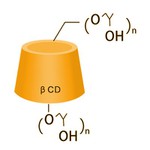

Hydroxypropyl Gamma Cyclodextrin
Hydroxypropyl gamma Cyclodextrin is widely used in medicine, cosmetics, industry fields,etc, with good solubility and stability, and can be used as solvent, stabilizer and encapsulation agent. In pharmaceuticals field, it is possible to increase the solubility, stability, and bioavailability of drugs, thereby improving their absorption and efficacy. In cosmetics field, it can be used as a carrier to help stabilize and deliver Active ingredient, and improve the texture and performance of products.
Zhiyuan: Your Trustworthy Hydroxypropyl Gamma Cyclodextrin Manufacturer!
Shandong Binzhou Zhiyuan Biotechnology Co., Ltd is a leading direct supplier of cyclodextrin derivatives, cyclodextrin inclusion compounds and cyclodextrin reagents. Established in 2010, our company covers an area of 30,000 square meters, with a construction area of 10,000 square meters. We have our own GMP standard pharmaceutical excipient clean production workshop, a large pharmaceutical storage warehouse, and a quality inspection center. In addition, we have developed procedures for identifying the status of products at each stage and monitoring their raw materials, processes, quality testing, etc. to ensure that these products can be safely used in pharmaceuticals, food, cosmetics, spices, pesticides and other fields.
Rich Product Range
We have more than 70 kinds of cyclodextrins in 5 major series (natural cyclodextrins, cyclodextrin derivatives, cyclodextrin reagents, cyclodextrin complexes, and cyclodextrin polymers), and conduct research and development for different applications of new products.
Well Equipped
Our GMP workshop obtained the pharmaceutical production license in 2013 and passed ISO certification. It is currently equipped with ion chromatography (Ic), capillary electrophoresis (Ce), high-performance liquid chromatography, and Fourier transform infrared spectrometer (Ftir ) and other imported testing equipment.
Quality Assurance
All our products, including hydroxypropyl βdex, β-butanesulfonate sodium and hydroxypropyl γ-cyclodextrin, have been registered by DMF, approved by the US FDA, and have passed many standard certifications such as CP, USP, and EP.
Customizable Services
We have a complete R&D, quality inspection center and professional production team. We can customize the production of cyclodextrin products according to your needs, including their quantity, ingredients, packaging, and support OEM and ODM orders.


![Gamma-Cyclodextrin 2-hydroxypropyl Ethers [128446-34-4]](/uploads/202340143/small/gamma-cyclodextrin-2-hydroxypropyl-ethers0c6cc98f-7198-46dd-9745-2554658cc5e9.jpg)
What Is Hydroxypropyl Gamma Cyclodextrin?
Hydroxypropyl-γ-cyclodextrin is a water-soluble, hydrophilic compound that can be used as a complexing agent. It is a modified form of Gamma Cyclodextrin, a cyclic oligosaccharide made up of eight glucose units arranged in a ring shape. HPGCD is modified with hydroxypropyl groups, which makes it soluble in water and increases its ability to form inclusion complexes with various molecules, including drugs and other substances. HPGCD has various applications in the pharmaceutical, food, and cosmetic industries, such as improving the solubility and bioavailability of drugs and enhancing the stability and sensory properties of food and cosmetic formulations. It can also be used to increase the aqueous dissolution rate.
![Gamma-Cyclodextrin 2-hydroxypropyl Ethers [128446-34-4]](/uploads/202340143/gamma-cyclodextrin-2-hydroxypropyl-ethers0c6cc98f-7198-46dd-9745-2554658cc5e9.jpg "Gamma-Cyclodextrin 2-hydroxypropyl Ethers [128446-34-4]")
Soluble
Compared to other types of cyclodextrins, Hydroxypropyl Gamma Cyclodextrin has a larger cavity, which allows it to contain larger-sized guest molecules and is easily soluble in water and other polar solvents.
Stable Status
Our gamma cyclodextrins are stable over a wide range of pH and temperature conditions, aiding in the solubilization of poorly soluble drugs, improving the retention of volatile molecules, and enhancing chemical stability.
Good Compatibility
Hydroxypropyl Gamma Cyclodextrin has excellent biocompatibility and can be used for enantioseparation of different compounds to participate in dyeing and finishing, chromatographic analysis, functional materials and other operations in the food, pesticide, chemical, textile and other industries.
Odor Masking
These gamma cyclodextrins can mask unpleasant odors and flavors by encapsulating them within their cavities, reducing microbial contamination and masking odors in the production of daily cosmetics.
Application of Hydroxypropyl Gamma Cyclodextrin
Complexation Efficiency
Natural γ-cyclodextrin (γ CD) is similar to linear water-soluble dextrins and, unlike natural α- and β-cyclodextrins (α CD and β CD), is digestible by salivary and pancreatic amylase. This gives γ CD a very favorable toxicological profile. However, its use is limited by its relatively low solubilization effect and tendency to form turbid solutions. The addition of 2-hydroxypropyl-γ-cyclodextrin (HP gamma CD) to aqueous γ CD solutions increases the complexation efficiency of γ CD and reduces turbidity. For example, an 80:20 mixture of gamma CD and HP gamma CD was 50% more effective as a solubilizer of dexamethasone and hydrocortisone than would be expected based on the solubilizing effect of the individual cyclodextrins.
Supramolecular Interactions
The hydrophilic molecule 7(diethylamino)-coumarin-3-carboxylic acid (7-DCCA ) of light physics. In the presence of macrocycles, the emission properties of 7-DCCA are greatly modulated, indicating the formation of supramolecular complexes, while the significant changes in its vibrational frequency indicate that the dye is encapsulated in the hydrophobic cavities of the macrocycles. In which, in the presence of macrocyclic compounds, upfield and downfield shifts of protons are observed in the aliphatic and aromatic regions. Time-resolved anisotropy measurements further strengthen the concept of host-guest supramolecular complex formation, since in both cases the rotational relaxation times are significantly increased compared to those in water.
Cell Culture
(2-Hydroxypropyl)-γ-cyclodextrin is a water-soluble alkylated cyclodextrin derivative. It can help improve the solubility of drugs in oral preparations or formulations. (2-Hydroxypropyl)-γ-cyclodextrin is used in solubilization of macromolecules and cell culture applications. (2-Hydroxypropyl)-γ-cyclodextrin has been used to study its inhibitory effect on inflammation induced by complement products and cholesterol crystals (CC) in plasma samples. Although it binds cholesterol with low affinity, it alleviates cholesterol accumulation in NPC1-deficient cells.
Hydroxypropyl Gamma Cyclodextrin
This is the most basic form of hydroxypropyl gamma cyclodextrin which is modified with hydroxypropyl groups on the gamma cyclodextrin molecule. It is soluble in water and has good stability with many drugs. It has been used to study its inhibitory effect on complement products and the inflammation induced by cholesterol crystals (CCs) from plasma samples. It has also been shown to reduce intracellular cholesterol accumulation in NPC patient cells and NPC mice model. It has a slightly larger cavity than gamma cyclodextrin, and can accommodate a larger substrate than betacyclodextrin.
Hydroxypropyl Beta Gamma Cyclodextrin
This is a modified form of hydroxypropyl gamma cyclodextrin which is also modified with hydroxypropyl groups on the beta and gamma cyclodextrin molecule. It has higher solubility and better stability compared to hydroxypropyl gamma cyclodextrin. The U.S. Food and Drug Administration (FDA) lists 2-hydroxypropyl-β-cyclodextrin (HPβCD) and 2-hydroxypropyl-γ-CD (HPγCD) as approved inert materials (excipients). HPβCD is suitable for oral and intravenous administration, while HPγCD can only be used in topical products and in a maximal concentration of 1.5%.
Sulfobutyl Ether Beta Gamma Cyclodextrin
It has the highest solubility and stability among the three types and is used for highly water-soluble drugs and peptides. SEβCD is synthesized by β-Cyclodextrin and 1,4-BS(1,4-Butane Sultone). Due to the low solubility of β-Cyclodextrin, long-term storage may lead to drug precipitation. It's a chemically modified, cyclic, hydrophilic oligosaccharide that's negatively charged in aqueous media. SEβCD is used as an excipient or formulating agent to increase the solubility of poorly soluble agents. It's also used as a solubilizing agent in some intravenous medications. SEβCD has been used in injection, oral, nasal, and eye medication. It has a special affinity for drugs with nitrogen elements.
Selection Method of the Optimal Cyclodextrin for Drug Complexation


The selection of the most suitable cyclodextrin for a certain application can be made by using numerous analytical methods such as spectroscopic methods in solutions (UV spectrophotometry, NMR, fluorescence, ESR), separation techniques (CE, HPLC, TLC), and electroanalytical methods. In case of solid phase samples, IR, Raman, X-ray, and thermal methods are the most commonly used, however, these approaches are not capable of determining the liquid phase (equilibrium) stability constant.
Uv Spectroscopy
It is a relatively straightforward method having low material needs, but it provides very little information about the structure of the complex. In this method, the change in the transitions of the chromophore group signals the formation of a complex. As a result of the formation of an inclusion complex and the chromophore getting into a more apolar environment, the UV absorbance spectrum might become more structured than in an aqueous solution. This interaction might result in either a hyper- or hypochromic and hypso- or bathocromic shift of the absorption spectrum. The two disadvantages of the method are that (a) other UV-active compounds may interfere with the spectrum, (b) the complexation does not necessarily result a characteristic change in the spectrum.
Nmr Spectroscopy
It has several advantages. Presence of a chromophore in the guest molecule is not required and, unlike in CD and UV spectroscopy, it provides information about the structure of the complex and it allows for quantification from the changes in the chemical shifts. This method’s drawback is its low sensitivity and the occasional need for deuterated solvents. If the guest molecule has low solubility, long acquisition times may be needed for achieving adequate signal–noise ratios in the case of 2D NOESY or ROESY techniques, which are necessary in structure analysis. The use of other solvents might be required to ensure the proper concentration of the compound. However, this additional solvent might affect the stability and the structure of the complex. In case of native cyclodextrins—due to their symmetry—the interpretation of the spectra can be simple, but in the case of modified cyclodextrins, the presence of structural isomers (different substitution degree) complicates the structural analysis.
Fluorescence Spectroscopy
It is the quantum yield effect, making it more sensitive and usable in a wider concentration range, compared to other techniques. It has to be noted that the signal intensity, despite being in correlation with the concentration, is not linear. When using modified cyclodextrins containing fluorophore groups, the fluorescence spectrum changes due to interactions with the guest molecule. Commonly, the fluorophore is displaced from the cavity by the guest molecule in a competitive process. Based on this principle, cyclodextrins can be applied as molecular sensors.
Capillary Electrophoresis
It requires small quantities of material, but either the guest molecule or the cyclodextrin must have a charged functional group. Neutral molecules and cyclodextrins cannot be tested directly. If the cyclodextrin is dissolved in the mobile phase, it might function as a chiral selector in case of enantiomer pairs.
Hplc Methods
They are not restricted to charged molecules and apply cyclodextrins two ways: first, the cyclodextrin is covalently bonded to the solid phase; second, the cyclodextrin is dissolved in the mobile phase. When applying covalently bonded cyclodextrins, the separation can be performed using normal (NP) or reverse phase (RP) mode. Testing different cyclodextrins require purchasing a column of each type. This is costly and time-consuming, especially if optimisation of the chromatographic parameters also requires addressing mobile phase composition and temperature parameters.
Circular Dichroism
Alongside the methods mentioned above, circular dichroism can come to mind as a good alternative. Its sensitivity and material needs are on par with UV spectroscopy but it provides more detailed structural information. Upon analysis of CD spectra, the formation of inclusion complexes can be confirmed and the structure of the complex can be assessed using theoretical calculations. Another benefit of this method is that, like UV spectroscopy, it can rapidly provide results, resulting in shorter experiment times. Furthermore, CD spectroscopy is less expensive than NMR or separation techniques.
Certificate Photo


Factory Photo


Frequently Asked Questions of Hydroxypropyl Gamma Cyclodextrin
Q: What is gamma-cyclodextrin used for?
Q: Is cyclodextrin safe for humans?
Q: What are the benefits of cyclodextrin?
Q: What is the function of cyclodextrin?
Q: What is gamma-cyclodextrin made from?
Q: Does cyclodextrin clear arteries?
Q: Can cyclodextrin remove plaque from arteries?
Q: What is another name for cyclodextrin?
Q: Is cyclodextrin a sugar?
Q: How does cyclodextrin treat cholesterol?
Q: Is gamma Cyclodextrin safe?
Q: What are the side effects of beta cyclodextrin?
Q: What is the benefit of cyclodextrin?
Q: Is cyclodextrin found in food?
Q: What is a natural source of cyclodextrin?
Q: Is cyclodextrin safe in food?
Q: What are cyclodextrin tablets used for?
Q: What sre the standards of cyclodextrin?