



Hydroxypropyl Betadex
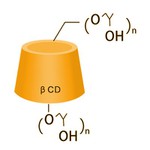
Hydroxypropyl beta Cyclodextrin (HP- β- CD) is a hydroxyalkylated derivative of beta Cyclodextrin(β- CD). Hydroxypropyl beta Cyclodextrin is non-toxic and has no side effects. Due to its special structure, it can greatly improve the solubility of insoluble drugs, making insoluble or insoluble drugs soluble in water. Therefore, it can effectively improve the bioavailability of drugs, greatly improve drug quality and dosage form varieties, and is widely used in the development and production of new drugs.
Zhiyuan: Your Trustworthy Hydroxypropyl Betadex Manufacturer!
Shandong Binzhou Zhiyuan Biotechnology Co., Ltd is a leading direct supplier of cyclodextrin derivatives, cyclodextrin inclusion compounds and cyclodextrin reagents. Established in 2010, our company covers an area of 30,000 square meters, with a construction area of 10,000 square meters. We have our own GMP standard pharmaceutical excipient clean production workshop, a large pharmaceutical storage warehouse, and a quality inspection center. In addition, we have developed procedures for identifying the status of products at each stage and monitoring their raw materials, processes, quality testing, etc. to ensure that these products can be safely used in pharmaceuticals, food, cosmetics, spices, pesticides and other fields.
Rich Product Range
We have more than 70 kinds of cyclodextrins in 5 major series (natural cyclodextrins, cyclodextrin derivatives, cyclodextrin reagents, cyclodextrin complexes, and cyclodextrin polymers), and conduct research and development for different applications of new products.
Well Equipped
Our GMP workshop obtained the pharmaceutical production license in 2013 and passed ISO certification. It is currently equipped with ion chromatography (Ic), capillary electrophoresis (Ce), high-performance liquid chromatography, and Fourier transform infrared spectrometer (Ftir ) and other imported testing equipment.
Quality Assurance
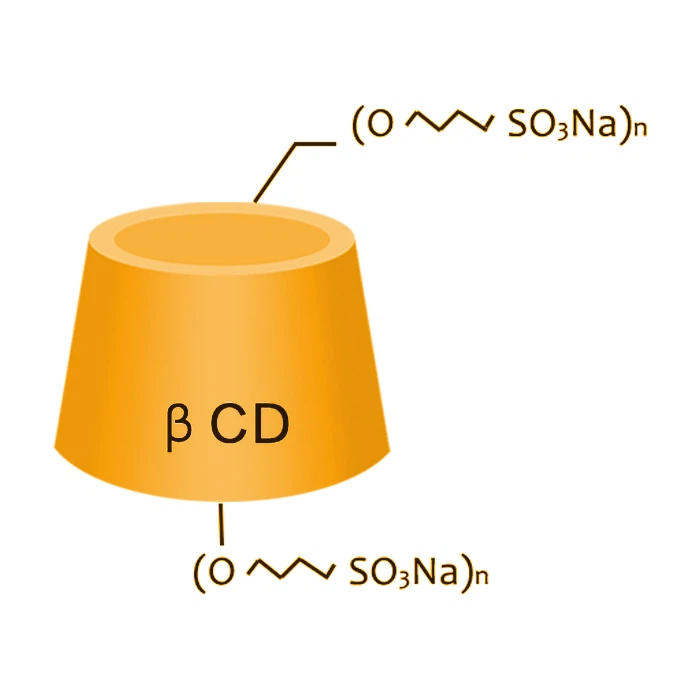
All our products, including hydroxypropyl βdex, β-butanesulfonate sodium and hydroxypropyl γ-cyclodextrin, have been registered by DMF, approved by the US FDA, and have passed many standard certifications such as CP, USP, and EP.
Customizable Services
We have a complete R&D, quality inspection center and professional production team. We can customize the production of cyclodextrin products according to your needs, including their quantity, ingredients, packaging, and support OEM and ODM orders.


What Is Hydroxypropyl Betadex?
Hydroxypropyl beta cyclodextrin (HPβCD) is comprised of seven sugar molecules bound together in a ring (cyclic oligosaccharide). The ring-shaped, three-dimensional structure has a hydrophobic cavity in its center, which is capable of trapping cholesterol and lipids. It is a water-soluble derivative of beta-cyclodextrin, and its structure is formed by the introduction of hydroxypropyl groups onto the beta-cyclodextrin molecule. The hydroxypropyl groups increase the solubility and stability of the molecule, enabling it to form inclusion complexes with lipophilic drugs that can be used for drug delivery. Hydroxypropyl Betadex is used as a drug solubilizer, stabilizer, and enhancer in various pharmaceutical formulations and drug delivery systems.
Quick Prepare
Our hydroxypropyl beta-cyclodextrin with high and low base concentrations are beneficial to O-6 and O-2 substitution products respectively. Formed, the mixture can be quickly refined by preparative chromatography.
Wide Application
Hydroxypropyl betaglucose is used in pharmacy as a solubilizer for oral liquids, oral solid dosages, and parenteral drugs, and as a stabilizer during preparation processing and storage.
High Safety
Hydroxypropyl betaglucans have low drug toxicity, and by increasing their solubility, their bioavailability can be improved and used stably in applications.
Easy to Store
These cyclodextrins can be easily stored within the temperature range of 2-8°C, do not require special storage environments and handling, and maintain a stable state for a long time.
Low Degree of Substitution (Ds<0.5)
The average degree of substitution (DS) is a critical characteristic of the complex mixture, as it influences the ability of HPβCDs to bind. These types of Hydroxypropyl Betadex are used as solubilizers and stabilizers in the pharmaceutical industry. They have a low molecular weight and good water-solubility, which makes them suitable for drug formulations.
High Degree of Substitution (Ds>0.5)
A number of clinical studies are reported in the literature and have shown that HP-β-CD was well tolerated and safe in the majority of patients receiving HP-β-CD at daily oral doses of 4–8 g for at least 2 weeks. And these types of Hydroxypropyl Betadex are used as drug delivery systems, especially for poorly water-soluble drugs. They have a higher molecular weight and are capable of forming inclusion complexes with drugs, which can enhance their solubility and bioavailability.
Different Molecular Weights
Batch specific molecular weights may vary from batch to batch due to the degree of hydration. This will affect the solvent volumes required to prepare stock solutions. Hydroxypropyl Betadex with different molecular weights are used for different applications. For example, low molecular weight Hydroxypropyl Betadex is used in the food industry as a fat replacer, while high molecular weight Hydroxypropyl Betadex is used in the cosmetics industry as a moisturizer and emulsifier.

Which Medicinal Products Contain Cyclodextrins?
Cyclodextrin can form water-soluble inclusion complexes with many lipophilic and poorly soluble compounds. It is a relatively large molecule with a molecular weight between 1000 and 2000. The most abundant natural cyclodextrins are α-cyclodextrin (αCD), β-cyclodextrin (βCD) and γ-cyclodextrin (γCD), which contain six, seven and eight glucopyranose units. Among these three cyclodextrins, βCD appears to be the most useful drug complexing agent because of its complexing ability, low cost, and other properties. The main limitation of cyclodextrin complexes is toxicity, especially at high concentrations.
Because of the diverse types of application of cyclodextrins, several types of medicinal products can contain cyclodextrins. They are used e.g. in tablets, aqueous parenteral solutions, nasal sprays and eye drop solutions. Examples of the use of cyclodextrins in medicines on the European market are βCD in cetirizine tablets and cisapride suppositories, γ-CD in minoxidil solution, and examples of the use of β-cyclodextrin derivatives are SBE-β-CD in the intravenous antimycotic voriconazole, HP-β-CD in the antifungal itraconazole, intravenous and oral solutions, and RM-β-CD in a nasal spray for hormone replacement therapy by 17β-estradiol. In Germany and Japan there are infusion products on the market, containing alprostadil (prostaglandin E1, PGE1) with α-CD.
Cyclodextrins are not included in the European Commission guidelines on labeling and excipients. Although cyclodextrins have very low oral availability, high doses (>200–1000 mg/kg/day) cause reversible diarrhea and cecal swelling in animals. large, may also cause diarrhea in humans.
Depending on the type of compound and the amount and type of cyclodextrin in question, the cyclodextrin may affect the permeability of the compound across membranes and therefore the (other) activity of topical (nasal, rectal, dermal, ocular) administration Bioavailability of substances.
Some cyclodextrins, such as α- and β-CD, can produce nephrotoxic effects in animals at high systemic concentrations. Derivatives of β-CD (e.g., HP-β-CD and SBE-β-CD) or γ-CD were less relevant to exposure. Adverse effects on the kidneys or renal function of animals. In summary, for products with extensive safety information, safety information in the package insert is desirable.
Due to the complex behavior of cyclodextrins, their safety should be clearly stated in the SmPC during specific development and safety assessments.
What You Should Know When Use Hydroxypropyl Betadex?
Description of first aid measures
General information: No special measures required.
After inhalation: Supply fresh air; consult doctor in case of complaints.
After skin contact: Generally the product does not irritate the skin.
After eye contact: Rinse opened eye for several minutes under running water.
After swallowing: If symptoms persist consult doctor.
Information for doctor:
Most important symptoms and effects, both acute and delayed
May cause anemia, cough, CNS depression, drowsiness, headache, heart damage, lassitude(weakness, exhaustion), liver damage, narcosis, reproductive effects, teratogenic effects.
Indication of any immediate medical attention and special treatment needed

Fire-fighting Measures

- Extinguishing media
- Suitable extinguishing agents:
- Use fire fighting measures that suit the environment.
- A solid water stream may be inefficient.
- Special hazards arising from the substance or mixture
- Advice for firefighters
- Protective equipment: No special measures required.
Accidental Release Measures
- Personal precautions, protective equipment and emergency procedures Not required.
- Environmental precautions: Do not allow to enter sewers/ surface or ground water.
- Methods and material for containment and cleaning up: Pick up mechanically.
Certificate Photo


Factory Photo


Frequently Asked Questions of Hydroxypropyl Betadex
Q: What is hydroxypropyl Betadex?
Q: What is hydroxypropyl beta cyclodextrin used for?
Q: What are the medicinal applications of Cyclodextrins?
Q: What is the use of Sulfobutylether beta cyclodextrin?
Q: What is 2 hydroxypropyl β cyclodextrin Hbcd used for?
Q: What is the application of cyclodextrin in pharmaceutical industry?
Q: What is the use of beta cyclodextrin in pharmaceuticals?
Q: What are the benefits of beta cyclodextrin?
Q: What is beta cyclodextrin used for in the food industry?
Q: Is hydroxypropyl Betadex toxic?
Q: Is hydroxypropyl beta cyclodextrin safe?
Q: Is 2 hydroxypropyl β cyclodextrin safe for humans?
Q: What is the mechanism of action of hydroxypropyl beta cyclodextrin?
Q: What is Betadex sulfobutyl ether sodium used for?
Q: What is hydroxypropyl β cyclodextrin complex?
Q: What does hydroxypropyl do to the body?
Q: What is hydroxypropyl β cyclodextrin HBCD?
Q: Is hydroxypropyl cyclodextrin safe for skin?
Q: What are the side effects of beta cyclodextrin?
Q: What is the solubility of hydroxypropyl beta cyclodextrin?