


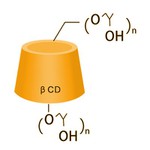

Methyl Beta Cyclodextrin
In medicine, Methyl beta cyclodextrin can improve the solubility and bioavailability of drugs, increase the curative effect of the drug or reduce the dosage, adjust or control the release rate of the drug, reduce the side effects of the drug, and enhance the stability of the drug.
Methyl beta cyclodextrin increases the solubility of non-polar substances such as fatty acids, vitamins and cholesterol.
In the field of daily chemicals and cosmetics, methyl beta-cyclodextrin is used to stabilize active ingredients and play a slow-release effect, increase the solubility of water-based ingredients, reduce microbial contamination, keep skin moist, mask bad odors, promote transdermal absorption of active ingredients, and reduce skin irritation.
Zhiyuan: Your Trustworthy Methyl Beta Cyclodextrin Manufacturer!
Shandong Binzhou Zhiyuan Biotechnology Co., Ltd is a leading direct supplier of cyclodextrin derivatives, cyclodextrin inclusion compounds and cyclodextrin reagents. Established in 2010, our company covers an area of 30,000 square meters, with a construction area of 10,000 square meters. We have our own GMP standard pharmaceutical excipient clean production workshop, a large pharmaceutical storage warehouse, and a quality inspection center. In addition, we have developed procedures for identifying the status of products at each stage and monitoring their raw materials, processes, quality testing, etc. to ensure that these products can be safely used in pharmaceuticals, food, cosmetics, spices, pesticides and other fields.
Rich Product Range
We have more than 70 kinds of cyclodextrins in 5 major series (natural cyclodextrins, cyclodextrin derivatives, cyclodextrin reagents, cyclodextrin complexes, and cyclodextrin polymers), and conduct research and development for different applications of new products.
Well Equipped
Our GMP workshop obtained the pharmaceutical production license in 2013 and passed ISO certification. It is currently equipped with ion chromatography (Ic), capillary electrophoresis (Ce), high-performance liquid chromatography, and Fourier transform infrared spectrometer (Ftir ) and other imported testing equipment.
Quality Assurance
All our products, including hydroxypropyl βdex, β-butanesulfonate sodium and hydroxypropyl γ-cyclodextrin, have been registered by DMF, approved by the US FDA, and have passed many standard certifications such as CP, USP, and EP.
Customizable Services
We have a complete R&D, quality inspection center and professional production team. We can customize the production of cyclodextrin products according to your needs, including their quantity, ingredients, packaging, and support OEM and ODM orders.


What Is Methyl Beta Cyclodextrin?
Methyl-β-cyclodextrin (MβCD) is a cyclic heptasaccharide that can solubilize non-polar substances. It is used to deliver hydrophobic agents and as a cholesterol-depleting reagent. MβCD increases the solubility of non-polar substances like lipids, fatty acids, vitamins, and cholesterol for use in cell culture applications. It is soluble in water and has more affinity to cholesterol due to the presence of hydrophobic core. It is also used to increase the permeability of cells, which increases the uptake of small molecules like glucose and nano-particles. It has also been reported to depolymerize the actin cytoskeleton in cells.
Multipurpose
Our methyl-beta-cyclodextrin (methyl-beta-cyclodextrin) is used to deliver hydrophobic agents, cholesterol-depleting reagents, etc., which can reduce clathrin-dependent endocytosis Act and block the formation of cell migration bodies.
Stable Properties
Methyl-β-cyclodextrin has a hydrophilic outer surface and a lipophilic central cavity, and the molecule is relatively large with many hydrogen donors and acceptors, to provide higher water solubility as well as bioavailability and stability.
Efficient Working
Our methyl-beta-cyclodextrin meets pharmaceutical grade standards and can significantly inhibit viral growth and invasion, improving drug delivery for almost any type of pharmaceutical formulation, without significant side effects.
Rich Specifications
These cyclodextrins are packed in PE bags and put into aluminum foil bags. We provide packaging specifications of 100g/bag, 1kg/bag, 2kg/bag, 10kg/bag/barrel, 20kg/bag/barrel and other specifications according to customer requirements, and support OEM Order.
Application of Methyl Beta Cyclodextrin
Inhibit Virus Production
VSV envelope is enriched in cholesterol and sphingomyelin, and lipid rafts play a significant role in the life cycle of VSV. Depletion of cholesterol of BHK cells by the treatment of methyl-β-cyclodextrin reduced virus production. Interestingly, the reverse effects were observed by replenishing cholesterol. This clearly indicates the direct involvement of cholesterol during VSV infection. Moreover, the treatment of myriocin to inhibit the sphingomyelin exhibited a minor effect on VSV production. However, treatment by both methyl-β-cyclodextrin and myriocin at the same time, destroy the stability of the cholesterol–sphingomyelin interaction in membranes and disturbed the integrity of the lipid raft structure, therefore, intensely inhibited virus production.
Improve Delivery Efficiency
The tacrolimus (FK506) used anticancer agent, but presents severe side-effects. To minimize these effects a new formulation method has been developed by complexation (FK506) with a hydrophilic cyclodextrin derivative, heptakis (2,6-di-O-methyl)-β-cyclodextrin (DM-β-CD). The complex enhanced solubility of FK506, then bovine serum albumin (BSA) nanoparticles were prepared; these results suggest that the drug/DM-β-CD inclusion complex-loaded BSA nanoparticles display significantly improved delivery efficiency for poorly soluble FK506 or its derivatives.
Metabolic Signal Transduction
Caveolae are a subset of membrane microdomains and are particularly abundant in adipocytes, where they play a critical role in insulin metabolic signal transduction. We disrupt microdomains by cholesterol extraction with methyl-β-cyclodextrin progressively inhibits tyrosine phosphorylation of IRS-1 and insulin-induced glucose transport activation.
Methyl Beta Cyclodextrin Powder
Methyl-β-cyclodextrin is a white to light red powder or crystal that is soluble in water. It is also used as an excipient to enhance the efficacy of medical, culinary, and cosmetic products. According to the European Medicines Agency, harmful effects of cyclodextrins are not expected at doses below 20 mg/kg/day. However, oral doses of 200 mg/kg/day may cause digestive problems. Beta-cyclodextrin is well tolerated when consumed orally because it is not absorbed in the gastrointestinal tract. However, there is not enough data to determine if it is safe for pregnant or breastfeeding women, or for children.
Methyl Beta Cyclodextrin Solution
This is a liquid solution that has been used as versatile tools in molecular assemblies, enhancement of solubility and organic synthesis. It is typically prepared by dissolving MBCD powder in water or another suitable solvent. It is soluble at 50 mg/ml in 1 M NaOH and 150 mg/ml in water. Aqueous solutions can be obtained by stirring for 30 minutes at room temperature. Methyl-β-cyclodextrin is soluble in organic solvents such as ethanol, DMSO, and dimethyl formamide, which should be purged with an inert gas.

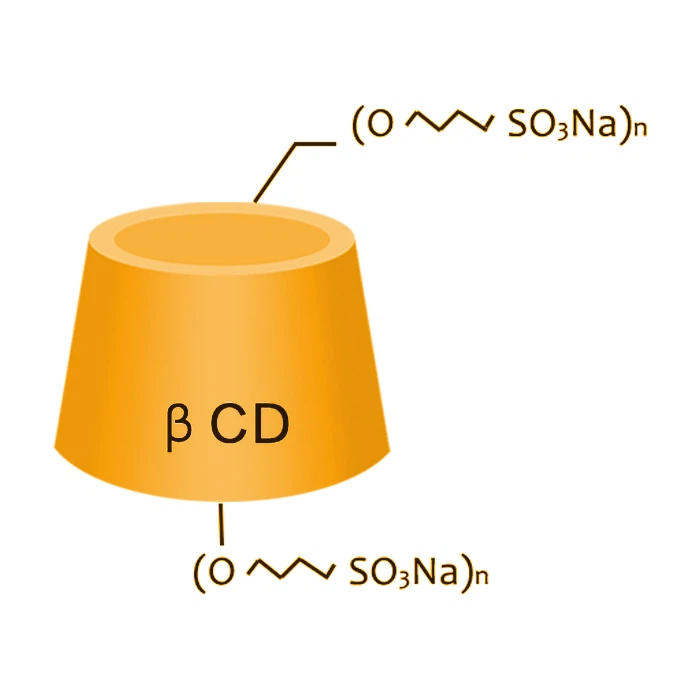
α-,β-or γ-CD is a cyclic oligosaccharide with 6, 7 or 8 glucose units connected by α-1,4- bonds. They have the shape of a truncated cone, hydrophobic cavities generated by methylene and oxygen groups and due to the existence of hydroxyl groups. These latter groups can be derivatized, so a variety of charged or uncharged derivatives can be used.
Inclusion complexation of lipophilic functional groups of analytes entering CD cavity from a wider or narrower side is the most common interaction with CD. In RPLC separation using aqueous or water-organic mobile phase, hydrophobic interaction controls inclusion complexation. When the hydrophobic part of the guest molecule penetrates the CD cavity, water molecules are released from the cavity. The complex is further stabilized by van der Waals interaction in the cavity and hydrogen bonding and dipole-dipole interaction at the outer edge of the dot. For charged cyclodextrin, ion interaction, when cyclodextrin derivatives contain aromatic parts, π-π interaction may also be involved. Generally speaking, the size of the compound is important for the inclusion mechanism, because it should match the cavity. Generally, substituted phenyl, naphthyl and heteroaromatic rings, preferably near the stereocenter, can be contained in the β-CD cavity.
Larger analytes (such as steroids) preferentially interact with γ-CD, while smaller analytes are contained in the α-CD cavity. When CD-based CSP is used in PO mode or NP mode, the inner cavity is blocked by solvent molecules, which prevents inclusion. In these modes, analytes with hydrophilic groups interact with the polar edge of CD. Compounds with multiple polar functional groups, one of which is located at or near the chiral center, are likely to be separated in PO mode. Large groups near the chiral center are further helpful for enantiomeric recognition. When the elution intensity of PO mode is too high, normal phase LC (NPLC) separation is very useful for less polar compounds.
How Methyl Beta Cyclodextrin Benefits the Cosmetics?


Increase Solubility
Low water solubility and low dissolution rate of active ingredients are key factors limiting their application, affecting the development of dermatological pharmaceutical and cosmetic formulations. Although various techniques such as iontophoresis and electroporation can be used to increase the apparent solubility of active ingredients and improve their bioavailability, these techniques show some disadvantages such as low loading capacity and the need for high doses of active ingredients, and therefore are used to develop new alternatives. In this context, CDs have emerged as exceptional alternatives for dermal delivery of active ingredients. This is achieved by changing the partition coefficient, contributing to a corresponding increase in apparent solubility and thus improving the permeability of the active ingredient.
Reduce Skin Irritation
In fact, rather than interfering with SC components and interacting directly, CD affects dissolution and forms a barrier between the active ingredients and the skin, reducing skin irritation and thus leading to an increase in the concentration of active ingredients in the SC in the skin layer. One example is the flavonoid silymarin, which is extracted from the seeds of milk thistle (Silybum marianum). Due to the low solubility and bioavailability of silymarin, complexation with cyclodextrins may improve the properties of silymarin, thus enhancing its therapeutic applications. Silymarin-Sulfobutyl Ether-β-CD (SBE-β-CD) inclusion complex is particularly useful for reducing facial redness in rosacea skin, preventing skin aging, increasing collagen production and reducing oxidative stress on skin cells.
Maintain Stable State
Likewise, we have examples of ultraviolet (UV) filters (such as ethylhexyl methoxycinnamate). The complexation of UV filters with CD is mainly used to overcome photostability issues and avoid their penetration into the skin. The use of CD can improve the stability and shelf life of several active ingredients, making these carriers very convenient and versatile for the development of skin formulations. These compounds are highly sensitive to light and oxidation and, if not protected, are likely to form paracymenes, which can cause skin irritation. β-CD has been used to complex these molecules, thus retaining the properties of the essential oil. Another reported oil is snakehead seed oil, which is composed of oleic acid, palmitic acid, linoleic acid, and stearic acid. These compounds are often used in massage and are beneficial for muscle pain, paralysis, and joint stiffness caused by arthritis.
Anti-oxidation
Although frequently used topically, the oil can oxidize during storage and processing, affecting its quality, stability and safety. 2-Hydroxypropyl-β-CD (HP-β-CD) is used to complex oils and improve their stability by providing antioxidant protection. Tretinoin is an active ingredient used in the treatment of psoriasis, acne vulgaris, and dermatitis Tumors, as well as signs of skin aging, namely small wrinkles and dark spots, are less photostable and prone to degradation when exposed to UV and visible radiation. In fact, when applied topically to the skin and exposed to light, tretinoin degrades approximately 40.0% after 4 hours. The instability of tretinoin can be significantly reduced by including it within the cavities of β-CD.
Reduce Evaporation Rate
Inclusion complexes of volatile organic compounds exhibit higher stability and lower evaporation rates, thereby improving their sensory properties. Fragrance compounds are commonly added to personal care products such as perfume and deodorant; however, some of these compounds can be toxic and non-biodegradable. Furthermore, most aromatic compounds have poor water solubility and require the presence of surfactants to enhance their physicochemical properties. However, surfactants can limit their fragrance effectiveness and cause formulation problems such as cloudiness (undesirable in clear formulations), photosensitization, and skin irritation. Therefore, the host-guest inclusion complex formed between aromatic compounds and cyclodextrin can reduce their evaporation, thereby producing a long-lasting fragrance effect without worrying about toxicological issues.
Certificate Photo


Factory Photo


Frequently Asked Questions of Methyl Beta Cyclodextrin
Q: What is a cyclodextrin?
Q: What is methyl beta cyclodextrin used for?
Q: What does methyl B cyclodextrin do to cell membranes?
Q: Is beta cyclodextrin safe?
Q: What are the benefits of B cyclodextrin?
Q: Is cyclodextrin safe for humans?
Q: What are the health benefits of cyclodextrin?
Q: Is beta cyclodextrin natural?
Q: Is cyclodextrin natural?
Q: What is cyclodextrin made from?
Q: Is cyclodextrin found in food?
Q: What cleans arteries quickly?
Q: Do cyclodextrins remove cholesterol?
How much beta cyclodextrin should I take?
5 mg per kilogram. α-CD and γ-CD can be taken without restrictions while the oral intake of β-CD should be limited to a maximum of 5 mg per kilogram of weight each day.
Q: Can cyclodextrin remove plaque from arteries?