

How does Methyl - β - cyclodextrin (beta - MCD) affect the solubility of vitamins?
As a supplier of Methyl-β-cyclodextrin (beta - MCD), I am often asked about the impact of this remarkable compound on the solubility of vitamins. In this blog post, I will delve into the scientific aspects of how Methyl-β-cyclodextrin interacts with vitamins to enhance their solubility, and why this is crucial in various industries.
Understanding Methyl - β - cyclodextrin (beta - MCD)
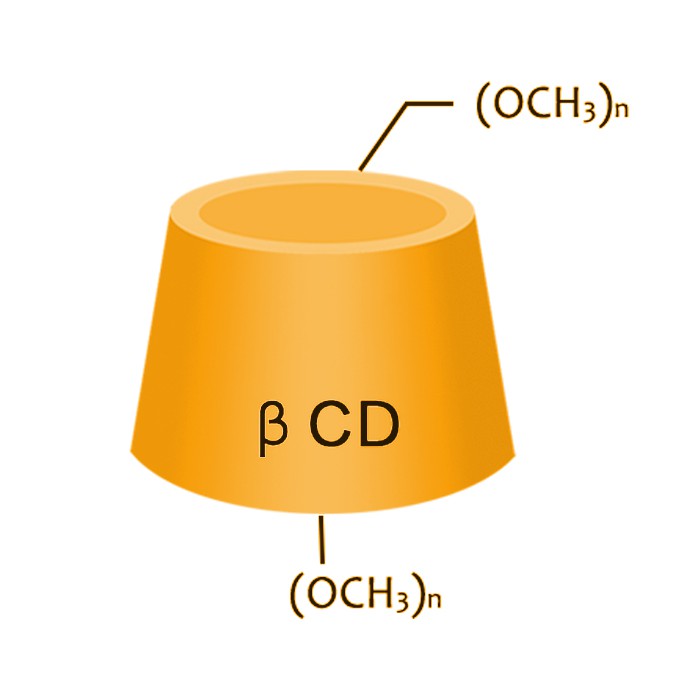
Methyl-β-cyclodextrin is a modified form of β - cyclodextrin, a cyclic oligosaccharide composed of seven glucose units linked by α - 1,4 - glycosidic bonds. The methyl groups are introduced to the hydroxyl groups of β - cyclodextrin, which significantly alters its physical and chemical properties. Methyl-β-cyclodextrin (beta - MCD) has a unique truncated cone - shaped structure with a hydrophilic outer surface and a hydrophobic cavity in the interior. This structure allows it to form inclusion complexes with a wide range of guest molecules, including vitamins.
Solubility Challenges of Vitamins
Vitamins are essential nutrients required for various physiological functions in the human body. However, many vitamins, especially fat - soluble vitamins such as vitamins A, D, E, and K, have poor solubility in water. This limited solubility poses challenges in the formulation of vitamin - containing products, such as dietary supplements, pharmaceuticals, and functional foods. Poor solubility can lead to low bioavailability, meaning that the body may not be able to absorb and utilize the vitamins effectively. Additionally, it can cause issues in product stability, homogeneity, and manufacturing processes.
Mechanism of Solubility Enhancement by Methyl - β - cyclodextrin
The hydrophobic cavity of Methyl-β-cyclodextrin provides a suitable environment for the encapsulation of hydrophobic vitamin molecules. When a vitamin molecule enters the cavity of Methyl-β-cyclodextrin, an inclusion complex is formed through non - covalent interactions, such as van der Waals forces, hydrogen bonding, and hydrophobic interactions.
This complex formation has several effects on the solubility of vitamins. Firstly, it effectively shields the hydrophobic part of the vitamin from the aqueous environment. The hydrophilic outer surface of Methyl-β-cyclodextrin makes the entire complex more soluble in water. As a result, the solubility of the vitamin in an aqueous medium is significantly increased.
Secondly, the formation of inclusion complexes can improve the stability of vitamins. Vitamins are often sensitive to factors such as light, heat, oxygen, and pH. The encapsulation of vitamins within the cyclodextrin cavity can protect them from these external factors, reducing degradation and increasing their shelf - life.
Examples of Vitamins and Their Solubility Improvement
Vitamin A
Vitamin A is a fat - soluble vitamin that plays a crucial role in vision, immune function, and cell growth. Its poor water solubility makes it difficult to incorporate into aqueous - based products. When Methyl-β-cyclodextrin forms an inclusion complex with vitamin A, the solubility of vitamin A in water can be increased several - fold. This allows for the development of vitamin A - fortified beverages, topical creams, and other water - based formulations.
Vitamin D
Vitamin D is essential for calcium absorption and bone health. Similar to vitamin A, vitamin D has low water solubility. By using 2, 6 - Di - O - Methyl - Beta - Cyclodextrin, which is a type of Methyl-β-cyclodextrin, the solubility of vitamin D can be enhanced. This is particularly important for the production of vitamin D supplements in liquid form, which are more convenient for consumption, especially for children and the elderly.
Vitamin E
Vitamin E is a powerful antioxidant that protects cells from oxidative damage. Its hydrophobic nature limits its application in water - based systems. Methyl-β-cyclodextrin can form inclusion complexes with vitamin E, improving its solubility and enabling its use in a wider range of products, such as emulsions, lipsticks, and hair care products.
Applications in Different Industries
Pharmaceutical Industry
In the pharmaceutical industry, improving the solubility of vitamins is crucial for the development of effective dosage forms. Methyl-β-cyclodextrin can be used to formulate vitamin - based drugs with enhanced bioavailability. For example, oral tablets or capsules containing vitamin - cyclodextrin complexes can ensure better absorption in the gastrointestinal tract, leading to improved therapeutic outcomes.

Food and Beverage Industry
The food and beverage industry is constantly looking for ways to fortify products with vitamins. The solubility enhancement provided by Methyl-β-cyclodextrin allows for the incorporation of vitamins into various food and beverage products, such as juices, dairy products, and functional snacks. This not only increases the nutritional value of the products but also improves their stability and sensory properties.
Cosmetics Industry
In the cosmetics industry, vitamins are often used for their antioxidant, anti - aging, and skin - nourishing properties. However, the poor solubility of many vitamins can limit their effectiveness in cosmetic formulations. Methyl-β-cyclodextrin can be used to solubilize vitamins in cosmetic products, such as creams, lotions, and serums, ensuring better penetration and delivery of vitamins to the skin.
Quality and Purity of Methyl - β - cyclodextrin
As a supplier, we understand the importance of providing high - quality CAS No 128446 - 36 - 6 Methyl cyclodextrin. Our Methyl-β-cyclodextrin is produced using advanced manufacturing processes to ensure high purity and consistent quality. We conduct rigorous quality control tests to meet the strict requirements of different industries. The purity of our product is crucial for its performance in enhancing the solubility of vitamins, as impurities can affect the formation of inclusion complexes and the overall stability of the vitamin - cyclodextrin system.
Conclusion
Methyl - β - cyclodextrin is a powerful tool for enhancing the solubility of vitamins. Its unique structure and ability to form inclusion complexes with vitamins offer significant advantages in terms of solubility improvement, stability enhancement, and bioavailability increase. This has far - reaching implications in various industries, including pharmaceuticals, food and beverage, and cosmetics.
If you are interested in exploring the potential of Methyl - β - cyclodextrin for your vitamin - related products, we invite you to contact us for further discussions and procurement. We are committed to providing you with the best quality Methyl - β - cyclodextrin and excellent technical support.
References
- Loftsson, T., & Brewster, M. E. (1996). Pharmaceutical applications of cyclodextrins. 1. Drug solubilization and stabilization. Journal of pharmaceutical sciences, 85(10), 1017 - 1025.
- Szente, L., & Szejtli, J. (2004). The use of cyclodextrins in cosmetics. Cosmetics & Toiletries, 119(11), 57 - 62.
- Pitha, J., & Pitha, R. (1986). Solubilization of drugs with cyclodextrins. II. Complexation of steroids with methylated beta - cyclodextrins. International Journal of Pharmaceutics, 29(1), 73 - 82.


