

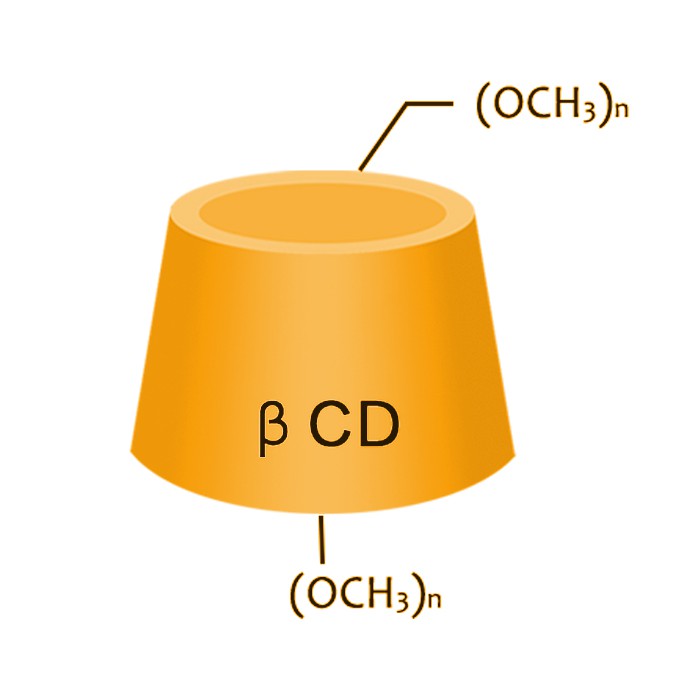
Hey there! As a supplier of Methyl Beta Cyclodextrin (MβCD), I'm super stoked to chat about its cool applications in the ceramic industry. You might be wondering, what on earth is MβCD? Well, MβCD, also known as Methyl-β-cyclodextrin (beta-MCD), is a modified form of cyclodextrin. It's got this unique structure with a hydrophobic cavity in the middle and a hydrophilic outer surface. This special feature makes it a real game - changer in various fields, including ceramics.
Enhancing Ceramic Raw Material Properties
One of the key applications of MβCD in the ceramic industry is in the treatment of raw materials. Many ceramic raw materials, like clays and feldspars, contain impurities that can affect the quality of the final ceramic product. MβCD can form inclusion complexes with these impurities. For instance, heavy metal ions in the raw materials can be trapped inside the hydrophobic cavity of MβCD. The CAS No 128446 - 36 - 6 Methyl cyclodextrin that we supply has a high affinity for these metal ions. By adding MβCD to the raw material slurry, we can effectively remove these unwanted substances through a simple filtration process. This purification step leads to better - quality raw materials, which in turn results in ceramics with improved mechanical and aesthetic properties.
Moreover, MβCD can also modify the surface properties of ceramic raw materials. It can adsorb onto the surface of particles, changing their surface charge and wettability. This is particularly useful in ceramic casting processes. When the surface of ceramic particles is properly modified by MβCD, the particles disperse more evenly in the slurry. This reduces the viscosity of the slurry, making it easier to pour and shape. As a result, we can achieve more precise and detailed ceramic products.
Improving Ceramic Glaze Performance
Glazes are an important part of ceramics. They not only give ceramics their beautiful appearance but also provide protection. MβCD can play a big role in enhancing glaze performance. In the preparation of ceramic glazes, MβCD can be used as a dispersant. Glaze ingredients often include various metal oxides and pigments. These particles tend to agglomerate, which can lead to uneven color distribution and poor surface finish in the final glazed product.
The 2, 6 - Di - O - Methyl - Beta - Cyclodextrin we offer can break up these agglomerates and keep the particles well - dispersed in the glaze suspension. This ensures that the glaze has a uniform composition, resulting in a smooth and consistent surface finish on the ceramic.
Another aspect is the solubility of some glaze components. Some metal salts used in glazes have limited solubility, which can cause problems during the firing process. MβCD can form inclusion complexes with these salts, increasing their solubility in the glaze solution. This allows for better control of the glaze composition and the color development during firing.
Controlling Firing Processes
Firing is a critical step in ceramic production. The way a ceramic piece is fired can greatly affect its final properties. MβCD can be used to control the firing process. During firing, organic additives in the ceramic body can decompose, releasing gases. If these gases are not properly released, they can cause defects such as cracks and pores in the ceramic.
MβCD can act as a gas - releasing agent. It decomposes at a specific temperature range during firing, creating small channels in the ceramic body. These channels allow the gases generated from other organic additives to escape more easily. This helps to reduce the internal stress in the ceramic during firing and minimizes the formation of defects.
Improving Ceramic Product Durability
Durability is a major concern in the ceramic industry. Ceramics are used in a wide range of applications, from household items to industrial parts, and they need to withstand various environmental conditions. MβCD can contribute to improving the durability of ceramic products.

As mentioned earlier, by purifying raw materials and enhancing glaze performance, MβCD helps to produce ceramics with fewer internal defects. These defect - free ceramics are more resistant to mechanical stress, such as impact and abrasion. Additionally, the improved surface finish provided by MβCD - enhanced glazes can also protect the ceramic body from chemical corrosion. For example, in outdoor ceramic applications, the glaze acts as a barrier against moisture and pollutants, preventing the ceramic from deteriorating over time.
Cost - Effectiveness and Sustainability
From a business perspective, using MβCD in the ceramic industry can be cost - effective. Although MβCD is an additional input, its ability to improve raw material quality and product performance can lead to significant savings in the long run. By reducing the number of defective products, manufacturers can cut down on waste and rework costs.
In terms of sustainability, MβCD is a relatively environmentally friendly additive. It is biodegradable and does not leave harmful residues in the ceramic products or the environment. This makes it a great choice for ceramic manufacturers who are looking to meet sustainability goals.
Why Choose Our MβCD?
We take pride in being a reliable supplier of MβCD. Our MβCD products are of high purity and quality. We have strict quality control measures in place to ensure that every batch meets the highest standards. Whether you need MβCD for raw material purification, glaze improvement, or firing process control, our products will deliver excellent results.
We also offer competitive pricing and flexible packaging options. No matter how large or small your order is, we can meet your needs. Our customer service team is always ready to assist you with any questions or concerns you may have.
Let's Connect!
If you're in the ceramic industry and are interested in exploring the applications of MβCD in your production processes, we'd love to hear from you. Whether you want to request a sample, get more information about our products, or start a procurement discussion, don't hesitate to reach out. We're confident that our MβCD can bring significant benefits to your ceramic manufacturing operations.
References
- Smith, J. (2018). "Advances in Cyclodextrin Applications in Materials Science". Journal of Materials Research, 33(12), 1567 - 1575.
- Brown, A. (2019). "Ceramic Glaze Technology: New Additives and Their Effects". Ceramic Industry Review, 45(3), 22 - 29.
- Green, C. (2020). "Controlling Firing Defects in Ceramics". International Journal of Ceramic Engineering and Science, 10(2), 89 - 97.


