

γ - cyclodextrin (γ - CDE) is a cyclic oligosaccharide composed of eight glucose units linked by α - 1,4 - glycosidic bonds. It has a unique toroidal molecular structure with a hydrophobic cavity and a hydrophilic outer surface, which gives it the ability to form inclusion complexes with a variety of guest molecules. In recent years, the leather industry has been exploring the potential applications of γ - CDE due to its remarkable properties. As a reliable γ - cyclodextrin (γ - CD) supplier, we are excited to share with you the diverse applications of γ - CDE in the leather industry.
1. Leather Tanning Process
The tanning process is a crucial step in leather production, which aims to convert raw hides into stable and durable leather. γ - CDE can play a significant role in this process. Firstly, it can form inclusion complexes with tanning agents. Tanning agents such as chromium salts are commonly used in the leather industry, but they may have environmental and health concerns. By forming inclusion complexes with γ - CDE, the release of these tanning agents can be controlled, reducing their potential environmental impact.

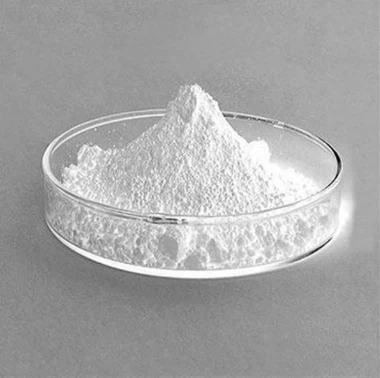
Moreover, γ - CDE can improve the penetration of tanning agents into the leather matrix. The hydrophobic cavity of γ - CDE can encapsulate the tanning agents, and then facilitate their transportation through the leather fibers. This leads to a more uniform distribution of tanning agents in the leather, resulting in better tanning quality and enhanced leather properties such as strength and durability.
2. Leather Dyeing and Finishing
In the leather dyeing process, γ - CDE can act as a dye carrier. Many dyes have poor solubility and affinity for leather fibers, which may lead to uneven dyeing and low color fastness. γ - CDE can form inclusion complexes with dyes, increasing their solubility in the dyeing bath. This allows the dyes to be more easily adsorbed onto the leather fibers, resulting in more uniform and intense coloration.
For example, when using disperse dyes for leather dyeing, γ - CDE can improve the dispersion stability of the dyes and prevent their aggregation. The inclusion complexes formed between γ - CDE and dyes can also enhance the interaction between the dyes and the leather fibers, improving the color fastness of the dyed leather.
In leather finishing, γ - CDE can be used as an additive in finishing agents. It can form a thin film on the leather surface, which not only provides a smooth and shiny appearance but also improves the water - resistance and abrasion - resistance of the leather. Additionally, γ - CDE can encapsulate some functional additives such as antioxidants and UV absorbers, protecting the leather from oxidation and UV damage during use.
3. Leather Odor Control
Leather products may emit unpleasant odors during the production process or storage, which can affect their quality and marketability. γ - CDE can effectively adsorb and remove these odorous substances. The hydrophobic cavity of γ - CDE can selectively encapsulate volatile organic compounds (VOCs) and other odor - causing molecules.
For instance, in the leather tanning and processing, some chemicals and by - products may produce pungent odors. γ - CDE can capture these odor molecules through inclusion complexation, reducing the odor intensity of the leather. This is particularly important for high - end leather products, where a pleasant odor is an important quality indicator.
4. Leather Preservation
During the storage and transportation of leather products, they are prone to microbial attack, which can cause mildew, rot, and deterioration. γ - CDE can be used in leather preservation to inhibit the growth of microorganisms. It can form inclusion complexes with some natural antimicrobial agents, such as essential oils.
The inclusion complexes can slowly release the antimicrobial agents, providing a long - term antimicrobial effect on the leather surface. This helps to maintain the quality and appearance of leather products during storage and transportation, reducing the economic losses caused by microbial damage.
5. Comparison with Other Cyclodextrins
In addition to γ - cyclodextrin (γ - CD), there are also other types of cyclodextrins such as Alpha Cyclodextrin (α - CD) and α - cyclodextrin CAS10016 - 20 - 3. Each type of cyclodextrin has its own unique cavity size and properties.
Alpha cyclodextrin has a relatively small cavity size, which limits its ability to encapsulate larger guest molecules. In contrast, γ - CDE has a larger cavity, which allows it to form inclusion complexes with a wider range of molecules, making it more suitable for applications in the leather industry where various chemicals and additives are involved.
Why Choose Our γ - CDE?
As a professional γ - cyclodextrin (γ - CD) supplier, we are committed to providing high - quality γ - CDE products. Our γ - CDE is produced through advanced manufacturing processes, ensuring its purity and stability. We also offer customized solutions according to the specific needs of our customers in the leather industry.
Our technical support team has rich experience in the application of γ - CDE in the leather industry. We can provide professional advice and guidance on the use of γ - CDE in different leather production processes, helping our customers to achieve better product quality and economic benefits.
Contact Us for Procurement
If you are interested in using γ - CDE in your leather production, we invite you to contact us for procurement discussions. Our sales team is ready to provide you with detailed product information, pricing, and delivery options. By choosing our γ - CDE, you can enhance the quality of your leather products and gain a competitive edge in the market.
References
- Szejtli, J. (1988). Introduction and general overview of cyclodextrin chemistry. Chemical Reviews, 88(4), 1413 - 1426.
- Loftsson, T., & Duchêne, D. (2007). Cyclodextrins and their pharmaceutical applications. International Journal of Pharmaceutics, 329(1 - 2), 1 - 11.
- Zhang, X., & Ma, J. (2015). Application of cyclodextrins in leather industry. Leather Science and Engineering, 25(3), 45 - 49.


