

Sulfobutyl Ether - β - cyclodextrin (SBE - β - CD) has emerged as a crucial excipient in the pharmaceutical industry, known for its unique properties and wide - ranging applications. As a reliable supplier of Sulfobutyl Ether - β - cyclodextrin, we understand the importance of understanding its physical properties, including the density of its solutions. In this post, we will explore in detail what factors influence the density of Sulfobutyl Ether - β - cyclodextrin solutions and why this property matters.
Understanding Sulfobutyl Ether - β - cyclodextrin
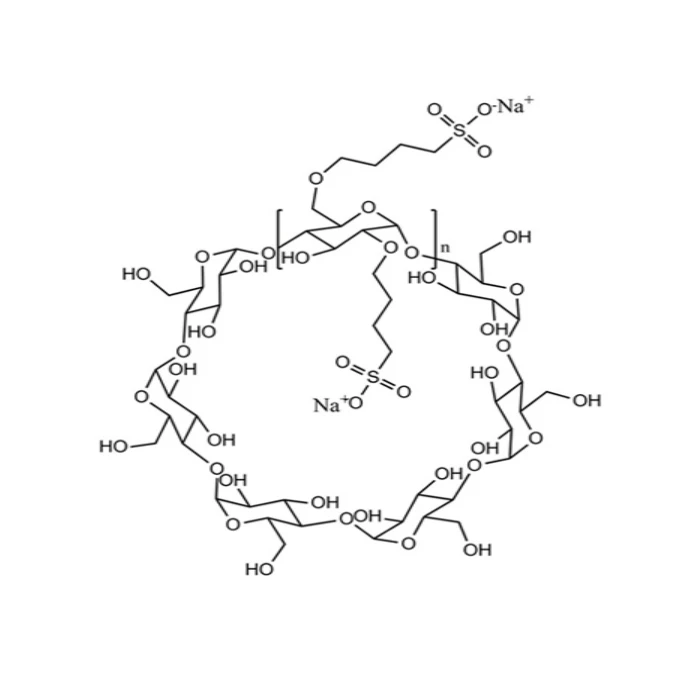
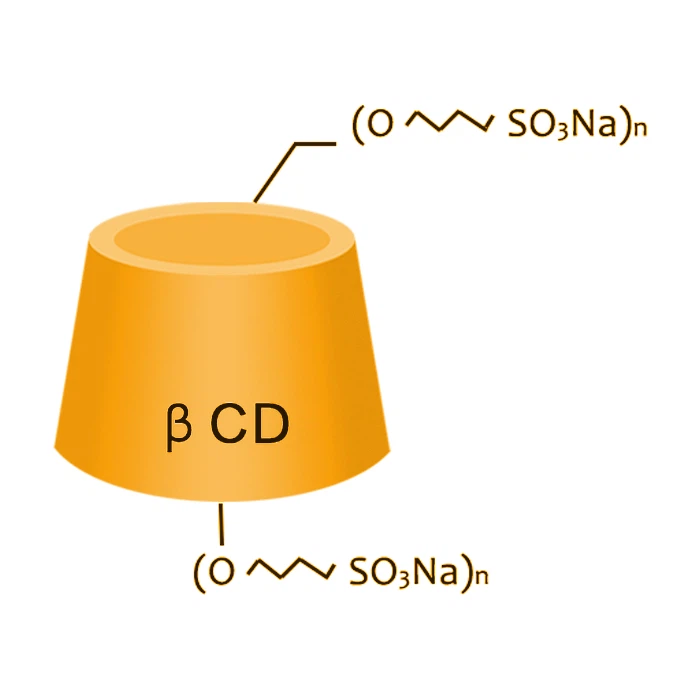
Before delving into the density of its solutions, let's first briefly introduce Sulfobutyl Ether - β - cyclodextrin. It is a chemically modified derivative of β - cyclodextrin, obtained by substituting hydroxyl groups on the β - cyclodextrin structure with sulfobutyl ether groups. The modification imparts several advantages over native β - cyclodextrin, such as improved solubility, lower toxicity, and enhanced complexation ability. You can find more information about Sulfobutyl Ether - β - cyclodextrin on our official page: Sulfobutyl Ether - β - cyclodextrin.
This compound is widely used in the pharmaceutical industry as a solubilizing agent for poorly soluble drugs, a stabilizer for labile drugs, and a carrier for drug delivery systems. Additionally, it can also be employed in the food and cosmetic industries. Another term often used to refer to it is Betadex Sulfobutyl Ether Sodium CAS NO.182410 - 00 - 0, and Betadex Sulfobutyl Ether Sodium Salt.
Factors Influencing the Density of Sulfobutyl Ether - β - cyclodextrin Solutions
The density of a Sulfobutyl Ether - β - cyclodextrin solution is not a fixed value and is affected by several factors:
Concentration
One of the most significant factors influencing the density of a Sulfobutyl Ether - β - cyclodextrin solution is its concentration. As the concentration increases, the density of the solution typically rises. This is because a higher concentration means more Sulfobutyl Ether - β - cyclodextrin molecules are present in a given volume of the solution. The additional solute particles contribute to an increase in mass per unit volume, thereby increasing the density.
Mathematically, a linear or near - linear relationship may exist between the concentration of Sulfobutyl Ether - β - cyclodextrin and the density of its solution within a certain concentration range. However, at very high concentrations, the relationship may deviate from linearity due to factors such as molecular interactions and limited solvent availability.
Temperature
Temperature also plays a crucial role in determining the density of Sulfobutyl Ether - β - cyclodextrin solutions. Generally, as the temperature increases, the density of the solution decreases. This is because an increase in temperature causes the molecules in the solution to gain kinetic energy and move more freely, leading to an expansion of the solution volume. Since density is defined as mass per unit volume, an increase in volume with constant mass results in a decrease in density.
The relationship between temperature and density can be described by the coefficient of thermal expansion of the solution. Different concentrations of Sulfobutyl Ether - β - cyclodextrin solutions may have different coefficients of thermal expansion, which need to be considered when accurately predicting the density at various temperatures.
Presence of Other Solutes
If a Sulfobutyl Ether - β - cyclodextrin solution contains other solutes, such as drugs or salts, the density of the solution will be affected. The additional solutes can either increase or decrease the density depending on their own densities and the interactions with Sulfobutyl Ether - β - cyclodextrin and the solvent.
For example, if a salt with a high density is added to a Sulfobutyl Ether - β - cyclodextrin solution, the overall density of the solution will increase. On the other hand, if a light - weight or low - density solute is introduced, the density may show a relatively small change or even a slight decrease depending on the amount and nature of the solute.
Measuring the Density of Sulfobutyl Ether - β - cyclodextrin Solutions
There are several methods available for measuring the density of Sulfobutyl Ether - β - cyclodextrin solutions:
Pycnometer Method
A pycnometer is a precisely calibrated glass vessel used to measure the volume of a liquid very accurately. To measure the density of a Sulfobutyl Ether - β - cyclodextrin solution using a pycnometer, the pycnometer is first weighed empty. Then, it is filled with the solution, and the temperature is carefully controlled. The filled pycnometer is weighed again, and the mass of the solution is calculated by subtracting the mass of the empty pycnometer from the mass of the filled pycnometer. The volume of the pycnometer is known, and the density is then determined by dividing the mass of the solution by its volume.
Hydrometer Method
A hydrometer is a simple and commonly used device for measuring the density of liquids. It works based on the principle of buoyancy. When a hydrometer is placed in a Sulfobutyl Ether - β - cyclodextrin solution, it floats, and the depth to which it sinks is related to the density of the solution. The scale on the hydrometer is calibrated to directly read the density or specific gravity of the liquid.
Digital Density Meters
Modern digital density meters offer high precision and accuracy in density measurement. These meters often use oscillating U - tubes or other advanced technologies to measure the density of the solution. They can provide rapid and reliable results, making them suitable for both laboratory research and industrial quality control.
Significance of Knowing the Density of Sulfobutyl Ether - β - cyclodextrin Solutions
Pharmaceutical Formulation
In pharmaceutical formulation, understanding the density of Sulfobutyl Ether - β - cyclodextrin solutions is essential for accurate dosing and formulation development. For example, when preparing a liquid dosage form, the density of the solution affects the volume - to - mass conversion, which is crucial for ensuring the correct amount of the active pharmaceutical ingredient (API) and excipient are used.
It also helps in the design and optimization of drug delivery systems. The density can influence the flow properties and stability of the formulation, which in turn affect the quality and performance of the final product.
Quality Control
Density measurement is an important part of quality control for Sulfobutyl Ether - β - cyclodextrin solutions. Deviations in density from the expected value may indicate impurities, incorrect concentration, or other quality issues. By monitoring the density during the manufacturing process, manufacturers can ensure the consistency and quality of their products.
Conclusion and Invitation for Communication
In conclusion, the density of Sulfobutyl Ether - β - cyclodextrin solutions is influenced by factors such as concentration, temperature, and the presence of other solutes. Measuring the density accurately can be achieved through methods like the pycnometer method, hydrometer method, and digital density meters. Understanding the density is of great significance in pharmaceutical formulation and quality control.
As a dedicated supplier of Sulfobutyl Ether - β - cyclodextrin, we are committed to providing high - quality products that meet the various needs of our customers. If you have any inquiries about our products, such as product specifications, pricing, or technical support, we encourage you to reach out to us for a discussion. We are more than happy to work with you to find the best solutions for your projects.
References
- Stella, V. J., & He, Q. (2008). Sulfobutyl ether β - cyclodextrin - based formulations and delivery systems. Journal of Pharmaceutical Sciences, 97(4), 1359 - 1373.
- Loftsson, T., & Brewster, M. E. (1996). Pharmaceutical applications of cyclodextrins. 1. Drug solubilization and stabilization. Journal of Pharmaceutical Sciences, 85(10), 1017 - 1025.
- Torchilin, V. P. (2007). Cyclodextrins in the design of nanoparticulate pharmaceutical carriers. Cyclodextrin News, 13(6), 1 - 11.


