

Hey there! As a supplier of Methyl Beta Cyclodextrin (MβCD), I often get asked about its molecular weight. So, let's dive right into it and break down what the molecular weight of MβCD is all about.
First off, let's understand what MβCD is. Methyl Beta Cyclodextrin is a modified form of beta-cyclodextrin. Cyclodextrins are cyclic oligosaccharides made up of glucose units linked together. They have a unique structure with a hydrophobic cavity on the inside and a hydrophilic exterior. This structure makes them super useful in various industries, like pharmaceuticals, food, and cosmetics.
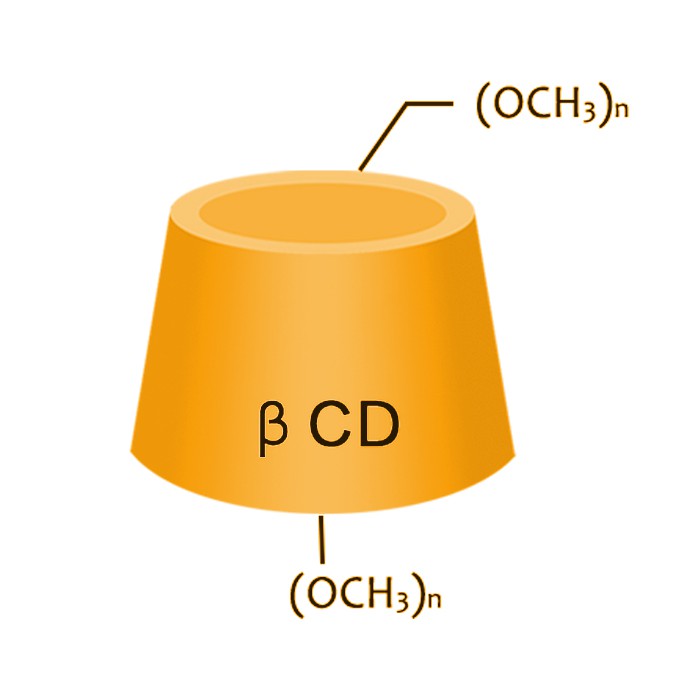
The molecular weight of a compound is a crucial piece of information. It tells us the mass of one mole of that substance. For MβCD, the molecular weight can vary a bit depending on the degree of methylation. The degree of methylation refers to how many of the hydroxyl groups on the beta-cyclodextrin molecule have been replaced with methyl groups.
Typically, the molecular weight of MβCD is around 1310 g/mol. But this is just an average value. The actual molecular weight can range from about 1130 to 1420 g/mol. The reason for this variation is that different manufacturers might produce MβCD with different degrees of methylation. A higher degree of methylation means more methyl groups are attached to the beta-cyclodextrin molecule, which in turn increases the molecular weight.
Now, you might be wondering why the molecular weight matters. Well, it has a big impact on the properties and applications of MβCD. For example, in the pharmaceutical industry, the molecular weight can affect how well MβCD can encapsulate drugs. A higher molecular weight MβCD might form more stable complexes with certain drugs, which can improve the drug's solubility, stability, and bioavailability.
In the food industry, the molecular weight can influence the taste, texture, and shelf life of food products. MβCD can be used to encapsulate flavors, colors, and nutrients. The right molecular weight MβCD can ensure that these encapsulated substances are released at the right time and in the right amount.
Let's talk a bit about the different types of MβCD. There are some related compounds that you might come across, like Dimethyl Beta Cyclodextrin CAS 51166-71-3 and 2, 6-Di-O-Methyl-Beta-Cyclodextrin. These are also forms of methylated beta-cyclodextrin, but they have specific patterns of methylation.
Dimethyl Beta Cyclodextrin has two methyl groups attached to the beta-cyclodextrin molecule. Its molecular weight is also affected by these methyl groups. And 2, 6-Di-O-Methyl-Beta-Cyclodextrin has methyl groups specifically at the 2 and 6 positions of the glucose units in the beta-cyclodextrin. Each of these compounds has its own unique properties and applications based on their molecular structures and weights.
Another important form is Methyl-β-cyclodextrin (beta-MCD). This is a commonly used form in research and industry. Its molecular weight, as we mentioned earlier, can vary, but it plays a key role in determining its performance in different applications.
As a supplier of MβCD, I know how important it is to provide high-quality products with the right molecular weight for our customers' needs. We work hard to ensure that our MβCD has a consistent molecular weight within the specified range. This consistency is crucial for our customers, whether they are using MβCD in a small research project or a large-scale industrial production.
If you're in the market for MβCD, it's essential to consider the molecular weight. You need to choose the right product based on your specific application. For example, if you're working on a drug delivery system, you might need an MβCD with a higher molecular weight for better drug encapsulation. On the other hand, if you're using it in a food product, a lower molecular weight MβCD might be more suitable for a certain flavor encapsulation.
We offer a range of MβCD products with different molecular weights to meet the diverse needs of our customers. Our team of experts can help you select the right product for your application. We also provide detailed technical specifications, including the molecular weight, so you can make an informed decision.
Whether you're a researcher, a manufacturer, or someone in the process of developing a new product, MβCD can be a valuable ingredient. Its unique properties, combined with the right molecular weight, can open up a world of possibilities.
If you're interested in learning more about our MβCD products or have any questions about molecular weight and which product is right for you, don't hesitate to reach out. We're here to help you with your MβCD needs and guide you through the process of selecting and using our products.
In conclusion, the molecular weight of Methyl Beta Cyclodextrin is an important factor that affects its properties and applications. It can vary depending on the degree of methylation, but typically ranges from about 1130 to 1420 g/mol. Understanding the molecular weight can help you choose the right MβCD for your specific needs. So, if you're looking for high-quality MβCD, get in touch with us and let's start a conversation about your requirements.
References:
- Handbook of Cyclodextrin Science and Technology
- Journal of Pharmaceutical Sciences (articles related to cyclodextrin applications)
- Industrial and Engineering Chemistry Research (publications on cyclodextrin properties)


