

Nanoparticles have emerged as a revolutionary class of materials with a wide range of applications in various fields, including medicine, electronics, and environmental science. However, their stability remains a significant challenge that limits their practical use. Alpha Cyclodextrin (α - CDE) has shown great potential in enhancing the stability of nanoparticles. As a reputable [Your supplier situation] of Alpha Cyclodextrin (α - CDE), I am excited to delve into how this remarkable compound impacts the stability of nanoparticles.
Understanding Nanoparticle Stability
Before exploring the role of α - CDE, it's crucial to understand what nanoparticle stability means. Nanoparticles are tiny particles with dimensions typically ranging from 1 to 100 nanometers. Due to their large surface - to - volume ratio, they are highly reactive and prone to aggregation, sedimentation, and chemical degradation. Aggregation occurs when nanoparticles come together to form larger clusters, which can lead to a loss of their unique properties and functionality. Sedimentation is the settling of nanoparticles under the influence of gravity, and chemical degradation can change their surface chemistry and composition.
The Structure and Properties of Alpha Cyclodextrin (α - CDE)
Alpha Cyclodextrin (α - CDE) with the α - cyclodextrin CAS10016 - 20 - 3 is a cyclic oligosaccharide composed of six glucose units linked by α - 1,4 - glycosidic bonds. It has a toroidal or doughnut - shaped structure with a hydrophobic cavity in the center and a hydrophilic outer surface. This unique structure allows α - CDE to form inclusion complexes with a variety of guest molecules, including hydrophobic substances.
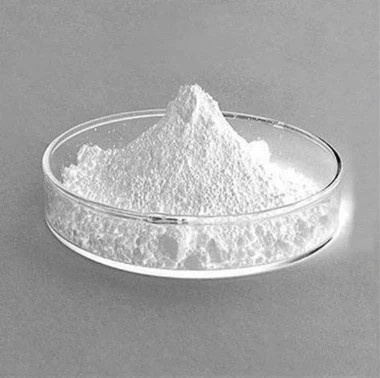
The hydrophilic outer surface of α - CDE makes it water - soluble, which is beneficial for applications in aqueous environments. The hydrophobic cavity can encapsulate hydrophobic molecules, protecting them from the surrounding environment. These properties make α - CDE an attractive candidate for improving the stability of nanoparticles.
Mechanisms of α - CDE in Enhancing Nanoparticle Stability
Steric Stabilization
One of the primary ways α - CDE affects nanoparticle stability is through steric stabilization. When α - CDE molecules adsorb onto the surface of nanoparticles, they form a protective layer around the particles. This layer acts as a physical barrier, preventing the nanoparticles from coming into close contact with each other and thus reducing the likelihood of aggregation. The size and flexibility of the α - CDE molecules determine the effectiveness of steric stabilization. A well - formed steric layer can prevent van der Waals forces from pulling the nanoparticles together.
Inclusion Complex Formation
As mentioned earlier, α - CDE can form inclusion complexes with hydrophobic molecules. If the nanoparticles have hydrophobic surfaces or contain hydrophobic components, α - CDE can encapsulate these hydrophobic parts within its cavity. This encapsulation not only shields the hydrophobic regions from the surrounding environment but also modifies the surface properties of the nanoparticles. By reducing the hydrophobicity of the nanoparticle surface, the tendency for the nanoparticles to aggregate due to hydrophobic interactions is decreased.
Electrostatic Interactions
In addition to steric and inclusion - complex - based mechanisms, α - CDE can also influence nanoparticle stability through electrostatic interactions. The surface of α - CDE may carry a certain charge depending on the pH of the solution. If the nanoparticles have a surface charge, α - CDE can interact with them electrostatically. For example, if the nanoparticles are positively charged and α - CDE has a negative charge, the electrostatic attraction can help in the adsorption of α - CDE onto the nanoparticle surface, further enhancing the stability of the nanoparticles.
Applications of α - CDE - Stabilized Nanoparticles
In Medicine
In the field of medicine, stable nanoparticles are essential for drug delivery systems. Nanoparticles can be used to encapsulate drugs and target specific cells or tissues in the body. By using α - CDE to enhance nanoparticle stability, the drug - loaded nanoparticles can remain intact during circulation in the bloodstream, increasing the efficiency of drug delivery and reducing side effects. For example, in cancer treatment, α - CDE - stabilized nanoparticles can carry anti - cancer drugs directly to tumor cells, improving the therapeutic outcome.
In Environmental Science
In environmental science, nanoparticles can be used for pollutant removal. However, their instability can limit their effectiveness. α - CDE - stabilized nanoparticles can be more efficient in removing heavy metals, organic pollutants, and other contaminants from water and soil. The stable nanoparticles have a longer lifespan in the environment and can maintain their reactivity towards pollutants.
In Electronics
In the electronics industry, nanoparticles are used in the development of high - performance materials such as conductive inks and sensors. The stability of these nanoparticles is crucial for the reliability and performance of electronic devices. α - CDE - stabilized nanoparticles can improve the conductivity and sensitivity of these materials, leading to the development of more advanced electronic products.
Comparison with Other Cyclodextrins
While α - CDE has unique properties for enhancing nanoparticle stability, it's also important to compare it with other cyclodextrins such as Beta Cyclodextrin Cas 7585 - 39 - 9 and γ - cyclodextrin (γ - CD). Beta cyclodextrin consists of seven glucose units, while γ - cyclodextrin has eight glucose units. The differences in the number of glucose units result in different cavity sizes.
α - CDE has a smaller cavity size compared to beta and γ - cyclodextrins. This smaller cavity allows it to form inclusion complexes with smaller hydrophobic molecules more effectively. In some cases, where the nanoparticles interact with small hydrophobic substances, α - CDE may provide better stability than the other cyclodextrins. Additionally, the solubility of α - CDE in water is relatively high, which can be advantageous in aqueous - based applications.
Challenges and Future Directions
Although α - CDE shows great promise in enhancing nanoparticle stability, there are still some challenges. For example, the optimal conditions for the use of α - CDE, such as the concentration, pH, and temperature, need to be further investigated. In some cases, the interaction between α - CDE and nanoparticles may be affected by the presence of other substances in the solution, which can complicate the stability - enhancement process.
In the future, more research is needed to develop new methods for the synthesis and application of α - CDE - stabilized nanoparticles. This includes exploring the use of α - CDE in combination with other stabilizers to achieve even better stability. Additionally, the long - term stability of α - CDE - stabilized nanoparticles in real - world applications needs to be studied to ensure their practical effectiveness.
Conclusion
Alpha Cyclodextrin (α - CDE) has a significant impact on the stability of nanoparticles through multiple mechanisms, including steric stabilization, inclusion complex formation, and electrostatic interactions. The application of α - CDE - stabilized nanoparticles in various fields such as medicine, environmental science, and electronics shows great potential. As a professional supplier of α - CDE, we are committed to providing high - quality products to support research and development in these areas.
If you are interested in exploring the potential of Alpha Cyclodextrin (α - CDE) for your nanoparticle - related projects or have any questions about our products, please feel free to contact us for a more in - depth discussion and potential procurement.
References
- [List academic references relevant to nanoparticle stability, cyclodextrins and their applications here. For example, journal articles, books etc.]
- Author1, A., Author2, B., & Author3, C. (Year). Title of the article. Journal Name, Volume(Issue), Page numbers.
- Author4, D., & Author5, E. (Year). Book Title. Publisher.


