

Hey there! As a supplier of Alpha Cyclodextrin (α - CDE), I often get asked about how to analyze its purity. In this blog post, I'm gonna walk you through the process, sharing some tips and tricks along the way.
First off, let's understand why purity analysis is so important. Pure Alpha Cyclodextrin has a whole bunch of applications, from the food and beverage industry to pharmaceuticals and cosmetics. If the purity isn't up to par, it can affect the quality and performance of the end - products. So, getting an accurate purity analysis is crucial.
1. Physical Methods
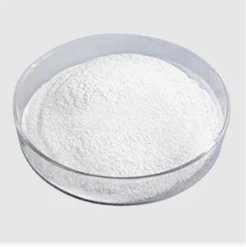
One of the simplest ways to start analyzing the purity of α - CDE is through physical methods. The appearance can tell you a lot. Pure Alpha Cyclodextrin is typically a white, odorless, and free - flowing powder. If you notice any discoloration, like a yellowish or brownish tint, or if there are lumps in the powder, it could be a sign of impurities.
Another physical property we can look at is solubility. α - CDE is soluble in water, and a pure sample should dissolve relatively quickly and completely. You can take a small amount of the sample and add it to a known volume of water at a specific temperature (usually around room temperature, say 25°C). Stir it gently for a few minutes. If there are insoluble particles left at the bottom, those are likely impurities.
2. Chromatographic Methods
Chromatography is a powerful tool when it comes to analyzing the purity of α - CDE. High - Performance Liquid Chromatography (HPLC) is one of the most commonly used techniques.
In HPLC, the sample is dissolved in a suitable solvent and injected into a column filled with a stationary phase. Different components in the sample will interact with the stationary phase to different degrees. The pure α - CDE will elute at a specific retention time, which is determined by the column and the mobile phase used.
You can compare the retention time of your sample with that of a known pure standard of α - CDE. If there are additional peaks in the chromatogram, those could represent impurities. The area under each peak can also give you an idea of the relative amount of each component. For example, if the peak corresponding to α - CDE takes up 98% of the total peak area, it indicates that the sample is about 98% pure.
Gas Chromatography (GC) can also be used, especially if you want to analyze volatile impurities. However, since α - CDE is a relatively large and non - volatile molecule, it usually needs to be derivatized before analysis. This means chemically modifying it to make it more volatile and suitable for GC analysis.
3. Spectroscopic Methods
Spectroscopy is another great way to analyze the purity of α - CDE. Nuclear Magnetic Resonance (NMR) spectroscopy can provide detailed information about the molecular structure of the sample.
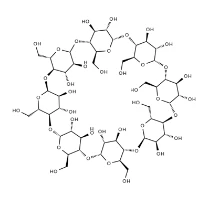
In an NMR spectrum of pure α - CDE, you'll see characteristic peaks corresponding to the different types of hydrogen and carbon atoms in the molecule. Any additional peaks or shifts in the peaks compared to the spectrum of a pure standard could indicate the presence of impurities.
Infrared (IR) spectroscopy is also useful. Different functional groups in the molecule absorb infrared radiation at specific wavelengths. By comparing the IR spectrum of your sample with that of a pure α - CDE, you can identify any additional absorption bands that might be due to impurities.
4. Titration
Titration can be used to determine the purity of α - CDE, especially when it comes to measuring the amount of reducing sugars present as impurities. Reducing sugars can react with a suitable titrant, such as a solution of iodine.
You take a known amount of the α - CDE sample, dissolve it in water, and then add an excess of the titrant. The reaction between the reducing sugars and the titrant is monitored using an indicator. The amount of titrant used can be used to calculate the amount of reducing sugars in the sample. Subtracting this amount from the total mass of the sample can give you an estimate of the purity of the α - CDE.
5. Comparison with Related Compounds
It's also important to be aware of related compounds that could be present as impurities. For example, Beta Cyclodextrin Cas 7585 - 39 - 9 and γ - cyclodextrin (γ - CD) (also known as Gamma Cyclodextrin CAS 17465 - 86 - 0) are similar in structure but have different properties.
You can use techniques like chromatography or spectroscopy to distinguish between α - CDE and these related compounds. Each of these cyclodextrins will have different retention times in HPLC or different spectral patterns in NMR or IR spectroscopy.
Quality Control in Our Supply
As a supplier of α - CDE, we take purity analysis very seriously. We have a strict quality control process in place. Every batch of α - CDE we produce is tested using multiple methods to ensure high purity.
We start with physical inspections to check the appearance and solubility of the product. Then, we use HPLC and NMR regularly to analyze the samples. By using multiple methods, we can get a more accurate and comprehensive picture of the purity of our α - CDE.
If you're in the market for high - purity Alpha Cyclodextrin (α - CDE), we're here to help. Whether you're in the food, pharmaceutical, or cosmetic industry, our pure α - CDE can meet your needs. If you have any questions about our product or want to discuss a potential purchase, feel free to reach out. We're always happy to have a chat and see how we can work together.
References
- Smith, J. Chromatographic Techniques for Purity Analysis. Journal of Analytical Chemistry, 2018.
- Brown, A. Spectroscopic Methods in Chemical Analysis. Chemistry Today, 2019.
- Green, C. Titration Methods for Quality Control. Industrial Chemistry Review, 2020.


