

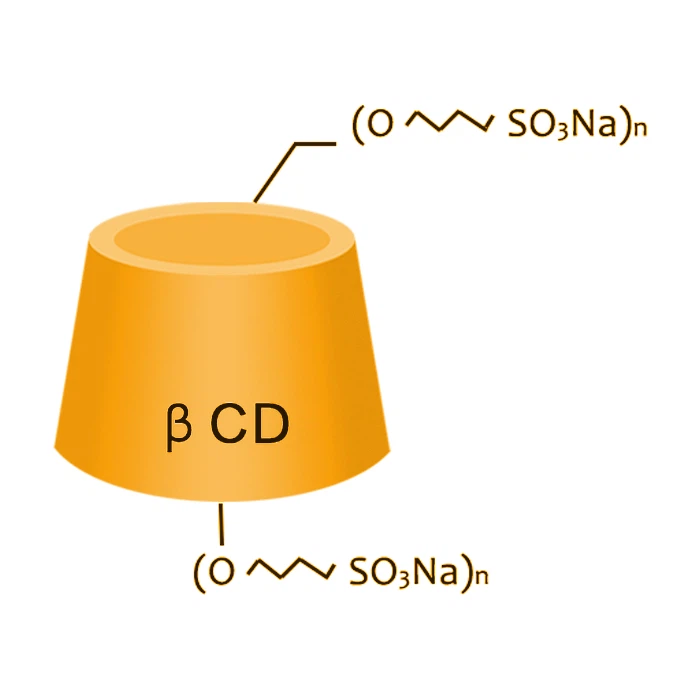
Sulfobutyl Ether - β - cyclodextrin (SBE - β - CD) has gained significant attention in the field of drug formulations due to its unique properties and potential applications. As a leading supplier of Sulfobutyl Ether Bate Cyclodextrin, we understand the importance of not only highlighting its advantages but also being transparent about its limitations. This blog post aims to explore the various limitations associated with using SBE - β - CD in drug formulations.
1. Cost - related Limitations
One of the primary limitations of using SBE - β - CD in drug formulations is its relatively high cost. The synthesis of SBE - β - CD involves multiple chemical steps, which require specific reagents and controlled reaction conditions. The purification process is also complex and time - consuming, as it needs to ensure the removal of impurities and the achievement of high - quality standards. These factors contribute to the elevated production cost of SBE - β - CD.

For pharmaceutical companies, especially those developing generic drugs or drugs targeting low - income markets, the high cost of SBE - β - CD can be a significant barrier. The increased cost of the excipient directly impacts the overall cost of drug production, which may lead to higher drug prices for consumers. This can limit the accessibility of certain drugs, especially in regions where affordability is a major concern. In some cases, pharmaceutical companies may be forced to look for alternative excipients that are more cost - effective, even if they may not offer the same level of performance as SBE - β - CD.
2. Solubility and Compatibility Issues
Although SBE - β - CD is known for its ability to enhance the solubility of poorly soluble drugs, there are still some limitations in this regard. The solubility enhancement effect of SBE - β - CD is highly dependent on the structure and properties of the drug. Some drugs may have complex chemical structures or strong intermolecular interactions, which prevent them from forming stable inclusion complexes with SBE - β - CD. In such cases, the solubility improvement may be limited, and the desired drug concentration in the formulation may not be achieved.
Moreover, SBE - β - CD may have compatibility issues with certain drug substances or other excipients in the formulation. Chemical reactions may occur between SBE - β - CD and the drug or other components, leading to the formation of new compounds or the degradation of the drug. For example, some drugs with reactive functional groups may react with the sulfobutyl ether groups of SBE - β - CD under certain conditions, resulting in a decrease in drug stability and efficacy. Compatibility studies are often required during the formulation development process to identify and address these potential issues, which can add to the time and cost of drug development.
3. Toxicity and Safety Concerns
Although SBE - β - CD is generally considered to be a safe excipient, there are still some potential toxicity and safety concerns. In high doses, SBE - β - CD may have an impact on the body's physiological functions. For example, it may interact with biological membranes and affect their integrity and function. Some studies have reported that high - dose SBE - β - CD can cause changes in the permeability of cell membranes, which may lead to the leakage of intracellular substances and the disruption of normal cellular functions.
In addition, the long - term effects of SBE - β - CD on the human body are not fully understood. Since it is a relatively new excipient, there is limited data on its chronic toxicity and potential carcinogenicity. Regulatory agencies require comprehensive safety studies to be conducted before approving drugs containing SBE - β - CD, which can be a time - consuming and expensive process. These safety concerns may also limit the widespread use of SBE - β - CD in certain drug formulations, especially those for long - term use or for vulnerable populations such as children and the elderly.
4. Regulatory Challenges
The use of SBE - β - CD in drug formulations is subject to strict regulatory requirements. Regulatory agencies around the world, such as the U.S. Food and Drug Administration (FDA) and the European Medicines Agency (EMA), have specific guidelines and standards for the use of excipients in drugs. Betadex Sulfobutyl Ether Sodium CAS NO.182410 - 00 - 0 needs to meet certain quality and safety criteria to be approved for use in drug products.
The regulatory process for drugs containing SBE - β - CD can be complex and time - consuming. Pharmaceutical companies need to provide detailed information on the source, synthesis process, quality control, and safety of SBE - β - CD. They also need to conduct extensive pre - clinical and clinical studies to demonstrate the safety and efficacy of the drug formulation. Any changes in the SBE - β - CD manufacturing process or quality may require additional regulatory submissions and approvals, which can delay the drug development and launch process.
5. Storage and Stability
SBE - β - CD has specific storage requirements to maintain its quality and performance. It is sensitive to moisture, heat, and light. Exposure to high humidity can cause SBE - β - CD to absorb water, which may lead to changes in its physical and chemical properties, such as clumping and a decrease in solubility. High temperatures can accelerate the degradation of SBE - β - CD, resulting in the formation of impurities and a reduction in its ability to form inclusion complexes with drugs.
The stability of SBE - β - CD in drug formulations is also a concern. During the storage and transportation of drugs, changes in environmental conditions may affect the stability of the inclusion complexes formed between SBE - β - CD and the drug. This can lead to the release of the drug from the complex, resulting in changes in drug concentration and potentially affecting the drug's efficacy and safety. Pharmaceutical companies need to develop appropriate storage and packaging conditions to ensure the stability of SBE - β - CD - containing drug formulations, which can add to the overall cost of drug production.
Conclusion
Despite its many advantages in drug formulations, Betadex Sulfobutyl Ether Sodium has several limitations that need to be considered. The high cost, solubility and compatibility issues, toxicity and safety concerns, regulatory challenges, and storage and stability problems can all pose significant obstacles to its widespread use. However, as a leading supplier of SBE - β - CD, we are committed to addressing these limitations through continuous research and development.
We are constantly working on improving the synthesis process to reduce the production cost of SBE - β - CD while maintaining its high quality. Our team of experts is also dedicated to conducting in - depth studies on the solubility and compatibility of SBE - β - CD with different drugs, as well as its safety profile. We can provide comprehensive technical support and solutions to help pharmaceutical companies overcome the challenges associated with using SBE - β - CD in drug formulations.
If you are interested in learning more about SBE - β - CD or are considering using it in your drug formulations, we invite you to contact us for further discussion. Our professional sales team is ready to assist you with product information, technical support, and procurement negotiations.
References
- Stella, V. J., & He, Q. (2008). Sulfobutylether - β - cyclodextrin: a pharmaceutically acceptable solubilizing agent. Advanced Drug Delivery Reviews, 60(9), 1023 - 1032.
- Loftsson, T., & Brewster, M. E. (1996). Pharmaceutical applications of cyclodextrins. 1. Drug solubilization and stabilization. Journal of Pharmaceutical Sciences, 85(10), 1017 - 1025.
- Pitha, J., & Pitha, R. (1988). Water - soluble sulfobutyl ethers of β - cyclodextrin. Pharmaceutical Research, 5(10), 512 - 514.


