

Hey there! As a supplier of Methyl Beta Cyclodextrin, I've been getting a lot of questions lately about its effect on the viscosity of emulsions. So, I thought I'd take some time to dig into this topic and share what I've learned.
First off, let's quickly go over what emulsions are. Emulsions are a type of mixture where two immiscible liquids are combined, with one being dispersed in the other in the form of tiny droplets. Think of oil and water - normally, they don't mix. But when you add an emulsifier and give it a good shake, you can create an emulsion where the oil droplets are suspended in the water. Emulsions are super common in a bunch of industries, like food, cosmetics, and pharmaceuticals.
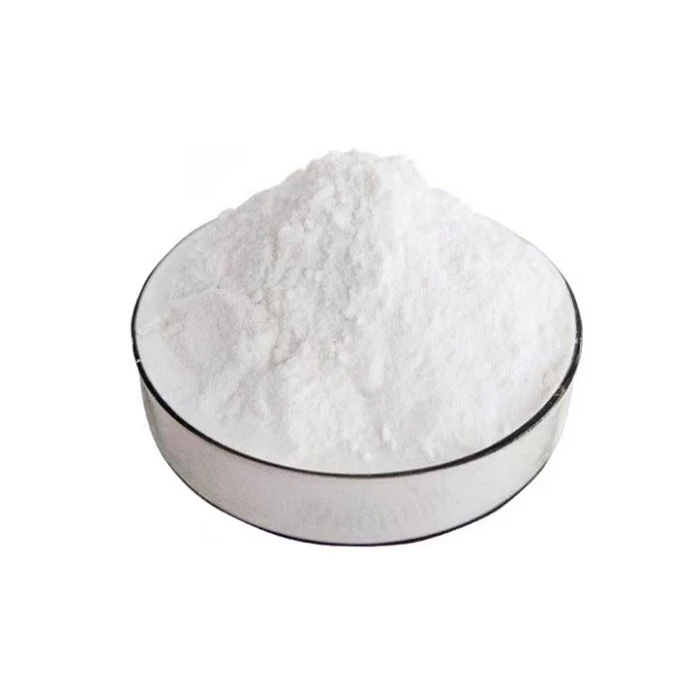
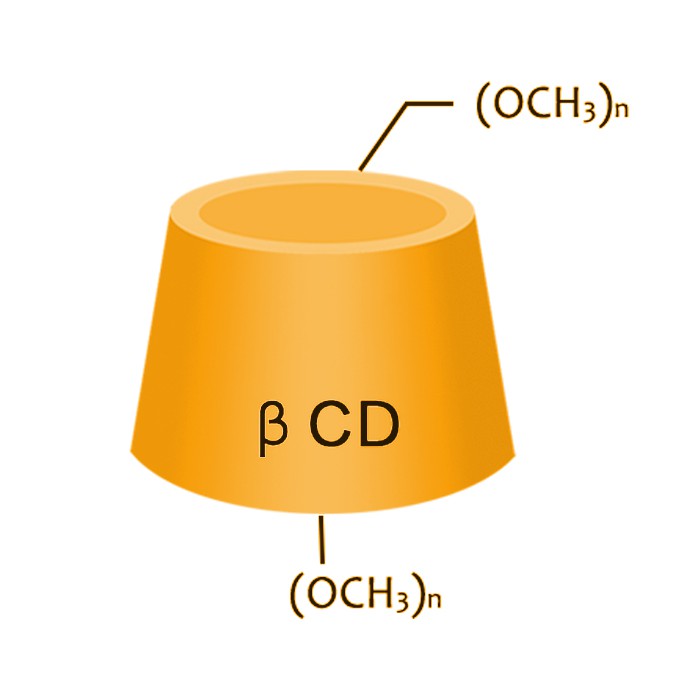
Now, let's talk about Methyl Beta Cyclodextrin. It's a modified form of beta-cyclodextrin, which is a cyclic oligosaccharide made up of seven glucose units. The methyl groups added to the beta-cyclodextrin change its properties in some really useful ways. You can find more about it here: Methyl-β-cyclodextrin (beta-MCD).
So, what's the deal with Methyl Beta Cyclodextrin and emulsion viscosity? Well, viscosity is basically a measure of a fluid's resistance to flow. A high - viscosity fluid is thick and flows slowly, like honey, while a low - viscosity fluid is thin and flows easily, like water.
One of the key ways Methyl Beta Cyclodextrin can affect emulsion viscosity is through its ability to form inclusion complexes. Inclusion complexes are formed when a guest molecule fits into the cavity of the cyclodextrin. In an emulsion, Methyl Beta Cyclodextrin can form complexes with various components, such as oils or surfactants.
When Methyl Beta Cyclodextrin forms complexes with the oil droplets in an emulsion, it can change the surface properties of those droplets. This can lead to a change in the interaction between the droplets and the continuous phase of the emulsion. For example, if the cyclodextrin complexes with the oil, it might make the oil droplets more stable and less likely to coalesce. This can increase the overall viscosity of the emulsion because the droplets are more evenly distributed and create more resistance to flow.
On the other hand, Methyl Beta Cyclodextrin can also interact with surfactants in the emulsion. Surfactants are molecules that reduce the surface tension between the two immiscible liquids in an emulsion, helping to keep the droplets dispersed. If Methyl Beta Cyclodextrin forms a complex with a surfactant, it can change the surfactant's effectiveness. In some cases, this might lead to a decrease in viscosity. If the surfactant is less effective at stabilizing the droplets, the droplets might start to clump together, and the emulsion might become less viscous.
The concentration of Methyl Beta Cyclodextrin also plays a huge role. At low concentrations, it might have a minimal effect on viscosity. But as the concentration increases, the number of inclusion complexes formed also increases, and the impact on viscosity becomes more significant.
In the food industry, emulsions are used in things like salad dressings, mayonnaise, and ice cream. Methyl Beta Cyclodextrin can be used to control the viscosity of these products. For example, in a salad dressing, adjusting the viscosity is crucial for getting the right texture. If the dressing is too thin, it might run off the salad, but if it's too thick, it might be hard to pour. By using Methyl Beta Cyclodextrin, food manufacturers can fine - tune the viscosity to meet consumer preferences.
In the cosmetics industry, emulsions are found in lotions, creams, and makeup. Viscosity is important here too, as it affects how the product feels on the skin and how easy it is to apply. Methyl Beta Cyclodextrin can be used to create a more stable and well - textured emulsion, which can improve the overall quality of the cosmetic product.
In pharmaceuticals, emulsions are used for drug delivery. The viscosity of the emulsion can affect how the drug is released and absorbed. Methyl Beta Cyclodextrin can be used to control the viscosity of these emulsions, ensuring that the drug is delivered in a consistent and effective way.
There are different types of Methyl Beta Cyclodextrin, like CAS No 128446-36-6 Methyl cyclodextrin and Dimethyl Beta Cyclodextrin CAS 51166-71-3. Each type might have a slightly different effect on emulsion viscosity depending on its specific properties and the way it interacts with the components of the emulsion.
To study the effect of Methyl Beta Cyclodextrin on emulsion viscosity, scientists usually use techniques like viscometry. Viscometers measure the viscosity of a fluid by applying a force and measuring how the fluid responds. By comparing the viscosity of emulsions with and without Methyl Beta Cyclodextrin, and at different concentrations of the cyclodextrin, researchers can get a better understanding of its impact.
Another factor to consider is the temperature. Temperature can affect both the viscosity of the emulsion and the behavior of Methyl Beta Cyclodextrin. As the temperature increases, the viscosity of most emulsions decreases because the molecules have more energy and can move more freely. Methyl Beta Cyclodextrin's ability to form inclusion complexes can also be influenced by temperature. At higher temperatures, the complexes might be less stable, which could change the effect on viscosity.
In conclusion, Methyl Beta Cyclodextrin can have a significant effect on the viscosity of emulsions. Its ability to form inclusion complexes with oil droplets and surfactants can either increase or decrease the viscosity, depending on various factors like concentration, the type of cyclodextrin, and temperature.
If you're in an industry that uses emulsions and you're interested in using Methyl Beta Cyclodextrin to control viscosity, I'd love to talk to you. Whether you're a food manufacturer looking for the perfect salad dressing texture, a cosmetic company aiming for a smooth - feeling lotion, or a pharmaceutical firm working on drug delivery, we can find the right solution for you. Get in touch to start a conversation about how our Methyl Beta Cyclodextrin products can meet your needs.
References
- Some scientific papers on cyclodextrins and their applications in emulsions.
- Industry reports on the use of cyclodextrins in food, cosmetics, and pharmaceuticals.


