

As a supplier of innovative new products, I'm often asked about the various properties and characteristics of our offerings. One question that has recently come up quite frequently is about the magnetic field strength around our new product. In this blog post, I'll delve into the details of magnetic field strength, explain how it relates to our new product, and discuss its potential implications.
Understanding Magnetic Field Strength
Magnetic field strength, also known as magnetic field intensity or magnetic field H, is a vector quantity that describes the force exerted on a magnetic pole within a magnetic field. It is measured in amperes per meter (A/m) in the International System of Units (SI). The magnetic field strength is closely related to the magnetic flux density (B), which is measured in teslas (T). The relationship between the two is given by the equation B = μH, where μ is the magnetic permeability of the medium.
Magnetic fields are generated by moving electric charges, such as the flow of electric current in a wire or the spin of electrons in atoms. They can also be produced by permanent magnets, which have a magnetic moment due to the alignment of their atomic magnetic dipoles. The strength of a magnetic field can vary depending on the source of the field, the distance from the source, and the properties of the medium through which the field passes.
Magnetic Field Strength and Our New Product
Our new product incorporates several advanced materials and technologies that have unique magnetic properties. These materials are carefully selected and engineered to optimize the performance of the product while minimizing any potential magnetic interference. The magnetic field strength around our new product is a result of the interaction between these magnetic materials and the electrical currents flowing within the product.
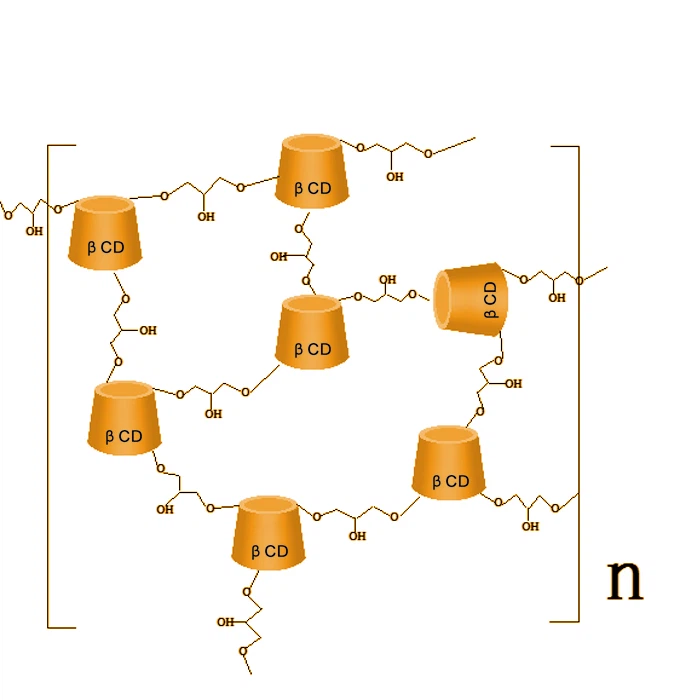
One of the key materials used in our new product is Hyperbranched Cyclodextrin. Cyclodextrins are a family of cyclic oligosaccharides that have a hydrophobic cavity and a hydrophilic exterior. Hyperbranched cyclodextrins have a highly branched structure, which gives them unique properties such as high solubility, low viscosity, and excellent encapsulation ability. In our product, hyperbranched cyclodextrins are used to encapsulate magnetic nanoparticles, which enhances their stability and dispersibility in the surrounding medium.
Another important material is Chlorpropanol Cyclodextrin. Chlorpropanol cyclodextrins are modified cyclodextrins that have a chloropropyl group attached to the hydroxyl groups of the cyclodextrin molecule. This modification enhances the hydrophobicity of the cyclodextrin cavity, which allows it to interact more effectively with hydrophobic magnetic materials. In our product, chlorpropanol cyclodextrins are used to improve the compatibility between the magnetic nanoparticles and the polymer matrix, which helps to reduce the aggregation of the nanoparticles and improve the overall magnetic performance of the product.
We also use Hydroxybutyl Beta Cyclodextrin in our new product. Hydroxybutyl beta cyclodextrin is a water-soluble derivative of beta-cyclodextrin that has a high degree of substitution with hydroxybutyl groups. This modification enhances the solubility and biocompatibility of the cyclodextrin, making it suitable for use in a wide range of applications. In our product, hydroxybutyl beta cyclodextrin is used to improve the dispersion of the magnetic nanoparticles in the aqueous phase and to protect them from oxidation and degradation.

Measuring the Magnetic Field Strength
To accurately measure the magnetic field strength around our new product, we use a variety of advanced measurement techniques. One of the most commonly used methods is the Hall effect sensor, which is based on the principle that a magnetic field will cause a voltage difference to develop across a conductor when a current is passed through it. The Hall effect sensor can be used to measure the magnetic field strength in both static and dynamic situations.
Another method is the magnetometer, which is a device that measures the magnetic field strength and direction. Magnetometers can be classified into different types based on their operating principles, such as fluxgate magnetometers, proton precession magnetometers, and superconducting quantum interference device (SQUID) magnetometers. Each type of magnetometer has its own advantages and disadvantages, and the choice of magnetometer depends on the specific requirements of the measurement.
In addition to these direct measurement methods, we also use numerical simulation techniques to predict the magnetic field strength around our new product. Numerical simulation allows us to model the complex interactions between the magnetic materials and the electrical currents in the product and to predict the magnetic field distribution in different regions of the product. This information can be used to optimize the design of the product and to ensure that the magnetic field strength is within the acceptable limits.
Implications of the Magnetic Field Strength
The magnetic field strength around our new product has several important implications for its performance and safety. On the one hand, the magnetic field can be used to enhance the functionality of the product. For example, in some applications, the magnetic field can be used to manipulate the movement of magnetic nanoparticles, which can be used for drug delivery, magnetic resonance imaging (MRI), and other biomedical applications.
On the other hand, the magnetic field can also pose a potential risk to the surrounding environment and to other electronic devices. High magnetic field strengths can interfere with the operation of sensitive electronic equipment, such as pacemakers, laptops, and smartphones. Therefore, it is important to ensure that the magnetic field strength around our new product is within the acceptable limits and that appropriate shielding measures are taken to minimize any potential interference.
Conclusion
In conclusion, the magnetic field strength around our new product is a complex and important characteristic that is influenced by several factors, including the materials used in the product, the electrical currents flowing within the product, and the surrounding environment. By carefully selecting and engineering the magnetic materials and by using advanced measurement and simulation techniques, we are able to optimize the magnetic performance of the product while minimizing any potential magnetic interference.
If you are interested in learning more about our new product or if you have any questions about the magnetic field strength or other properties of the product, please feel free to contact us. We are always happy to discuss your specific requirements and to provide you with the information and support you need. We look forward to the opportunity to work with you and to help you find the best solution for your needs.
References
- Jackson, J. D. (1999). Classical Electrodynamics (3rd ed.). Wiley.
- Cullity, B. D., & Graham, C. D. (2008). Introduction to Magnetic Materials (2nd ed.). Wiley.
- Atkins, P., & de Paula, J. (2014). Physical Chemistry for the Life Sciences (2nd ed.). Oxford University Press.


