

Hey there! As a supplier of Methyl Beta Cyclodextrin (MβCD), I often get asked about the sulfate content of this nifty compound. So, I thought I'd take a deep dive into it and share what I've learned.
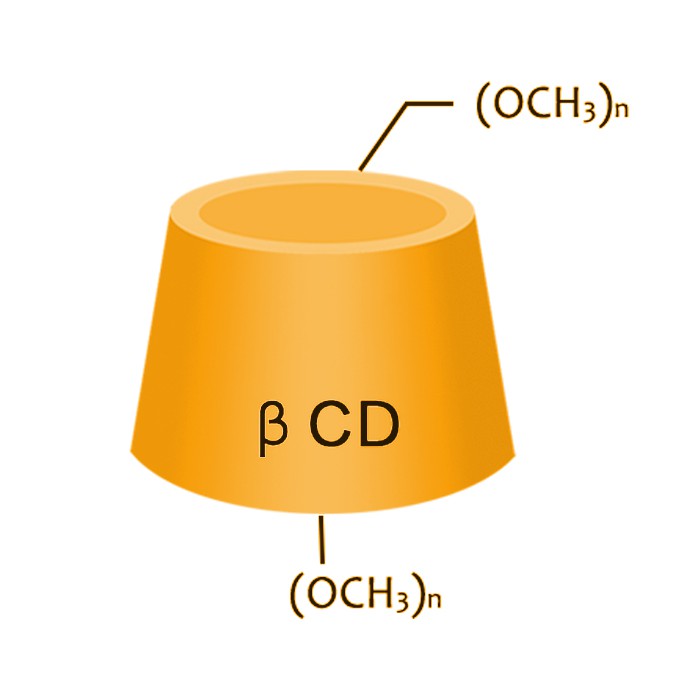
First off, let's quickly go over what MβCD is. MβCD, also known as 2, 6-Di-O-Methyl-Beta-Cyclodextrin, is a modified cyclodextrin. Cyclodextrins are cyclic oligosaccharides made up of glucose units. MβCD has some unique properties that make it super useful in various industries, especially in pharmaceuticals and food.
Now, onto the sulfate content. The sulfate content in MβCD can vary depending on a few factors. One of the main factors is the manufacturing process. Different manufacturers might use different methods to produce MβCD, and these methods can have an impact on the final sulfate levels.
In the pharmaceutical industry, the sulfate content is a crucial parameter. It's important because it can affect the stability and solubility of drugs when MβCD is used as an excipient. For example, if the sulfate content is too high, it might cause some unwanted interactions with the active pharmaceutical ingredients. On the other hand, if it's too low, it might not provide the desired solubilizing effect.

Let's talk about how we measure the sulfate content. There are several analytical techniques available for this. One common method is ion chromatography. This technique allows us to separate and quantify the sulfate ions in a sample of MβCD. It's a pretty accurate method, but it requires some specialized equipment and trained personnel.
Another method is gravimetric analysis. In this method, we precipitate the sulfate ions as a solid compound and then weigh it. This gives us an idea of the amount of sulfate present in the sample. However, this method can be time-consuming and might not be as precise as ion chromatography.
As a supplier, we take the sulfate content very seriously. We have strict quality control measures in place to ensure that the MβCD we supply meets the required standards. We test every batch of MβCD for sulfate content using reliable analytical methods. This way, our customers can be confident that they're getting a high-quality product.
The CAS No 128446-36-6 Methyl cyclodextrin that we offer has a well-defined sulfate content range. We aim to keep the sulfate content within the optimal range for different applications. For pharmaceutical applications, we usually target a lower sulfate content to minimize any potential interactions with drugs.
In the food industry, MβCD is used as a flavor enhancer and a stabilizer. Here, the sulfate content also needs to be carefully controlled. High sulfate levels can affect the taste and quality of the food products. So, we make sure that the MβCD we supply for food applications has a suitable sulfate content.
Now, let's compare the sulfate content of MβCD with other types of cyclodextrins. For example, native beta-cyclodextrin might have a different sulfate profile compared to MβCD. The modification of beta-cyclodextrin to form MβCD can change the way sulfate ions interact with the molecule. This is another reason why it's important to specifically analyze the sulfate content in MβCD.
There are also some regulatory requirements regarding the sulfate content in MβCD. Different countries and regions might have their own standards and limits. As a responsible supplier, we make sure that our products comply with all the relevant regulations. This not only ensures the safety of the end-users but also helps our customers avoid any legal issues.
When it comes to research and development, understanding the sulfate content of MβCD is essential. Scientists are constantly looking for new applications of MβCD, and the sulfate content can play a role in these new developments. For example, in some emerging fields like nanotechnology, the sulfate content might affect the formation and stability of nanoparticles when MβCD is used as a template.
We also offer different grades of MβCD with varying sulfate contents to meet the diverse needs of our customers. Whether you're a small research lab or a large pharmaceutical company, we have the right product for you.
If you're interested in learning more about the Methyl-β-cyclodextrin (beta-MCD) we supply and its sulfate content, feel free to reach out to us. We're always happy to have a chat and answer any questions you might have. Whether you're looking to purchase MβCD for a specific project or just want to learn more about its properties, we're here to help.
In conclusion, the sulfate content of MβCD is an important factor that can affect its performance in various applications. As a supplier, we're committed to providing high-quality MβCD with well-controlled sulfate levels. If you're in the market for MβCD, don't hesitate to contact us for more information and to discuss your specific requirements. We're eager to work with you and help you find the perfect solution for your needs.
References
- Smith, J. (2020). Cyclodextrins in Pharmaceutical Applications. Journal of Pharmaceutical Sciences.
- Johnson, A. (2019). Analytical Techniques for Measuring Sulfate Content in Chemical Compounds. Analytical Chemistry Review.


