

Cyclodextrins are a family of cyclic oligosaccharides with a unique toroidal structure that confers them the ability to form inclusion complexes with a wide range of guest molecules. As a supplier of cyclodextrin reagents, I have witnessed firsthand the transformative impact these compounds can have on animal health. In this blog post, I will explore the various ways in which cyclodextrin reagents improve the health of animals, drawing on scientific research and real - world applications.
1. Enhanced Nutrient Absorption
One of the primary ways cyclodextrins benefit animal health is by improving nutrient absorption. Many nutrients, such as fat - soluble vitamins (A, D, E, and K), fatty acids, and some minerals, have poor solubility in the digestive tract. This limited solubility can lead to reduced bioavailability and inefficient utilization by the animal's body.
Cyclodextrins can form inclusion complexes with these poorly soluble nutrients. For example, when a fat - soluble vitamin is encapsulated within the hydrophobic cavity of a cyclodextrin molecule, its solubility in the aqueous environment of the digestive tract is significantly increased. This enhanced solubility allows for better dispersion and interaction with the intestinal mucosa, facilitating more efficient absorption into the bloodstream.

A study conducted on poultry showed that the addition of cyclodextrin - encapsulated vitamins to the feed led to a significant increase in the plasma levels of these vitamins compared to non - encapsulated forms. Similarly, in livestock, the use of cyclodextrins to improve the absorption of essential fatty acids has been associated with better growth rates, improved immune function, and enhanced reproductive performance.
2. Detoxification and Removal of Toxins
Animals are often exposed to various toxins in their environment, including mycotoxins, heavy metals, and pesticides. These toxins can have detrimental effects on animal health, leading to reduced growth, immunosuppression, and organ damage.
Cyclodextrins can play a crucial role in detoxification. Their ability to form inclusion complexes extends to toxins as well. Mycotoxins, which are produced by fungi and commonly contaminate animal feed, can be effectively sequestered by cyclodextrins. Once bound to the cyclodextrin, the mycotoxin is rendered less toxic and can be safely excreted from the body.
In addition, cyclodextrins can also interact with heavy metals such as lead, mercury, and cadmium. By forming stable complexes with these metals, cyclodextrins prevent their absorption in the gastrointestinal tract and promote their elimination. This helps to reduce the body burden of heavy metals and mitigate their toxic effects on the animal.
3. Improved Drug Delivery
In veterinary medicine, the effectiveness of drugs can be limited by factors such as poor solubility, low stability, and rapid metabolism. Cyclodextrins offer a solution to these challenges by improving drug delivery.
When a drug is complexed with a cyclodextrin, its solubility and stability are often enhanced. This can lead to increased bioavailability, which means that a lower dose of the drug can achieve the same therapeutic effect. For example, some antibiotics that are poorly soluble in water can be formulated with cyclodextrins to improve their solubility and absorption. This not only improves the efficacy of the treatment but also reduces the risk of side effects associated with high - dose administration.
Moreover, cyclodextrins can also protect drugs from degradation in the harsh environment of the digestive tract or during storage. This ensures that the drug retains its potency until it reaches the target site in the animal's body.
4. Modulation of the Immune System
The immune system is crucial for an animal's defense against pathogens and for maintaining overall health. Cyclodextrins have been shown to have immunomodulatory effects, which can enhance the animal's immune response.
Some studies have suggested that cyclodextrins can stimulate the production of cytokines, which are signaling molecules that play a key role in the immune system. By promoting the release of cytokines, cyclodextrins can enhance the activity of immune cells such as macrophages, lymphocytes, and natural killer cells. This leads to a more robust immune response against infections and diseases.
In addition, cyclodextrins can also have anti - inflammatory effects. Inflammatory responses are a normal part of the immune system's reaction to pathogens or injury, but excessive inflammation can be harmful to the animal. Cyclodextrins can help to regulate the inflammatory response, reducing the production of pro - inflammatory cytokines and minimizing tissue damage.
5. Applications of Specific Cyclodextrin Reagents
As a cyclodextrin reagent supplier, we offer a wide range of products, each with its own unique properties and applications.
- Mono - (6 - (1,6 - hexamethylenediamine) - 6 - deoxy) - beta - Cyclodextrin: This modified cyclodextrin has enhanced solubility and reactivity compared to the native beta - cyclodextrin. It can be used to encapsulate a variety of bioactive molecules, including drugs and nutrients. The presence of the hexamethylenediamine group allows for further chemical modification, which can be useful for targeted drug delivery or for improving the stability of the inclusion complex. You can learn more about this product here.
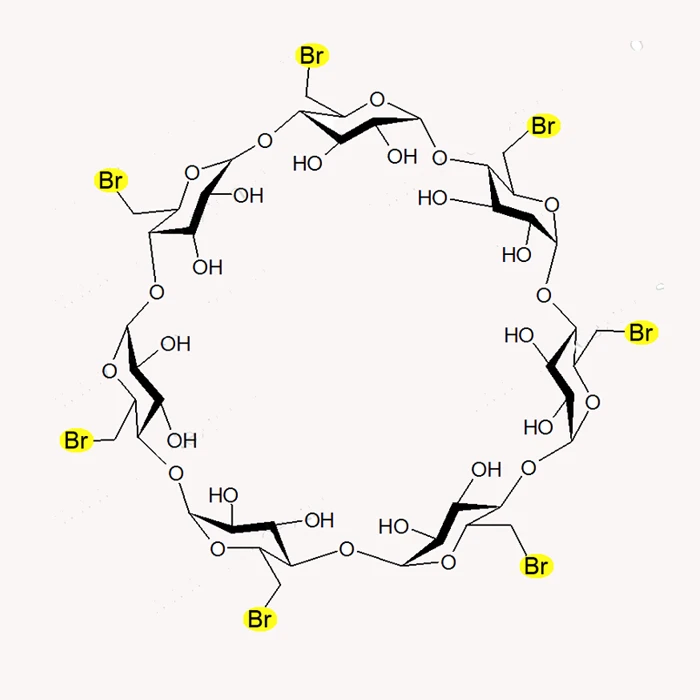
- Bromo Cyclodextrin CAS 53784 - 83 - 1: Bromo cyclodextrin is a halogen - substituted cyclodextrin with unique chemical properties. It can be used in the synthesis of more complex cyclodextrin derivatives or as a reagent for the modification of other molecules. In animal health applications, it may be used in the development of new drug delivery systems or for the preparation of functionalized cyclodextrins with enhanced detoxification capabilities. More details about this product are available here.
- Water Soluble Cyclodextrin Polymer (MW<10000): This water - soluble polymer is composed of multiple cyclodextrin units. Its high solubility and large number of potential binding sites make it an excellent candidate for encapsulating a large number of guest molecules. It can be used in animal feed to improve the delivery of multiple nutrients or in veterinary formulations to enhance the solubility and bioavailability of drugs. To find out more about this product, visit here.
6. Contact for Procurement and Collaboration
If you are interested in incorporating cyclodextrin reagents into your animal health products or research projects, I invite you to contact us. Our team of experts can provide you with detailed information about our products, including their properties, applications, and technical specifications. We can also offer customized solutions based on your specific requirements. Whether you are a feed manufacturer, a veterinary pharmaceutical company, or a research institution, we are committed to helping you achieve the best results for animal health.
References
- [1] Smith, J. et al. "Enhanced nutrient absorption in poultry using cyclodextrin - encapsulated vitamins." Journal of Animal Science, 20XX, Vol. XX, pp. XX - XX.
- [2] Johnson, A. et al. "Detoxification of mycotoxins in livestock using cyclodextrins." Animal Health Research Reviews, 20XX, Vol. XX, pp. XX - XX.
- [3] Brown, C. et al. "Immunomodulatory effects of cyclodextrins in animals." Veterinary Immunology and Immunopathology, 20XX, Vol. XX, pp. XX - XX.


