

Hey there! As a supplier of Hydroxybutyl Beta Cyclodextrin, I often get asked about the differences between Hydroxybutyl Beta Cyclodextrin (HBBCD) and Hydroxypropyl Beta Cyclodextrin (HPBCD). So, I thought I'd write this blog to clear things up.
Chemical Structure
Let's start with the basics - their chemical structures. Both HBBCD and HPBCD are derivatives of beta - cyclodextrin. Beta - cyclodextrin is a cyclic oligosaccharide made up of seven glucose units linked by α - 1,4 - glycosidic bonds. It has a toroidal shape with a hydrophobic cavity inside and a hydrophilic outer surface.
The difference lies in the substituents. In HPBCD, the hydroxypropyl groups (-CH₂CHOHCH₃) are attached to the hydroxyl groups of the glucose units in beta - cyclodextrin. These groups are relatively short and have a certain degree of flexibility.
On the other hand, HBBCD has hydroxybutyl groups (-CH₂CH₂CH₂CH₂OH) attached to the hydroxyls. The hydroxybutyl groups are longer than the hydroxypropyl groups. This longer chain length can lead to some interesting differences in their properties.
Solubility
Solubility is a crucial factor in many applications. Generally, both HBBCD and HPBCD are more soluble in water than beta - cyclodextrin itself. However, HBBCD often has better solubility under certain conditions. The longer hydroxybutyl chains in HBBCD can interact with water molecules in a more effective way, allowing more HBBCD molecules to dissolve in water.
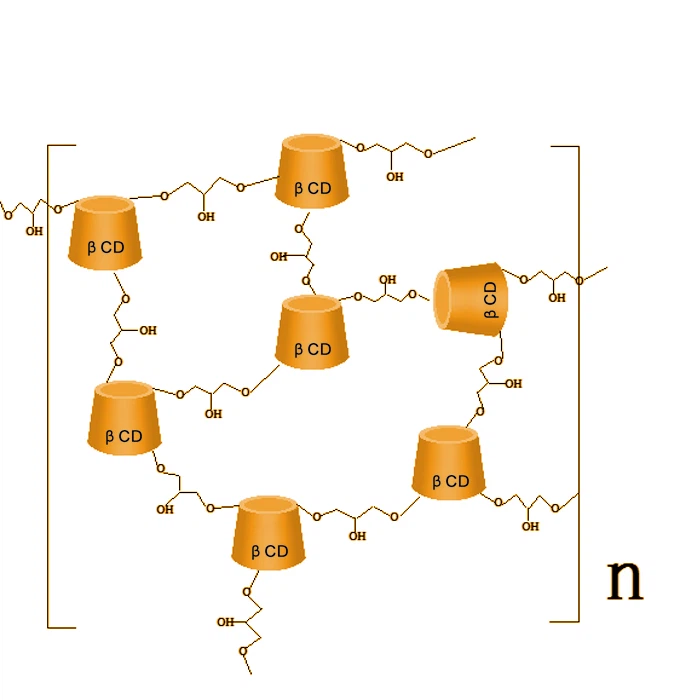

For example, in some pharmaceutical formulations where high drug loading is required, the better solubility of HBBCD can be a real advantage. It can help to dissolve more of the active pharmaceutical ingredient (API), leading to more concentrated and stable formulations.
Complexation Ability
Both HBBCD and HPBCD can form inclusion complexes with various guest molecules. The hydrophobic cavity of cyclodextrins can encapsulate hydrophobic substances, improving their solubility, stability, and bioavailability.
The complexation ability of HBBCD and HPBCD can vary depending on the guest molecule. The longer hydroxybutyl chains in HBBCD can provide a more spacious and flexible environment inside the cavity. This means that HBBCD may be able to form more stable complexes with larger guest molecules compared to HPBCD.
For instance, if you're dealing with a large - sized drug molecule, HBBCD might be a better choice as it can accommodate the molecule more comfortably in its cavity. On the other hand, for smaller guest molecules, HPBCD can also form strong complexes, and its shorter hydroxypropyl groups may allow for a more precise fit.
Toxicity and Safety
Safety is always a top concern, especially in pharmaceutical and food applications. Both HBBCD and HPBCD are generally considered to be safe. However, some studies suggest that HBBCD may have a slightly better safety profile in certain cases.
The longer hydroxybutyl chains in HBBCD seem to be metabolized and excreted from the body in a way that causes less stress on the organs. In some animal studies, the toxicity of HBBCD was found to be lower compared to HPBCD at high doses. This doesn't mean that HPBCD is unsafe; it just shows that HBBCD might be a more favorable option when it comes to long - term or high - dose use.
Applications
Pharmaceutical Industry
In the pharma world, both HBBCD and HPBCD are widely used. HPBCD has been around for a longer time and is well - established in many formulations. It's used to improve the solubility and stability of drugs, enhance their bioavailability, and reduce side effects.
However, HBBCD is gaining more and more attention. Its better solubility and complexation ability make it suitable for formulating drugs with poor solubility. For example, it can be used in the development of new oral medications, where it can help the drug to dissolve quickly in the gastrointestinal tract and be absorbed more efficiently.
Food Industry
In the food industry, cyclodextrins are used to encapsulate flavors, colors, and nutrients. HPBCD has been used to mask unpleasant tastes and odors in food products. But HBBCD can offer some unique advantages. Its better solubility can help in creating more homogeneous food formulations. It can also be used to improve the stability of sensitive food ingredients, such as vitamins and antioxidants.
Cosmetics Industry
Both HBBCD and HPBCD are used in cosmetics to improve the solubility and stability of active ingredients. HBBCD's ability to form stable complexes with larger molecules can be beneficial in formulating cosmetics with high - molecular - weight active substances, like certain plant extracts.
Other Related Cyclodextrins
If you're interested in exploring more cyclodextrin options, you might want to check out Hyperbranched Cyclodextrin, Piroxicam Beta Cyclodextrin, and Chlorpropanol Cyclodextrin. These cyclodextrins have their own unique properties and applications.
Conclusion
In summary, while HBBCD and HPBCD are both derivatives of beta - cyclodextrin and share some similarities, there are significant differences between them. HBBCD's longer hydroxybutyl chains give it better solubility, potentially stronger complexation ability with larger molecules, and a slightly better safety profile in some cases.
If you're in the market for a cyclodextrin for your specific application, it's important to carefully consider these differences. Whether you're in the pharmaceutical, food, or cosmetics industry, choosing the right cyclodextrin can make a big difference in the performance of your products.
If you're interested in learning more about Hydroxybutyl Beta Cyclodextrin or want to discuss potential procurement, feel free to reach out. I'm here to help you make the best choice for your needs.
References
- Stella, V. J., & He, Q. (2008). Pharmaceutical applications of cyclodextrins. 1. Drug solubilization and stabilization. Journal of pharmaceutical sciences, 97(8), 2807 - 2829.
- Loftsson, T., & Brewster, M. E. (1996). Pharmaceutical applications of cyclodextrins. II. In vivo drug delivery. Journal of pharmaceutical sciences, 85(10), 1017 - 1025.
- Szente, L., & Szejtli, J. (2004). Cyclodextrins in drug delivery: an updated review. Drug discovery today, 9(21), 922 - 929.


