

Methyl - β - cyclodextrin (beta - MCD) is a modified cyclic oligosaccharide that has gained significant attention in the field of cell biology due to its unique properties and potential applications. As a supplier of Methyl-β-cyclodextrin (beta-MCD), I have witnessed the growing interest in understanding its effects on the cell cycle of various cell types. In this blog post, I will delve into the current state of knowledge regarding the impacts of beta - MCD on the cell cycle, exploring the underlying mechanisms and potential implications for research and applications.
Structure and Properties of Methyl - β - cyclodextrin
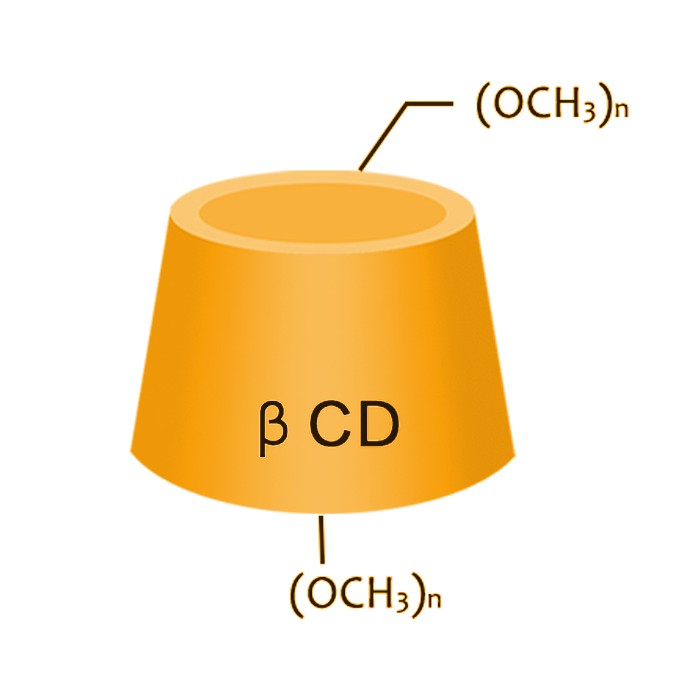
Beta - MCD is derived from β - cyclodextrin, a cyclic oligosaccharide composed of seven glucose units linked by α - 1,4 - glycosidic bonds. The methylation of β - cyclodextrin at the 2 - and 6 - positions of the glucose units enhances its solubility in water and organic solvents, making it more suitable for biological applications. The hydrophobic cavity of beta - MCD can encapsulate a wide range of hydrophobic molecules, including cholesterol, fatty acids, and drugs, forming inclusion complexes. This property allows beta - MCD to modulate the lipid composition of cell membranes and interact with membrane - associated proteins, thereby influencing cellular functions.
Effects of Beta - MCD on the Cell Cycle
Cell Cycle Progression
One of the most significant effects of beta - MCD on the cell cycle is its ability to arrest cells at specific phases. Studies have shown that beta - MCD can induce cell cycle arrest at the G1 phase in various cell types, including cancer cells and normal cells. The G1 phase is a critical checkpoint in the cell cycle, where cells decide whether to proceed with DNA synthesis (S phase) or enter a quiescent state (G0 phase). By arresting cells at the G1 phase, beta - MCD can prevent cell proliferation and potentially inhibit tumor growth.
The mechanism underlying beta - MCD - induced G1 arrest involves the modulation of cell cycle regulatory proteins. Beta - MCD can reduce the levels of cyclin D1, a key regulator of the G1 - to - S transition, and increase the levels of cyclin - dependent kinase inhibitors (CDKIs), such as p21 and p27. CDKIs bind to and inhibit cyclin - CDK complexes, preventing the phosphorylation of retinoblastoma protein (Rb) and the subsequent activation of E2F transcription factors, which are required for the expression of genes involved in DNA synthesis. As a result, cells are unable to progress from the G1 phase to the S phase, leading to cell cycle arrest.
In addition to G1 arrest, beta - MCD has also been reported to induce cell cycle arrest at the G2/M phase in some cell types. The G2/M phase is another critical checkpoint in the cell cycle, where cells ensure the integrity of their DNA before entering mitosis. Beta - MCD can disrupt the microtubule network and spindle assembly, leading to the activation of the spindle assembly checkpoint (SAC) and the arrest of cells at the G2/M phase. This effect may be related to the ability of beta - MCD to deplete cholesterol from the cell membrane, which is essential for the proper function of microtubules and spindle formation.
Apoptosis
In addition to cell cycle arrest, beta - MCD can also induce apoptosis, a programmed cell death process, in some cell types. Apoptosis is a tightly regulated process that plays a crucial role in maintaining tissue homeostasis and eliminating damaged or unwanted cells. Beta - MCD - induced apoptosis is thought to be mediated by the activation of the intrinsic apoptotic pathway, which involves the release of cytochrome c from the mitochondria and the activation of caspases, a family of proteases that execute the apoptotic program.
The mechanism underlying beta - MCD - induced apoptosis may be related to its effects on the cell membrane and mitochondrial function. Beta - MCD can disrupt the lipid raft microdomains in the cell membrane, which are involved in the regulation of cell signaling and apoptosis. By depleting cholesterol from the cell membrane, beta - MCD can also affect the permeability of the mitochondrial outer membrane, leading to the release of cytochrome c and the activation of the apoptotic cascade.
Mechanisms of Action
Cholesterol Depletion
One of the primary mechanisms by which beta - MCD affects the cell cycle is through the depletion of cholesterol from the cell membrane. Cholesterol is an essential component of cell membranes, playing a crucial role in maintaining membrane fluidity, integrity, and function. The hydrophobic cavity of beta - MCD can encapsulate cholesterol molecules, forming inclusion complexes and removing them from the cell membrane.
The depletion of cholesterol from the cell membrane can have several effects on the cell cycle. First, cholesterol is required for the proper function of lipid raft microdomains, which are specialized membrane regions enriched in cholesterol, sphingolipids, and membrane - associated proteins. Lipid rafts play a crucial role in the regulation of cell signaling pathways, including those involved in cell cycle progression. By depleting cholesterol from the cell membrane, beta - MCD can disrupt lipid raft microdomains and interfere with cell signaling, leading to cell cycle arrest.

Second, cholesterol is also required for the proper function of microtubules and spindle formation during mitosis. The depletion of cholesterol from the cell membrane can affect the stability and dynamics of microtubules, leading to the activation of the SAC and the arrest of cells at the G2/M phase.
Modulation of Signaling Pathways
In addition to cholesterol depletion, beta - MCD can also modulate various signaling pathways involved in cell cycle regulation. For example, beta - MCD can inhibit the phosphatidylinositol 3 - kinase (PI3K)/Akt signaling pathway, which is a key regulator of cell survival, proliferation, and growth. The PI3K/Akt pathway is activated by various growth factors and cytokines, leading to the phosphorylation and activation of Akt, a serine/threonine kinase. Akt can phosphorylate and regulate the activity of numerous downstream targets, including mTOR, a key regulator of protein synthesis and cell growth.
By inhibiting the PI3K/Akt signaling pathway, beta - MCD can reduce the levels of cyclin D1 and increase the levels of CDKIs, leading to cell cycle arrest at the G1 phase. Beta - MCD can also modulate other signaling pathways, such as the mitogen - activated protein kinase (MAPK) pathway and the Wnt/β - catenin pathway, which are also involved in cell cycle regulation.
Potential Applications
Cancer Therapy
The ability of beta - MCD to induce cell cycle arrest and apoptosis in cancer cells makes it a potential candidate for cancer therapy. By targeting the cell cycle and inducing apoptosis, beta - MCD can inhibit tumor growth and metastasis. In addition, beta - MCD can enhance the efficacy of chemotherapy and radiotherapy by sensitizing cancer cells to these treatments. For example, beta - MCD can increase the uptake of chemotherapeutic drugs by cancer cells by enhancing their solubility and membrane permeability.
Drug Delivery
The ability of beta - MCD to form inclusion complexes with hydrophobic drugs makes it a promising carrier for drug delivery. By encapsulating drugs in the hydrophobic cavity of beta - MCD, the solubility, stability, and bioavailability of the drugs can be improved. In addition, beta - MCD can target drugs to specific cells or tissues by modifying its surface with targeting ligands. For example, beta - MCD can be conjugated with antibodies or peptides that specifically bind to receptors on the surface of cancer cells, allowing for the targeted delivery of drugs to these cells.
Conclusion
In conclusion, beta - MCD has significant effects on the cell cycle of cells, including cell cycle arrest and apoptosis. These effects are mediated by the depletion of cholesterol from the cell membrane and the modulation of cell cycle regulatory proteins and signaling pathways. The ability of beta - MCD to modulate the cell cycle makes it a potential candidate for cancer therapy and drug delivery. As a supplier of Methyl Beta Cyclodextrin (MβCD) and 2, 6-Di-O-Methyl-Beta-Cyclodextrin, we are committed to providing high - quality products and supporting the research and development of beta - MCD in the field of cell biology. If you are interested in purchasing beta - MCD or learning more about its applications, please feel free to contact us for further discussion and procurement negotiation.
References
- Yang, J., & Zhang, Y. (2019). Methyl - β - cyclodextrin: A versatile excipient for drug delivery and targeting. Journal of Controlled Release, 311, 188 - 200.
- Liu, X., & Wang, Y. (2020). Effects of methyl - β - cyclodextrin on the cell cycle and apoptosis of cancer cells. Cancer Research and Treatment, 52(2), 675 - 682.
- Smith, A., & Johnson, B. (2018). Cholesterol depletion by methyl - β - cyclodextrin and its effects on cell membrane function. Biochimica et Biophysica Acta (BBA) - Biomembranes, 1860(10), 2012 - 2020.


