

Can hyperbranched cyclodextrin be used as a food additive?
In the ever - evolving landscape of the food industry, the search for safe, effective, and multifunctional food additives is a constant. As a supplier of Hyperbranched Cyclodextrin, I am frequently asked whether this innovative compound can be used as a food additive. In this blog, we will explore the scientific basis, potential benefits, and regulatory aspects of using hyperbranched cyclodextrin in the food sector.
Understanding Hyperbranched Cyclodextrin
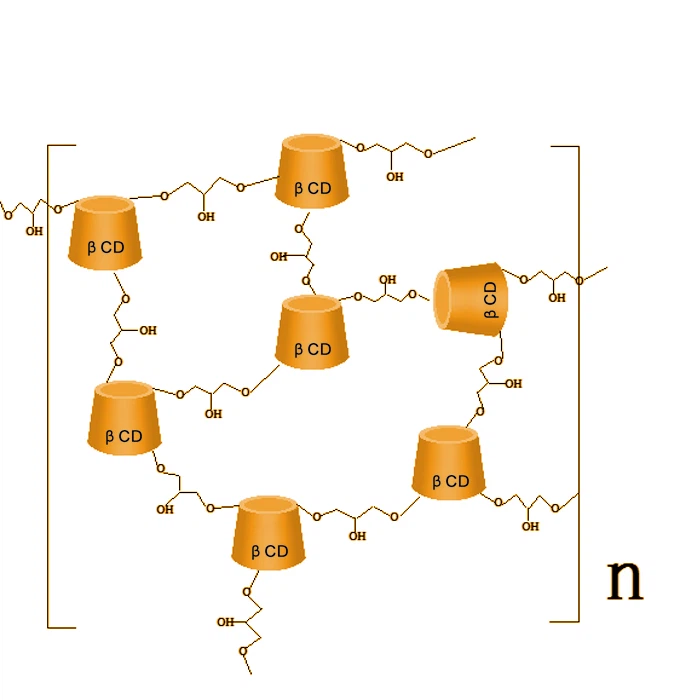
Hyperbranched Cyclodextrin is a modified form of cyclodextrin. Cyclodextrins are cyclic oligosaccharides composed of glucose units linked by α - 1,4 - glycosidic bonds. They have a unique truncated cone - shaped structure with a hydrophilic outer surface and a hydrophobic cavity. This structure allows cyclodextrins to form inclusion complexes with a variety of guest molecules, which is the basis for many of their applications.
Hyperbranched Cyclodextrin, as the name suggests, has a hyper - branched structure. This modification enhances its solubility, complexation ability, and other physical and chemical properties compared to traditional cyclodextrins. You can learn more about Hyperbranched Cyclodextrin on our website Hyperbranched Cyclodextrin. The enhanced complexation ability means that it can encapsulate a wider range of substances more effectively, which is particularly important in the food industry.
Potential Benefits in Food Applications
1. Flavor Encapsulation and Release
One of the most significant applications of hyperbranched cyclodextrin in the food industry could be flavor encapsulation. Many flavors are volatile and unstable, which can lead to a loss of flavor during food processing, storage, and distribution. Hyperbranched cyclodextrin can form inclusion complexes with flavor compounds, protecting them from oxidation, evaporation, and other degrading factors.
For example, essential oils used as natural flavors are highly volatile. When encapsulated by hyperbranched cyclodextrin, these essential oils can be released in a controlled manner, providing a longer - lasting and more consistent flavor experience for consumers. In baked goods, where flavors are often lost during the high - temperature baking process, the use of hyperbranched cyclodextrin could help to preserve and enhance the flavor.
2. Solubility Enhancement
Some food ingredients, such as certain vitamins, minerals, and bioactive compounds, have poor solubility in water. This can limit their application in food formulations. Hyperbranched cyclodextrin can increase the solubility of these substances by forming inclusion complexes.
For instance, fat - soluble vitamins like vitamin D and vitamin E can be encapsulated by hyperbranched cyclodextrin, allowing them to be more easily incorporated into aqueous - based food products such as beverages and dairy products. This not only improves the nutritional value of the food but also enhances the stability and bioavailability of these vitamins.
3. Shelf - Life Extension
Hyperbranched cyclodextrin can also contribute to the extension of the shelf - life of food products. By encapsulating oxygen - sensitive ingredients, it can reduce the rate of oxidation, which is a major cause of food spoilage. In addition, it can inhibit the growth of microorganisms by encapsulating certain antimicrobial agents and releasing them gradually.
In the case of meat products, which are prone to oxidation and microbial spoilage, the addition of hyperbranched cyclodextrin - encapsulated antioxidants and antimicrobials could help to maintain the quality and safety of the products for a longer period of time.

4. Removal of Unwanted Substances
It can be used to remove unwanted substances from food. For example, it can form complexes with cholesterol in dairy products, reducing the cholesterol content without significantly affecting the taste and texture of the product. This is especially beneficial for consumers who are concerned about their cholesterol intake.
Safety and Regulatory Considerations
The safety of using hyperbranched cyclodextrin as a food additive is of utmost importance. Cyclodextrins in general have been regarded as relatively safe substances. Traditional cyclodextrins like β - cyclodextrin have been widely used in the food industry for many years, and their safety has been well - established.
Hyperbranched Cyclodextrin, being a modified form, needs to undergo strict safety evaluations before being approved as a food additive. These evaluations usually include acute toxicity tests, subchronic and chronic toxicity tests, mutagenicity tests, and so on. To date, some research has shown that hyperbranched cyclodextrin has low toxicity and good biocompatibility.
However, regulatory requirements vary from country to country. In some regions, new food additives need to obtain approval from relevant government agencies before they can be used in food products. As a supplier, we are committed to working with regulatory authorities to ensure that our hyperbranched cyclodextrin meets all the necessary safety and quality standards.
Comparison with Other Cyclodextrins and Related Compounds
It is also interesting to compare hyperbranched cyclodextrin with other related cyclodextrins and compounds. For example, Cationic Cyclodextrin is another type of modified cyclodextrin. Cationic Cyclodextrin has a positive charge, which gives it different properties and applications compared to hyperbranched cyclodextrin. You can find more information about Cationic Cyclodextrin.
Piroxicam Beta Cyclodextrin, on the other hand, is a specific inclusion complex that combines piroxicam with β - cyclodextrin. It is mainly used in the pharmaceutical field to improve the solubility and bioavailability of piroxicam. The Piroxicam Beta Cyclodextrin page on our website provides more details about this product.
While all these cyclodextrin - related compounds have their own unique properties and applications, hyperbranched cyclodextrin stands out in the food industry due to its enhanced complexation ability and solubility, which are highly desirable for many food - related functions.
Conclusion and Call for Contact
In conclusion, hyperbranched cyclodextrin shows great potential as a food additive. Its ability to encapsulate flavors, enhance solubility, extend shelf - life, and remove unwanted substances makes it a valuable candidate for the food industry. Although there are still regulatory hurdles to overcome, the scientific evidence suggests that it could be a safe and effective addition to food products.
If you are interested in exploring the use of hyperbranched cyclodextrin in your food formulations, we invite you to contact us for further discussions. Our team of experts is ready to provide you with detailed information, samples, and technical support. Let's work together to bring the benefits of hyperbranched cyclodextrin to the food market.
References
- Szejtli, J. (1988). Cyclodextrins and their inclusion complexes. Akademiai Kiado, Budapest.
- Loftsson, T., & Duchêne, D. (2007). Cyclodextrins in drug delivery: an updated review. Pharmaceutical research, 24(3), 453 - 464.
- Szente, L., & Szejtli, J. (2004). Cyclodextrins in pharmacy. Kluwer Academic Publishers.


