

Yo! As a supplier of Cationic Cyclodextrin, I often get asked about its physical properties. So, I thought I'd break it down in this blog post.
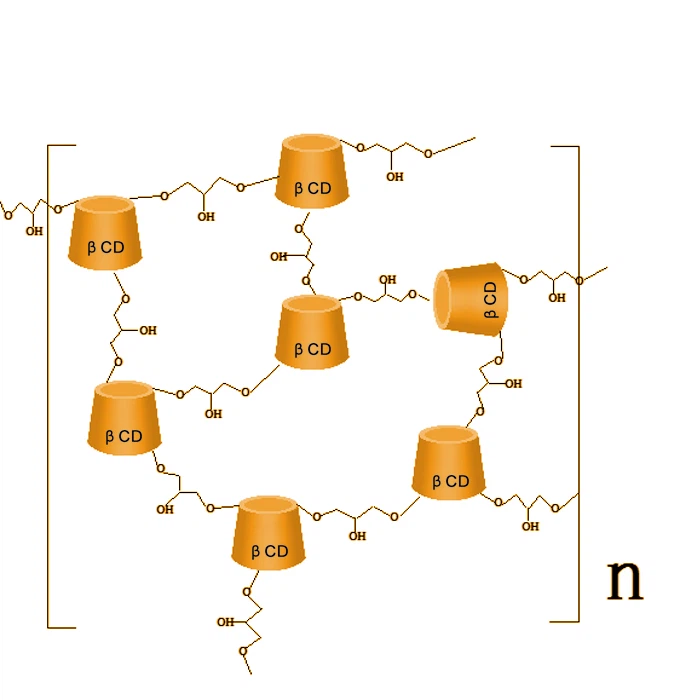
First off, let's talk about what cyclodextrins are in general. Cyclodextrins are cyclic oligosaccharides made up of glucose units. They've got a unique structure with a hydrophobic cavity on the inside and a hydrophilic outer surface. This structure allows them to form inclusion complexes with a wide range of guest molecules, which is super useful in various industries like pharmaceuticals, food, and cosmetics.
Now, Cationic Cyclodextrin is a modified form of cyclodextrin. The cationic part means it has a positive charge. This positive charge gives it some interesting physical properties that set it apart from regular cyclodextrins.
Solubility
One of the key physical properties of Cationic Cyclodextrin is its solubility. Unlike some other cyclodextrins, Cationic Cyclodextrin tends to have better solubility in water. This is because the positive charge on the molecule interacts with the polar water molecules, making it easier for the cyclodextrin to dissolve. The solubility can vary depending on factors like the degree of substitution (how many of the hydroxyl groups on the cyclodextrin have been modified to give the positive charge) and the pH of the solution. In general, at neutral to slightly basic pH values, Cationic Cyclodextrin shows good solubility, which is great for applications where it needs to be dissolved in an aqueous environment. For example, in the pharmaceutical industry, good water solubility is crucial for drug delivery systems. If a drug is complexed with Cationic Cyclodextrin, the increased solubility of the cyclodextrin can help the drug dissolve better in the body's fluids, improving its bioavailability.
Viscosity
The viscosity of Cationic Cyclodextrin solutions is another important property. When you dissolve Cationic Cyclodextrin in water, the resulting solution has a certain viscosity. The viscosity depends on the concentration of the cyclodextrin in the solution. At low concentrations, the solution may have a relatively low viscosity, similar to water. But as the concentration increases, the viscosity goes up. This is because the cyclodextrin molecules start to interact with each other, forming a more complex network in the solution. In some applications, like in the formulation of creams and gels in the cosmetics industry, the viscosity of the Cationic Cyclodextrin solution can be adjusted to achieve the desired texture. A higher viscosity can give a thicker, more stable product, while a lower viscosity can make it easier to spread.

Particle Size
If Cationic Cyclodextrin is in a solid form or dispersed in a liquid as particles, the particle size is an important physical property. The particle size can affect things like the rate of dissolution and the stability of the suspension. Smaller particle sizes generally lead to faster dissolution because there is more surface area available for the solvent to interact with the cyclodextrin. In the manufacturing process, the particle size can be controlled through techniques like milling or spray - drying. For example, in the food industry, if Cationic Cyclodextrin is used as an encapsulating agent for flavors or nutrients, the particle size can impact how quickly the encapsulated material is released.
Thermal Stability
Cationic Cyclodextrin also has a certain degree of thermal stability. It can withstand a range of temperatures without significant degradation. However, like most organic compounds, extreme temperatures can cause problems. At high temperatures, the cyclodextrin may start to break down, losing its ability to form inclusion complexes. The thermal stability can be influenced by factors like the degree of substitution and the presence of other substances in the system. In industrial processes where heating is involved, such as in the production of some polymers or in the sterilization of pharmaceutical formulations, it's important to know the thermal stability of Cationic Cyclodextrin to ensure that it retains its functionality.
Interaction with Other Substances
Cationic Cyclodextrin's positive charge makes it interact differently with other substances compared to non - charged cyclodextrins. It can form electrostatic interactions with negatively charged molecules. For example, in the presence of anionic polymers or negatively charged drugs, Cationic Cyclodextrin can form complexes through these electrostatic forces. This can be used to control the release of drugs, as the complex formation can slow down the diffusion of the drug from the delivery system. In addition, it can also interact with biological membranes. The positive charge on Cationic Cyclodextrin can help it bind to the negatively charged cell membranes, which can be useful in drug delivery applications to improve the uptake of drugs into cells.
Applications Based on Physical Properties
The unique physical properties of Cationic Cyclodextrin make it suitable for a wide range of applications. In the pharmaceutical industry, its solubility and ability to form inclusion complexes are used to improve the solubility and stability of drugs. For example, drugs like Piroxicam Beta Cyclodextrin can be complexed with Cationic Cyclodextrin to enhance their bioavailability. In the food industry, Cationic Cyclodextrin can be used as an emulsifier or a stabilizer due to its solubility and viscosity properties. It can also be used to encapsulate flavors and nutrients, protecting them from oxidation and improving their shelf - life. In the cosmetics industry, its ability to interact with biological membranes and its viscosity control can be used in the formulation of skin - care products to improve the delivery of active ingredients. Another interesting application is in the environmental field. Cationic Cyclodextrin can be used to remove heavy metals from water. The positive charge on the cyclodextrin can attract negatively charged metal ions, forming complexes that can be easily removed from the water.
Comparison with Other Cyclodextrins
When compared to other types of cyclodextrins like Hydroxybutyl Beta Cyclodextrin and Hyperbranched Cyclodextrin, Cationic Cyclodextrin has its own set of advantages. Hydroxybutyl Beta Cyclodextrin is known for its good solubility and biocompatibility, but Cationic Cyclodextrin's positive charge gives it additional functionality in terms of electrostatic interactions. Hyperbranched Cyclodextrin has a more complex structure with multiple branches, which can provide a large number of binding sites. However, Cationic Cyclodextrin's positive charge can be used to target specific negatively charged molecules or surfaces, which may not be possible with hyperbranched cyclodextrin.
Why Choose Our Cationic Cyclodextrin
As a supplier, we ensure that our Cationic Cyclodextrin has consistent physical properties. We carefully control the manufacturing process to get the right degree of substitution, particle size, and solubility. Our quality control measures ensure that you get a product that meets your specific requirements. Whether you're in the pharmaceutical, food, cosmetics, or environmental industry, our Cationic Cyclodextrin can be a great choice for your applications.
If you're interested in learning more about our Cationic Cyclodextrin or have questions about its physical properties and how it can be used in your products, don't hesitate to reach out. We're here to help you make the best choice for your business and can provide samples for you to test. Let's start a conversation about how our Cationic Cyclodextrin can add value to your products.
References
- Szejtli, J. (1988). Cyclodextrin technology. Kluwer Academic Publishers.
- Loftsson, T., & Brewster, M. E. (1996). Pharmaceutical applications of cyclodextrins. 1. Drug solubilization and stabilization. Journal of pharmaceutical sciences, 85(10), 1017 - 1025.
- Duchene, D. (Ed.). (1987). Pharmaceutical applications of cyclodextrins. Springer Science & Business Media.


