

Piroxicam Beta Cyclodextrin is a crucial pharmaceutical compound, and as a supplier, maintaining high - quality control standards is of utmost importance. In this blog, I will delve into the various quality control standards for Piroxicam Beta Cyclodextrin and explain why they are essential for both suppliers and customers.
Chemical Composition and Purity
The first and most fundamental aspect of quality control for Piroxicam Beta Cyclodextrin is its chemical composition. Piroxicam Beta Cyclodextrin is a complex formed by piroxicam, a non - steroidal anti - inflammatory drug (NSAID), and beta - cyclodextrin, a cyclic oligosaccharide. The purity of this compound should be within a strict range.
The content of piroxicam in the Piroxicam Beta Cyclodextrin complex can be determined through high - performance liquid chromatography (HPLC). This analytical method allows for the accurate quantification of piroxicam, ensuring that it meets the specified percentage. For example, in our production, we aim for a piroxicam content within a narrow margin, typically around [X]% (this is a placeholder, and actual values should be based on industry standards and product specifications).
Impurities in Piroxicam Beta Cyclodextrin can have a significant impact on its safety and efficacy. These impurities may include residual solvents from the manufacturing process, degradation products of piroxicam or beta - cyclodextrin, and other contaminants. Gas chromatography (GC) can be used to detect and quantify residual solvents. We follow international guidelines, such as those set by the International Council for Harmonisation of Technical Requirements for Pharmaceuticals for Human Use (ICH), to limit the levels of residual solvents. For instance, the limit for common solvents like ethanol or acetone is strictly regulated to ensure the safety of the final product.
Physical Properties
The physical properties of Piroxicam Beta Cyclodextrin also play a vital role in quality control. Particle size distribution is an important parameter. A consistent particle size is necessary for proper dissolution and bioavailability of the drug. We use techniques like laser diffraction to measure the particle size distribution. This helps us ensure that the majority of the particles fall within the desired range, typically between [X] and [Y] micrometers (again, these are placeholders for actual values).
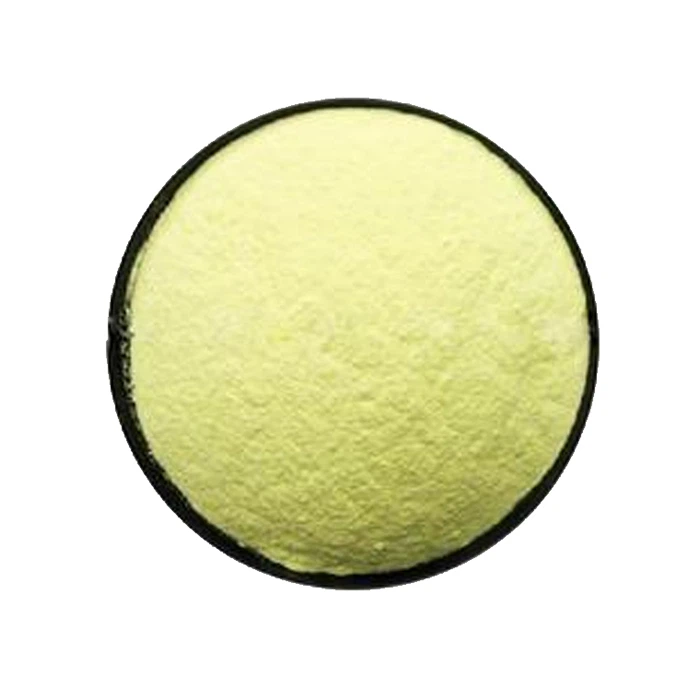
The appearance of Piroxicam Beta Cyclodextrin is another physical characteristic that is closely monitored. It should be a white to off - white powder. Any discoloration, such as yellowing or the presence of dark spots, may indicate degradation or contamination. Visual inspection under standardized lighting conditions is a simple yet effective method to check for such issues.
Solubility and Dissolution
Solubility is a key property of Piroxicam Beta Cyclodextrin, especially considering its use in pharmaceutical formulations. The complex should have enhanced solubility compared to piroxicam alone. We test the solubility of Piroxicam Beta Cyclodextrin in various solvents, including water and physiological fluids. This is done by measuring the amount of the compound that can dissolve in a given volume of solvent at a specific temperature and pH.
Dissolution rate is also crucial, as it affects the bioavailability of piroxicam. Dissolution testing is typically carried out using apparatus described in pharmacopoeias, such as the United States Pharmacopeia (USP) or the European Pharmacopoeia (EP). We ensure that the dissolution profile of Piroxicam Beta Cyclodextrin meets the required specifications, which may involve a certain percentage of the drug being dissolved within a specified time frame, for example, [X]% within [Y] minutes.
Stability
Stability is a long - term quality control aspect. Piroxicam Beta Cyclodextrin should be stable under various storage conditions. Accelerated stability testing is commonly used to predict the long - term stability of the product. Samples are stored at elevated temperatures and humidity levels for a certain period, typically three to six months. During this time, the chemical composition, physical properties, and dissolution rate are monitored regularly.
Real - time stability testing is also conducted, where samples are stored under normal storage conditions (e.g., at room temperature and low humidity) for an extended period, often up to several years. This helps us determine the shelf - life of Piroxicam Beta Cyclodextrin and ensure that it remains safe and effective throughout its intended use.
Microbiological Quality
Microbiological contamination can pose a serious risk to the safety of pharmaceutical products. We implement strict microbiological quality control measures for Piroxicam Beta Cyclodextrin. Total viable count (TVC) is determined to assess the overall microbial load. The product should meet the acceptance criteria for TVC, which is usually expressed as the number of colony - forming units (CFU) per gram.
Pathogenic microorganisms, such as Escherichia coli, Staphylococcus aureus, and Pseudomonas aeruginosa, are also tested for. These tests are carried out using standard microbiological techniques, such as plate counting and biochemical identification. We follow good manufacturing practices (GMP) to minimize the risk of microbiological contamination during production, storage, and transportation.
Comparison with Related Cyclodextrin Products
It is also interesting to compare Piroxicam Beta Cyclodextrin with other types of cyclodextrins, such as Hydroxybutyl Beta Cyclodextrin and Hyperbranched Cyclodextrin. Each of these cyclodextrins has its own unique properties and applications.
Hydroxybutyl Beta Cyclodextrin has enhanced solubility and biocompatibility compared to beta - cyclodextrin. It is often used in parenteral formulations due to its low toxicity. Hyperbranched Cyclodextrin, on the other hand, has a more complex structure and may offer different encapsulation properties. While Piroxicam Beta Cyclodextrin is specifically designed for the delivery of piroxicam, understanding the differences between these cyclodextrins can help in optimizing the formulation and application of the product.

Importance of Quality Control for Customers
For our customers, whether they are pharmaceutical manufacturers or research institutions, high - quality Piroxicam Beta Cyclodextrin is essential. In pharmaceutical manufacturing, the quality of the raw materials directly impacts the quality of the final drug product. A product that meets strict quality control standards ensures consistent performance, safety, and efficacy of the medication.
Research institutions rely on high - quality Piroxicam Beta Cyclodextrin for accurate and reproducible experiments. If the product is of poor quality, it can lead to inconsistent results and may even invalidate the research findings.
Conclusion
In conclusion, quality control for Piroxicam Beta Cyclodextrin is a multi - faceted process that involves strict monitoring of chemical composition, physical properties, solubility, stability, and microbiological quality. As a supplier, we are committed to upholding these standards to provide our customers with a high - quality product.
If you are interested in purchasing Piroxicam Beta Cyclodextrin or have any questions about our quality control processes, please feel free to reach out. We are more than happy to discuss your specific requirements and how our product can meet your needs. You can visit our website Piroxicam Beta Cyclodextrin for more information.
References
- International Council for Harmonisation of Technical Requirements for Pharmaceuticals for Human Use (ICH) guidelines on residual solvents and impurity control.
- United States Pharmacopeia (USP) and European Pharmacopeia (EP) for dissolution testing and other pharmaceutical standards.
- Textbooks on pharmaceutical analysis and quality control, such as "Pharmaceutical Analysis: A Textbook for Pharmacy Students and Pharmaceutical Chemists" by S. William Hopper.


