

As a supplier of Chlorpropanol Cyclodextrin, I am often asked about the release mechanism of drugs from Chlorpropanol Cyclodextrin - based formulations. In this blog post, I will delve into the details of this process, exploring the factors that influence drug release and the significance of these mechanisms in the pharmaceutical industry.
Understanding Cyclodextrins and Chlorpropanol Cyclodextrin
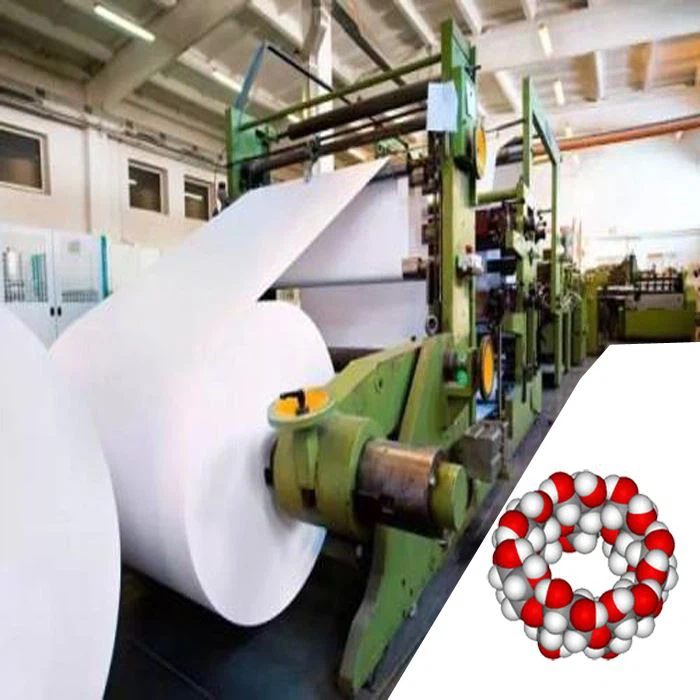
Cyclodextrins are cyclic oligosaccharides composed of glucose units linked by α - 1,4 - glycosidic bonds. They have a unique toroidal structure with a hydrophobic interior and a hydrophilic exterior. This structure allows them to form inclusion complexes with various guest molecules, including drugs. Chlorpropanol Cyclodextrin is a modified cyclodextrin, where the hydroxyl groups on the cyclodextrin backbone are substituted with chlorpropanol moieties. This modification can alter the physicochemical properties of the cyclodextrin, such as solubility, stability, and complexation ability, which in turn affects the drug release mechanism.
The link between Chlorpropanol Cyclodextrin and drug delivery lies in its ability to encapsulate drugs within its cavity. The formation of inclusion complexes can improve the solubility, stability, and bioavailability of drugs. For more information about Chlorpropanol Cyclodextrin, you can visit Chlorpropanol Cyclodextrin.
Mechanisms of Drug Release from Chlorpropanol Cyclodextrin - Based Formulations
1. Diffusion - Controlled Release
Diffusion is one of the most common mechanisms for drug release from cyclodextrin - based formulations. In this mechanism, the drug molecules diffuse out of the cyclodextrin inclusion complexes and into the surrounding medium. The rate of diffusion is influenced by several factors, including the concentration gradient of the drug between the complex and the medium, the size and shape of the drug molecule, the properties of the cyclodextrin (such as its degree of substitution and solubility), and the viscosity of the release medium.
When the drug - cyclodextrin complex is placed in a release medium, the drug molecules tend to move from an area of high concentration (inside the complex) to an area of low concentration (the medium). The diffusion rate can be described by Fick's laws of diffusion. For example, if the release medium has a low viscosity, the drug molecules can diffuse more easily, resulting in a faster release rate.
2. Dissociation of the Inclusion Complex
The dissociation of the drug - cyclodextrin inclusion complex is another important factor in drug release. The stability of the inclusion complex depends on the strength of the non - covalent interactions between the drug and the cyclodextrin, such as hydrogen bonding, van der Waals forces, and hydrophobic interactions. Changes in the environmental conditions, such as pH, temperature, and the presence of other competing molecules, can affect the stability of the complex and lead to its dissociation.
For instance, a change in pH can alter the ionization state of the drug and the cyclodextrin, which may disrupt the non - covalent interactions and cause the drug to be released. Similarly, an increase in temperature can provide enough energy to break the weak bonds holding the complex together.
3. Erosion of the Formulation Matrix
In some cases, Chlorpropanol Cyclodextrin - based formulations are incorporated into a matrix, such as a polymer or a gel. The erosion of this matrix can also contribute to drug release. As the matrix erodes, the drug - cyclodextrin complexes are exposed to the release medium, and the drug can be released through diffusion or dissociation.
The rate of matrix erosion depends on factors such as the nature of the matrix material, its degradation rate, and the environmental conditions. For example, a biodegradable polymer matrix will erode over time, releasing the drug in a controlled manner.
Factors Influencing the Drug Release Mechanism
1. Physicochemical Properties of the Drug
The size, shape, solubility, and ionization state of the drug play a crucial role in the drug release mechanism. Smaller drug molecules can diffuse more easily out of the cyclodextrin cavity, while larger molecules may be more tightly bound. Drugs with high solubility in the release medium are more likely to be released quickly, as they can easily partition from the complex into the medium.

The ionization state of the drug can also affect its interaction with the cyclodextrin. For example, a charged drug molecule may have stronger electrostatic interactions with the cyclodextrin, which can influence the stability of the inclusion complex and the drug release rate.
2. Properties of Chlorpropanol Cyclodextrin
The degree of substitution of chlorpropanol groups on the cyclodextrin backbone can significantly affect the drug release mechanism. A higher degree of substitution may increase the hydrophobicity of the cyclodextrin, which can enhance the complexation ability with hydrophobic drugs but may also slow down the drug release rate.
The solubility of Chlorpropanol Cyclodextrin in the release medium is another important factor. If the cyclodextrin has high solubility, it can more easily disperse in the medium, facilitating the release of the drug.
3. Formulation Design
The way the Chlorpropanol Cyclodextrin - based formulation is designed can also impact the drug release mechanism. For example, the use of different excipients in the formulation can affect the stability of the drug - cyclodextrin complex and the release rate. Some excipients may act as stabilizers, while others may enhance the solubility or diffusion of the drug.
The choice of the dosage form, such as tablets, capsules, or injections, can also influence drug release. For instance, a tablet may have a slower release rate compared to an injection due to the need for disintegration and dissolution of the tablet matrix.
Comparison with Other Cyclodextrins
It is interesting to compare the drug release mechanism of Chlorpropanol Cyclodextrin with other types of cyclodextrins, such as Cationic Cyclodextrin and Hydroxybutyl Beta Cyclodextrin. Cationic Cyclodextrins have positively charged groups, which can interact with negatively charged drugs or biological membranes. This can lead to different complexation and release behaviors compared to Chlorpropanol Cyclodextrin.
Hydroxybutyl Beta Cyclodextrin is a widely used cyclodextrin with good solubility and biocompatibility. It may have a different drug release profile due to its specific chemical structure and the nature of its interactions with drugs.
Significance in the Pharmaceutical Industry
The understanding of the drug release mechanism from Chlorpropanol Cyclodextrin - based formulations is of great significance in the pharmaceutical industry. It allows for the design of more effective drug delivery systems, which can improve the therapeutic efficacy of drugs, reduce side effects, and enhance patient compliance.
For example, by controlling the drug release rate, it is possible to maintain a constant drug concentration in the body, which is particularly important for drugs with a narrow therapeutic window. This can lead to better treatment outcomes and fewer fluctuations in drug levels, reducing the risk of toxicity or sub - therapeutic effects.
Conclusion and Call to Action
In conclusion, the release mechanism of drugs from Chlorpropanol Cyclodextrin - based formulations is a complex process influenced by multiple factors, including diffusion, dissociation of the inclusion complex, and erosion of the formulation matrix. Understanding these mechanisms and the factors that affect them is crucial for the development of optimized drug delivery systems.
As a supplier of Chlorpropanol Cyclodextrin, we are committed to providing high - quality products and technical support to our customers. If you are interested in learning more about Chlorpropanol Cyclodextrin and its applications in drug delivery, or if you are looking to purchase our products for your pharmaceutical research or development, please feel free to contact us for further discussion and procurement negotiations.
References
- Loftsson, T., & Duchêne, D. (2007). Cyclodextrins and their pharmaceutical applications. International Journal of Pharmaceutics, 329(1 - 2), 1 - 11.
- Stella, V. J., & He, Q. (2008). Recent advances in cyclodextrins for drug delivery applications. Journal of Pharmaceutical Sciences, 97(8), 2807 - 2829.
- Brewster, M. E., & Loftsson, T. (2007). Cyclodextrins as pharmaceutical solubilizers. Advanced Drug Delivery Reviews, 59(7), 645 - 666.


