

Hydroxypropyl alpha-cyclodextrin (HPαCD) is a modified cyclic oligosaccharide that has gained significant attention in various industries, especially in pharmaceuticals, food, and cosmetics. One of the key properties that make HPαCD so valuable is its solubility in water. In this blog post, we'll explore what the solubility of HPαCD in water is, why it matters, and how it can be utilized in different applications. As a supplier of HPαCD, we are well - versed in its properties and applications, and we're excited to share our knowledge with you.
Understanding Hydroxypropyl Alpha - Cyclodextrin
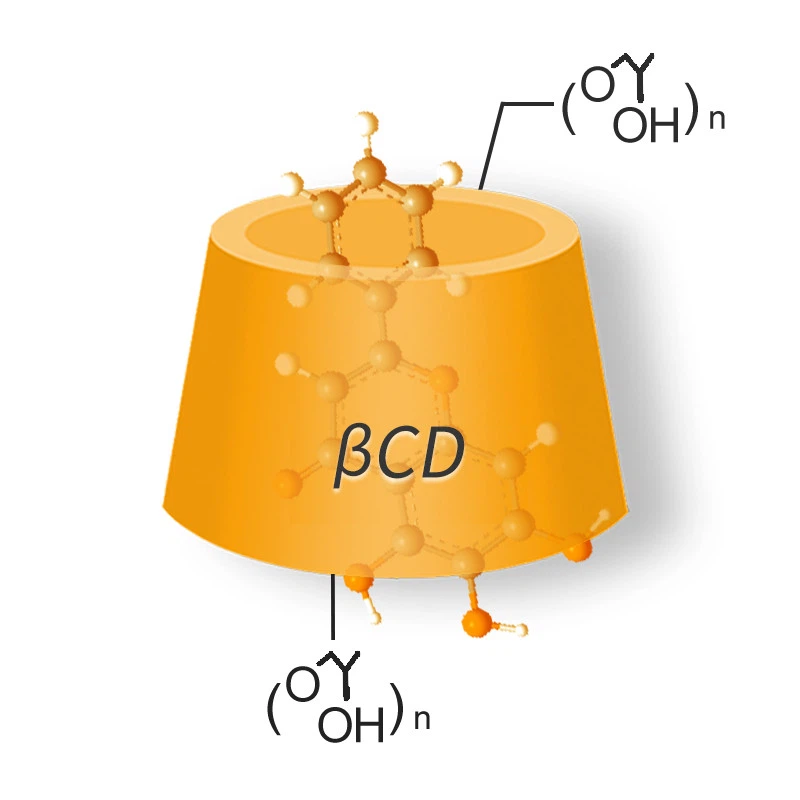
Before diving into its solubility, let's briefly understand what HPαCD is. Cyclodextrins are torus - shaped molecules composed of glucose units linked by α - 1,4 - glycosidic bonds. Alpha - cyclodextrin consists of six glucose units. Hydroxypropylation is a chemical modification process where hydroxypropyl groups are introduced to the cyclodextrin molecule. This modification enhances the physical and chemical properties of the cyclodextrin, including its solubility in water.
Solubility of Hydroxypropyl Alpha - Cyclodextrin in Water
The solubility of HPαCD in water is quite high compared to its native alpha - cyclodextrin counterpart. Native alpha - cyclodextrin has a limited solubility in water, which restricts its applications. However, the hydroxypropylation of alpha - cyclodextrin significantly improves its solubility. At room temperature (around 25°C), HPαCD can dissolve in water at concentrations of up to 500 g/L or even higher in some cases.
The high solubility of HPαCD is due to the introduction of hydroxypropyl groups. These groups increase the hydrophilicity of the molecule. The hydroxypropyl groups can form hydrogen bonds with water molecules, allowing the HPαCD molecules to disperse easily in the water phase. Moreover, the hydroxypropylation disrupts the intermolecular hydrogen - bonding network of the native cyclodextrin, which further contributes to its enhanced solubility.
Factors Affecting Solubility
Although HPαCD has high solubility in water, several factors can influence its solubility behavior.
Temperature
Temperature plays a crucial role in the solubility of HPαCD. Generally, the solubility of HPαCD increases with an increase in temperature. As the temperature rises, the kinetic energy of the water molecules and HPαCD molecules increases. This increased kinetic energy allows the water molecules to more effectively break the intermolecular forces between HPαCD molecules, facilitating their dissolution. However, it's important to note that extreme temperatures may cause some degradation of the HPαCD molecule, so the temperature should be carefully controlled.
pH
The pH of the solution can also affect the solubility of HPαCD. In a wide range of pH values (usually from 3 to 11), HPαCD maintains good solubility. But at extremely acidic or alkaline conditions, the chemical structure of HPαCD may be affected, potentially leading to a decrease in solubility. For example, in highly acidic solutions, the hydroxypropyl groups may undergo hydrolysis, which can change the properties of the molecule and reduce its solubility.
Presence of Other Solutes
The presence of other solutes in the water can influence the solubility of HPαCD. Some salts or organic compounds may interact with HPαCD through various forces such as electrostatic interactions or hydrophobic interactions. These interactions can either increase or decrease the solubility of HPαCD. For instance, some salts may cause salting - out effects, where the presence of high concentrations of salts reduces the solubility of HPαCD by competing for water molecules.
Applications Based on Solubility
The high solubility of HPαCD in water makes it a versatile ingredient in many applications.
Pharmaceutical Industry
In the pharmaceutical industry, HPαCD is widely used as a solubilizing agent. Many drugs have poor water solubility, which limits their bioavailability. By forming inclusion complexes with HPαCD, the solubility and stability of these drugs can be significantly improved. For example, poorly soluble drugs can be encapsulated within the hydrophobic cavity of HPαCD, while the hydrophilic outer part of HPαCD allows the complex to dissolve easily in water. This enhances the drug's dissolution rate in the body, leading to better absorption and improved therapeutic effects.
Food Industry
In the food industry, HPαCD can be used to improve the solubility and stability of flavor compounds, vitamins, and antioxidants. For example, some natural antioxidants may have low solubility in water, which can limit their use in aqueous food products. By using HPαCD, these antioxidants can be solubilized and protected from degradation. This not only improves the quality and shelf - life of food products but also allows for better dispersion of these functional ingredients in the food matrix.
Cosmetic Industry
The cosmetic industry also benefits from the high solubility of HPαCD. It can be used to solubilize lipophilic active ingredients such as essential oils, fatty acids, and some plant extracts. For example, 10% Baicalein Inclusion Complex, 10% Water - soluble Ferulic Acid, and Water - soluble Azelaic Acid Inclusion Complex are products that may utilize HPαCD to enhance the solubility of their active components. This enables the formulation of clear, stable, and effective cosmetic products.
Quality Control of Solubility
As a supplier of HPαCD, we understand the importance of ensuring consistent solubility for our customers. We have strict quality control measures in place to guarantee the solubility of our HPαCD products. Our manufacturing process is carefully optimized to ensure uniform hydroxypropylation of the alpha - cyclodextrin molecules. We also conduct regular solubility tests on our products under different conditions to ensure that they meet the specified solubility requirements.
Conclusion
The solubility of hydroxypropyl alpha - cyclodextrin in water is a remarkable property that opens up a wide range of applications in various industries. Its high solubility is due to the hydroxypropylation modification, which enhances the hydrophilicity of the molecule. Although factors such as temperature, pH, and the presence of other solutes can affect its solubility, HPαCD generally maintains good solubility under normal conditions.

If you are interested in using HPαCD in your products, whether it's for pharmaceuticals, food, or cosmetics, we are here to provide you with high - quality HPαCD products. Our team of experts can also offer technical support and guidance on the application of HPαCD. Don't hesitate to contact us for more information and to start a procurement discussion. We look forward to partnering with you to achieve your product development goals.
References
- Szejtli, J. (1998). Introduction and general overview of cyclodextrin chemistry. Chemical Reviews, 98(5), 1743 - 1753.
- Loftsson, T., & Brewster, M. E. (1996). Pharmaceutical applications of cyclodextrins. 1. Drug solubilization and stabilization. Journal of Pharmaceutical Sciences, 85(10), 1017 - 1025.
- Duchene, D., & Wouessidjewe, D. (1991). Cyclodextrins and their pharmaceutical applications. CRC Press.


